


Learn how to plan apartment intercom upgrade work with clear entry rules, suitable IP equipment, resident communication and reliable ongoing support too.
Why Fully Insured Security Installers Matter

When someone is fitting CCTV over your entrance, running cabling through your offices, or configuring access control for a nursery or block of flats, you are not just buying equipment. You are trusting people with your building, your safety, your data, and your day-to-day control. That is why working with fully insured security installers matters far more than many customers realise.
Insurance is often treated like a box-ticking detail. It is not. It is one of the clearest signs that an installer takes their work, their responsibilities, and your risk seriously. If a company is properly insured, it shows they have considered what could go wrong and put protection in place before stepping onto your site.
What fully insured security installers actually give you
At a basic level, fully insured security installers help protect you if something goes wrong during installation or service work. That could mean accidental damage to a wall during cable runs, a problem caused while working at height, or an issue that affects another part of the property. In commercial settings, the stakes can be even higher because disruption affects staff, tenants, visitors, and operations.
But the value goes beyond the insurance certificate itself. A fully insured installer usually works in a more disciplined way. They are more likely to assess the site properly, use suitable methods, document work clearly, and take fewer shortcuts. Insurance does not guarantee good workmanship on its own, but it often sits alongside a more professional approach.
For homeowners, that means less worry about who is drilling into external walls, mounting cameras at height, or working around power and network points. For landlords and facilities managers, it means greater confidence when contractors are on-site in shared entrances, car parks, corridors, and managed buildings.
Why insurance matters in real installations
Security installation is practical work. It involves ladders, tools, fixings, electrical connection points, network hardware, and live environments where people are moving through the property. In a home, the installer may be working around décor, flooring, and existing wiring. In a business, they may be working around employees, customers, residents, or children.
That creates real exposure. A poorly placed ladder can damage flooring. A mistaken drill point can affect hidden services. An incorrectly managed cable route can create risk or require remedial work. Even when the job is straightforward, things can happen. The difference is whether the installer has the backing to put it right without leaving the customer exposed.
This is especially relevant when systems are integrated. A modern installation may include CCTV, smart illumination, alarms, door entry, remote app access, and multi-point control. The more connected the system, the more important it is that installation is handled by a company that understands both the technical side and the practical responsibility that comes with it.
Fully insured security installers and the problem with the cheapest quote
Price matters. Every sensible customer has a budget. But security is one of those areas where the cheapest quote can become expensive very quickly.
A lower price may reflect corners being cut in system design, equipment choice, labour time, or after-sales support. It can also reflect weaker business standards behind the scenes. If an installer is vague about insurance, qualifications, or what happens if damage occurs, that is not a small issue to overlook for the sake of a slightly lower figure.
The right quote should cover more than products and installation time. It should reflect proper planning, suitable equipment, safe working, careful positioning, and support once the system is live. That is particularly important for CCTV, where camera placement, intrusion-triggered recording, night performance, and usable footage matter far more than a headline specification on a box.
A system that misses the gate, blinds out at night, or records poor facial detail has not saved money. It has simply moved the cost to the moment you need evidence and do not have it.
What to ask before appointing an installer
If you are comparing providers, ask direct questions. Are they fully insured for the type of work they carry out? Are they installing themselves or subcontracting unknown parties? What support do they offer after installation? Will they survey the property properly before recommending a system?
The answers tell you a lot. A dependable installer will not treat those questions as awkward. They should expect them. In fact, a professional company should welcome informed customers because good security decisions are made on clarity, not pressure.
It is also worth asking how they approach system design. Do they recommend cameras and access points based on real use, light levels, entry routes, and blind spots? Do they consider how the system will be used every day, not just how it looks on a quote? A consultative approach is often the difference between a system that works on paper and one that gives you control in practice.
Why this matters for commercial and managed properties
Commercial sites and managed buildings have more moving parts. You may need CCTV covering access roads, car parks, stock areas, receptions, or communal entrances. You may also need controlled entry with auditability, such as keypad, card, fob, or monitor-based door access.
In these settings, fully insured security installers are not just a sensible choice. They are often the only responsible choice. A mistake can affect multiple occupants, shared infrastructure, and business continuity. In a nursery, there is an added expectation of safeguarding and controlled access. In an office building, poor installation can affect staff flow, visitor management, and site security. In a block of flats, unreliable door entry creates daily frustration as well as risk.
Insurance matters here because the environment is more sensitive. So does experience. An installer needs to understand how to fit systems with minimal disruption, how to route equipment cleanly, and how to deliver straightforward control for the people using it every day.
Good installers do not just fit equipment
The strongest security companies act as advisers first and installers second. That means they do not push a larger system than you need, and they do not recommend features simply because they sound impressive.
Sometimes a customer asks for more cameras when better placement would do the job. Sometimes they think they need a full overhaul when a targeted upgrade to night coverage, smart illumination, or door entry would solve the actual problem. Sometimes wireless alarm protection is the right fit; sometimes a more integrated access and surveillance setup is the better investment.
This is where experience matters. So does honesty. A good installer should explain what will genuinely improve visibility, deterrence, and control – and what will not.
That service-first mindset is one reason many property owners choose firms such as NRI Security Ltd. The reassurance comes not only from the equipment being installed, but from knowing the recommendation is based on the site, the risks, and the result you need.
The link between insurance and after-sales confidence
Most security systems are judged long after the engineers have left. You find out whether the app is easy to use, whether night images are clear, whether alerts are meaningful, and whether entry control works smoothly on a busy day.
That is why after-sales support matters so much. A company that stands behind its work usually operates differently from the start. It surveys properly, specifies carefully, and installs with the expectation that the customer will rely on that system for years, not weeks.
Insurance fits into that same picture. It is part of a wider professional standard. It tells you the company has thought beyond the sale. Combined with experience, technical knowledge, and a straightforward quote process, it helps remove the uncertainty that often surrounds security purchasing.
If you are investing in CCTV, alarms, or access control, ask who is installing it, how they work, and what protection is in place if something goes wrong. The right answer should give you reassurance before the first bracket is fixed or the first cable is run.
Security should leave you feeling more in control, not exposed to new risks. Choosing fully insured security installers is one of the simplest ways to make sure it does.

Residential Video Entry Guide for Safer Access
Residential video entry guide for homeowners and landlords. Learn what matters, what to compare, and how to choose a reliable system.

Access Control Installation for Apartment Blocks
Access control installation for apartment blocks improves entry security, resident safety and daily management with the right system design.

Choosing a Dahua Door Entry Installer
Need a dahua door entry system installer? Learn what to expect from a proper survey, POE setup, access options, and reliable after-care.

CCTV Installation for Small Retail Shops
CCTV installation for small retail shops helps deter theft, protect staff and improve visibility. Get the right system, layout and support.

Best Access Control Options for Landlords
Compare the best access control options for landlords, from fobs to IP video entry, and choose a secure, manageable system for every property with ease.

How to Choose a Home CCTV Installer
Learn how to choose home CCTV installer with confidence. Compare surveys, support, system design and quotes before you commit.
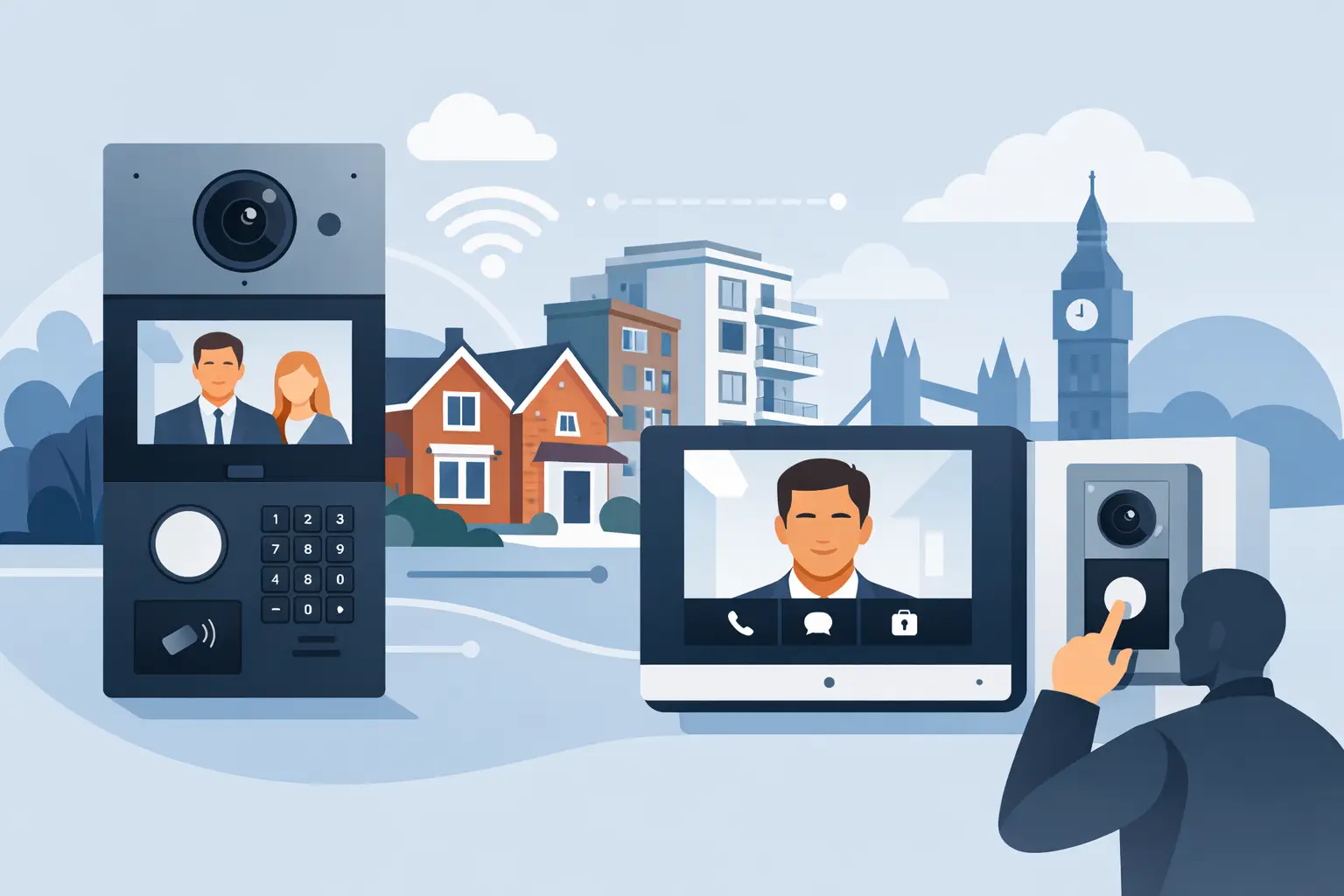
Dahua IP Intercom System Review for UK Properties
Read our Dahua IP intercom system review for a clear look at door entry, PoE monitors, remote access, installation and who it suits best in the UK today.

What Home CCTV Tech Is Worth Buying?
Learn which latest CCTV technology for homes genuinely improves security, from smart alerts to colour night vision and professional setup.

CCTV Systems That Protect Homes and Businesses
CCTV systems give homes and businesses evidence, stronger deterrence and remote reassurance. Learn how to specify coverage that works when it matters most.

How to Secure Shared Entrances Properly
Learn how to secure shared entrances with the right door entry, CCTV, lighting and access control for flats, offices and managed buildings.

Smart Door Entry for Nurseries Safeguarding
Smart door entry for nurseries safeguarding helps control access, verify visitors and support staff with clear, reliable entry records and video.