


CCTV for trades yard tool theft prevention helps deter intruders, protect stock and capture clear evidence with the right design and placement.
Dahua IP Intercom System Review for UK Properties
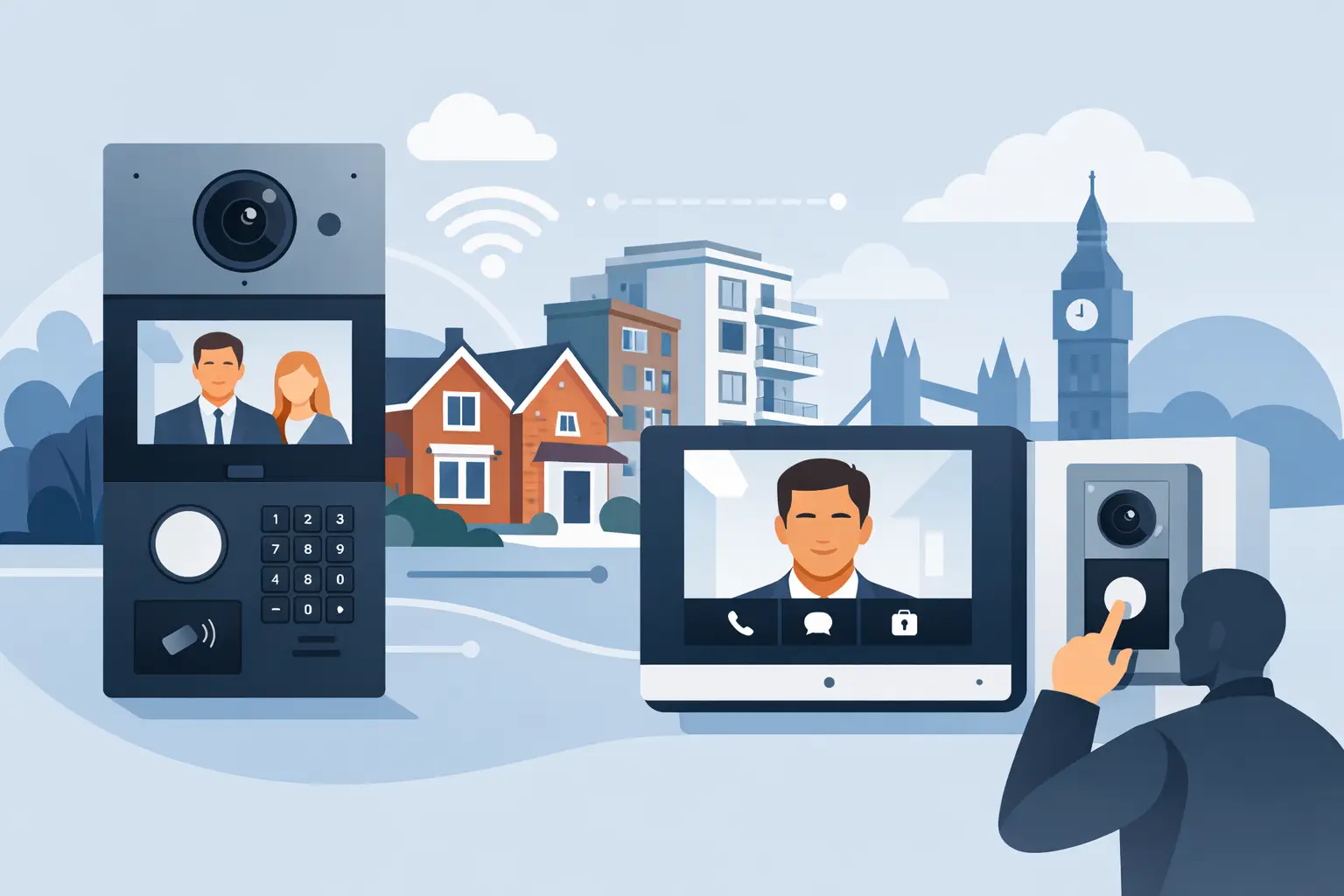
A front door is one of the few places where a small decision can affect every person entering a property. This Dahua IP intercom system review looks at whether Dahua door entry gives homeowners, landlords and business managers the control they need, without making daily access complicated.
Dahua IP video intercoms are a strong fit where you need to see, speak to and release a visitor from a reliable central point. They can also bring access credentials, resident call routing and remote viewing into one managed system. The value is not simply in having a screen at the door. It is in knowing who is requesting entry, recording the event where required, and giving authorised people a straightforward way to get in.
Dahua IP intercom system review: the practical verdict
For many UK residential and commercial sites, Dahua is a capable, flexible door entry platform. It works particularly well for properties that benefit from PoE-connected indoor monitors, video verification before release, and access by keypad, card or fob. A well-specified system feels simple to use: a visitor presses the call button, the occupier sees and speaks with them through the monitor or supported mobile access, then chooses whether to release the door.
The strongest results come from professional design rather than choosing a door station from a specification sheet alone. The number of doors, flats or offices, how people enter outside normal hours, whether gates are involved, and the condition of existing cabling all affect the right setup.
Dahua is not automatically the best answer for every site. A single home wanting only a basic wireless chime may find an IP system more than they need. Equally, a large, complex development may need additional planning around network capacity, resident directories, lift integration and ongoing management. For the middle ground – houses with gates, small offices, nurseries, blocks of flats and managed premises – it offers a sensible balance of visibility, control and scalability.
What a Dahua IP door entry system does well
Clear visitor verification
The first benefit is visual confirmation. Instead of relying on a voice-only handset or opening the door because someone says they are a courier, staff and residents can see who is there. This is valuable at busy entrances, in shared buildings and at premises where safeguarding matters.
Video is only as useful as its placement and lighting. A camera pointed towards bright sunlight, a poorly positioned call panel, or an unlit entrance can reduce the quality of identification. The external station should be positioned to capture faces naturally, protect against weather exposure and avoid creating a blind spot around the approach to the door.
Where a property already has Dahua CCTV, door entry can sit comfortably alongside the wider security approach. The intercom manages the request to enter; CCTV provides broader coverage of the entrance, boundary or car park. They serve different purposes, but together they create a clearer record of what happened before and after a door release.
PoE installation keeps the system dependable
PoE, or Power over Ethernet, is one of the practical reasons to choose an IP intercom. A single network cable can carry both power and data to compatible devices. This reduces the need for separate local power supplies at each monitor or door station and gives the installer a cleaner, more manageable route for cable runs.
Dahua’s 7-inch Android indoor monitors are a useful example. They offer a familiar touch-screen format for answering calls, viewing a visitor and releasing an entrance. In a flat, office or reception area, that is easier to manage than relying on an occupant’s personal mobile phone as the only point of control.
PoE does not mean installation is plug-and-play. The switch must have suitable power capacity, cable routes must be planned correctly, and the network must be configured securely. A professionally installed system also needs sensible labelling, testing and a plan for what happens if network equipment is restarted or replaced.
Flexible access for authorised users
A video intercom should not slow down people who belong on site. Dahua systems can support different methods of entry, including keypad codes, cards and fobs, depending on the equipment selected and the access rules required. This is useful for staff entrances, communal doors, gates and properties where residents, contractors and managers need different permissions.
The real advantage is accountability. A landlord or facilities manager can avoid circulating one mechanical key that cannot be traced or easily withdrawn. If a fob is lost or a contractor finishes work, their access can be removed without changing every lock.
However, credentials need managing properly. Shared PINs are convenient but weak if they are passed on. Fobs should be issued against a clear user record, and former staff or tenants should be removed promptly. Door entry hardware improves control, but it cannot compensate for poor access procedures.
A credible option for multi-occupancy sites
For blocks of flats, offices and nurseries, visitor calls need to reach the right person quickly. Dahua IP intercoms can be designed with multiple indoor monitors, directory functions and distinct call destinations, making them well suited to managed environments.
At a nursery, for example, reception can verify a visitor before opening the main entrance while staff retain a practical method of moving through authorised internal doors. In an office building, a reception monitor can handle standard visitors, while access credentials allow staff to enter without waiting to be released. In a block of flats, the system needs careful configuration so calls route correctly and residents can use it confidently from day one.
The trade-offs to consider before specifying Dahua
An IP system depends on its underlying infrastructure. That is a strength when the network is designed for the job, but a weakness when devices are added to an ageing or poorly managed network with no spare PoE capacity. Reliable cabling and correctly selected network equipment should be part of the quote, not an afterthought.
There is also a choice between convenience and resilience. Mobile access can be helpful when a homeowner is away or a manager is moving around the building, but it should complement an indoor monitor rather than replace it on sites where dependable local answering is essential. Phones run out of battery, notifications may be missed, and app permissions can change.
Privacy is another consideration. Video door entry should be installed with a defined purpose: managing access at the entrance. Camera angles, notification settings and recorded footage should be proportionate to the property and its users. For commercial and multi-occupancy premises, clear policies are particularly useful for avoiding confusion about who can view footage and how long it is retained.
Finally, a door release is only one part of physical security. If the lock, closer, gate motor or door frame is unsuitable, a high-quality intercom cannot make the entrance secure. The release mechanism must be matched to the door and fire safety requirements, and doors should close and latch reliably after every entry.
How to decide whether it is right for your property
Start with the entrance rather than the product. Ask who needs to get in, who needs to approve entry, and what happens when the building is unattended. A family home may prioritise a gate station and one or two internal monitors. A small business may need reception control, staff fobs and an entrance camera. A managed block may need multiple resident call points, a directory and a clear process for changing occupants.
Then consider the wider security picture. If visibility is poor around the front boundary after dark, CCTV with smart illumination or intrusion-triggered colour night coverage may be a worthwhile complement. If the concern is unauthorised access outside opening hours, the intercom can work alongside alarm and access control measures rather than carrying the full burden alone.
A site survey is the point where these decisions become practical. It identifies cable routes, monitor locations, network requirements, lock compatibility and the best viewing angle at the entrance. It also prevents an all-too-common outcome: an expensive panel fitted neatly to a wall but positioned where it cannot clearly identify a visitor.
For homeowners and businesses that want controlled entry without unnecessary complexity, Dahua IP door entry is a system worth serious consideration. NRI Security can assess the property, explain the practical options in plain language and provide a no-obligation quotation based on what genuinely needs protecting. The right result is not the system with the longest feature list; it is the one that lets the right people in, keeps the wrong people out, and remains easy to rely on every day.

Video Door Entry for Safer Premises
Video door entry gives homeowners and businesses better control of visitors, access and accountability with clear, professionally installed systems.
Best Commercial Security System Features
Compare the best commercial security system features for dependable CCTV, controlled entry and faster response across offices, flats and managed sites.

Wireless Alarm App Control Guide
Wireless alarm app control guide for homes and businesses. Learn setup, permissions, alerts, and remote use without losing reliability or control.
Home CCTV Installation That Covers What Matters
Plan a home CCTV installation with clear coverage, useful colour night vision, remote access and professional support that protects what matters most, daily.

What CCTV Cameras Need Internet?
What CCTV cameras need internet? Learn which systems work offline, when internet helps, and how to choose the right setup for home or business.

How to Improve Apartment Entry Security
Learn how to improve apartment entry security with better access control, CCTV, lighting and door entry planning for safer shared buildings.

Monitored Alarm Versus Self Monitoring Compared
Monitored alarm versus self monitoring explained: compare response, cost and control to choose dependable protection for your home or business today.

Commercial CCTV Installation Guide for UK Sites
Our commercial CCTV installation guide explains how to plan cameras, protect privacy and achieve clear evidence with reliable professional support on site.

Ajax alarm app review for homes and businesses
Ajax alarm app review for UK homes and businesses. See how it handles alerts, user control, automation and daily use before you buy.

What Happens During a Security Survey Visit?
Find out what happens during a security survey, from identifying weak points to choosing CCTV, access control and alarms suited to your property needs.

Best Video Door Entry Monitors for UK Properties
Compare the best video door entry monitors for homes, flats and workplaces, with clear advice on screens, POE, access control and installation choices.