


Wireless alarm reliability depends on design, signal strength, power and support. See what a professional installation checks before an alarm is needed.
Security Site Survey Guide for Safer Installs

A camera that looks impressive on paper can still miss the only route an intruder would use. A door entry panel can be packed with features and still be awkward for staff, tenants or visitors if it is specified without looking properly at the building. That is why a security site survey guide matters. The survey is where good protection starts – not with a catalogue, and not with a guess.
For homeowners, landlords and business operators, a proper survey removes the two biggest risks in security buying: paying for equipment you do not need, or ending up with blind spots, weak entry control and poor day-to-day usability. The right survey turns a list of products into a system that fits the property, the people using it and the level of risk involved.
What a security site survey is really for
A site survey is not just a walk-round to count cameras or measure a gate. It is a practical assessment of how your property works, where it is vulnerable and what level of control you actually need. That includes external approach routes, entrances, internal circulation, lighting conditions, existing cabling, internet availability, power supply and how footage or alerts will be used after installation.
A good installer will also look at behaviour, not just building layout. Where do deliveries arrive? Which door gets propped open? Is there a side passage hidden from the street? Are staff leaving after dark? Does a nursery need tighter visitor accountability than a small office? These details shape the design far more than a basic floorplan ever could.
What gets checked during a security site survey guide process
Most properties need the same core questions answered, but the balance changes depending on whether the job is a house, a flat block, a nursery, an office or a mixed-use building.
CCTV coverage and camera positioning
For CCTV, the survey should identify key viewpoints rather than simply aiming for maximum camera count. Front elevation coverage may deter opportunists, but side access, rear gardens, bin stores, car parks and service entrances often present the greater risk. Inside commercial premises, reception areas, stock rooms and final exit routes may be more important than general open-plan coverage.
The survey should also consider image purpose. If you need to identify faces at an entrance, a wide overview camera alone will not do the job. If you want to see vehicle movement on a driveway, the lens choice and mounting height matter. If the goal is intrusion-triggered colour night coverage, lighting and scene design become part of the conversation, not an afterthought.
Lighting and night-time visibility
Many security problems only show up after dark. A camera positioned perfectly in daylight may struggle at night if there is back-glare from a porch light, deep shadow beside fencing or no usable illumination across the perimeter. This is where smart illumination and targeted lighting design can make a major difference.
The survey should examine whether standard infrared is enough or whether colour-at-night performance is the better option. It should also assess whether lights should be triggered by movement, integrated with perimeter events or kept on in selected areas. Better visibility at the right moment gives you more usable footage and a stronger deterrent.
Access control and visitor management
For door entry and access control, the survey is about much more than where the panel will sit. It needs to account for daily traffic, user groups and the type of credentials that make sense. A small office may want keypad and fob access for staff. A managed residential block may need card, fob and monitor-based visitor release. A nursery may need tighter control, clearer visitor verification and a straightforward handover process for authorised collection.
The installer should also assess lock release requirements, door condition, cable routes, POE availability and where internal monitors belong. A 7-inch Android monitor is useful, but only if it is placed where staff or residents can answer quickly and comfortably.
Existing infrastructure
The condition of the building affects cost, installation method and reliability. Older properties may have awkward wall construction, limited routes for cabling or inherited systems that need careful integration or replacement. Newer sites may support cleaner POE runs and better device placement, but that does not guarantee the current network is suitable.
A proper survey looks at network capability, recorder placement, Wi-Fi limitations where relevant, available power, external weather exposure and whether any existing equipment is worth retaining. Re-using parts of an older system can save money in some cases. In others, it creates a weak point that costs more over time.
Why the survey changes the quote
If two installers give wildly different prices, the quality of the site survey is often the reason. One may be quoting a generic package. The other may have accounted for cable runs, access equipment, low-light conditions, entry credentials, recorder storage, remote viewing setup and after-install support.
That does not mean the higher quote is always the better one. It means you need to know what has actually been specified and why. A proper survey should lead to a clear, no-pressure quotation that explains the system design in plain language. You should understand what is being protected, what the equipment will do and what trade-offs have been made.
For example, one camera with the correct angle and night performance may outperform two badly placed basic units. A simpler access control setup may be the right answer for a small site if it improves reliability and keeps daily use straightforward. Good security is not about adding more. It is about specifying properly.
Common mistakes when no proper survey is done
The most common result of a poor survey is misplaced confidence. The system looks installed, but the important detail is missing.
Blind spots are a frequent problem, especially around side access, rear perimeters and shared entrances. Another is poor night footage caused by reflective surfaces, badly placed lights or unrealistic expectations about low-light performance. Access control can also fail in a quieter way, with doors that release too slowly, awkward monitor locations or credentials that do not suit the people using the building.
There is also the issue of compliance and accountability. In regulated or higher-responsibility settings such as nurseries or managed residential properties, the survey should consider who needs access, when, how visits are verified and what records or footage may need to be reviewed later. Security is not just about stopping intrusion. It is also about proving what happened.
How to prepare for a security site survey
You do not need technical knowledge to get value from a survey, but a little preparation helps. Start by being clear about the real concern. That might be unauthorised access, parcels going missing, staff opening up alone, a vulnerable rear boundary or tenants needing better visitor control.
It also helps to identify pain points in daily use. Do you want remote viewing on your mobile phone? Do multiple people need access credentials? Are there times when visibility is poor? Have you had near misses rather than actual incidents? Those details help shape a better system than a simple request for cameras at the front and back.
If plans, old system details or known trouble areas are available, have them ready. Just as important, be honest about budget. A good installer should advise you towards the right-fit system, not push you into the most expensive one.
What to expect from a good installer after the survey
The best survey does not end at equipment selection. It should lead to a design that makes sense, a quotation that is easy to follow and support that continues after commissioning. That means sensible camera placement, practical user setup, tidy installation work and clear handover so you know how to use what has been fitted.
This is especially important where remote apps, playback, user permissions and visitor release are involved. A technically capable system is only useful if the people responsible for the property can operate it with confidence. That is why a consultative approach matters. NRI Security works on that basis – advise first, specify properly, install cleanly and support after the job is done.
The survey is where control begins
A security system should give you confidence, not more questions. The site survey is the point where risks are identified, weak assumptions are removed and the right balance is found between deterrence, evidence, convenience and cost. When that stage is handled properly, everything that follows is stronger.
If you are planning CCTV, door entry or a wider upgrade to how your property is protected, start with the survey and pay attention to the questions being asked. The quality of those questions usually tells you exactly how the installation will turn out.

Access Control for Small Business Office Use
Access control for small business office sites improves safety, accountability and day-to-day entry management without adding unnecessary complexity.

Intrusion Line Triggered CCTV: A Practical Guide
Intrusion line triggered cctv captures the moment someone crosses a boundary, improving night footage, alerts and evidence without constant false alarms.
What Is Full Colour Night CCTV and How It Works
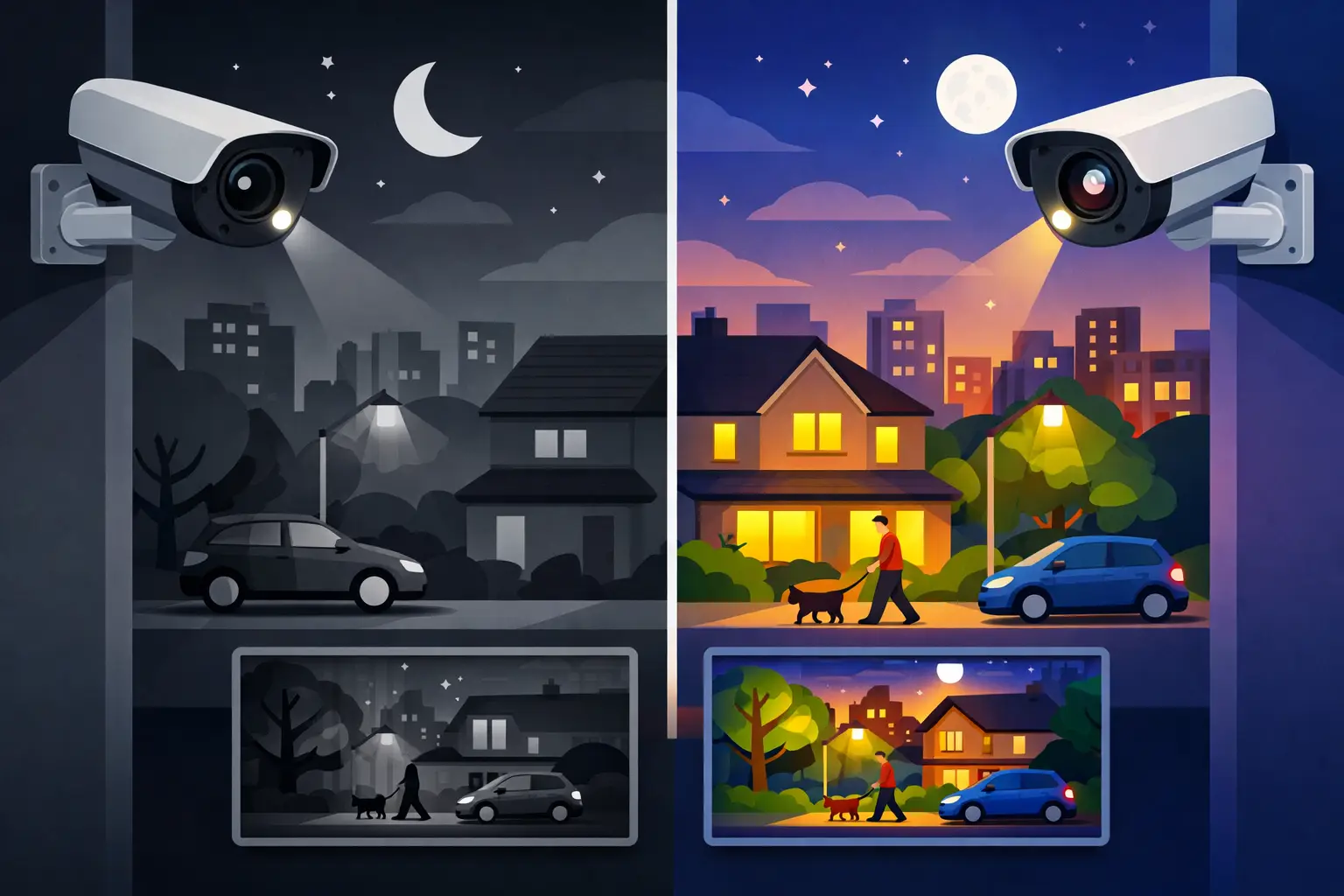
Understand what is full colour night CCTV, how it records useful colour after dark, and why camera placement and lighting still matter on every site.

Gate Intercom System for a Private Driveway
Choose a gate intercom system for private driveway access with clear video, reliable calling and professional installation advice for lasting control daily

Upgrade Old Analogue CCTV to IP
Learn how to upgrade old analogue CCTV to IP, what can stay, what must change, and how to improve image quality, access and control.

Why Aftercare Support for CCTV Matters
Aftercare support for CCTV keeps footage clear, apps working and coverage reliable long after installation – for homes and businesses.

CCTV for Nurseries: What Good Security Looks Like
CCTV installation for nursery security: camera placement, night coverage, entry control, privacy rules and how to choose a reliable installer for safeguarding.

Secure Remote Access to CCTV Explained
Secure remote access to CCTV gives you live viewing without opening your system to avoidable risk. Here’s how to set it up the right way.

Residential Video Entry Guide for Safer Access
Residential video entry guide for homeowners and landlords. Learn what matters, what to compare, and how to choose a reliable system.

Is a PoE Video Intercom Worth It?
Choosing a poe video intercom with indoor monitor? Learn what PoE really changes, what to specify, and how to avoid common installation pitfalls.

How to Plan Office Surveillance Properly
Learn how to plan office surveillance with the right camera positions, access points, privacy controls and night coverage for clear evidence.