


Read our Dahua IP intercom system review for a clear look at door entry, PoE monitors, remote access, installation and who it suits best in the UK today.
Best Access Control Options for Landlords

A lost key is rarely just a replacement-key problem for a landlord. It can mean an uncontrolled copy remains in circulation, a tenant feels unsafe, and someone has to arrange access at short notice. The best access control options for landlords replace that uncertainty with clear control over who can enter, where they can go and when their permission ends.
For a single rented house, a sensible upgrade may be as straightforward as an electronic door entry point with coded access. For a block of flats, shared office or managed property, the system needs to handle multiple residents, contractors, deliveries and common areas without becoming difficult to administer. The right answer depends on the property layout, the level of risk and how often occupancy changes.
Start with the access risks at your property
Access control should be specified around the doors people actually use, not simply fitted because it is fashionable. Begin with the main entrance, then consider side gates, rear doors, bin stores, plant rooms, cycle storage and any internal doors that should be limited to authorised people.
A landlord managing a small house in multiple occupation may need to secure a shared entrance while allowing residents to come and go freely. A block manager may need separate permissions for residents, cleaners, maintenance teams and managing agents. In an office building, staff may require access to their own floor but not to comms rooms or private offices.
This is also the point to decide whether visual verification matters. If visitors, couriers or contractors regularly attend, a door release without a camera may create as many questions as it solves. Video door entry lets the occupant or manager see and speak to the caller before granting entry, creating a stronger first line of defence.
Best access control options for landlords
There is no single system that suits every rental portfolio. These are the main options worth considering, with the practical trade-offs that matter when the property is occupied and managed day to day.
Keypad entry for controlled shared doors
A keypad allows users to enter a PIN at the door. It is familiar, quick to use and avoids issuing a physical credential to every visitor. For a small managed building or communal entrance, it can be a cost-effective option where residents need regular access.
The limitation is that codes can be shared. If a former tenant, contractor or guest knows the PIN, the code needs changing to remove that access. This is manageable where the number of users is low, but it becomes less attractive in properties with frequent tenant turnover. A keypad works best as one credential option within a wider system, rather than the only means of entry.
Proximity cards and fobs for simple administration
Cards and fobs are a strong choice for landlords because access can be removed without replacing locks. When a tenant leaves or a fob is reported missing, the administrator can delete that credential from the system. The door hardware stays in place and other users are unaffected.
They are particularly suitable for blocks of flats, offices, nurseries and shared commercial premises. A fob can be assigned to an individual resident or member of staff, while contractors can receive time-limited or closely managed access. Where the system supports event records, the property manager has a clearer account of entry activity than a conventional key can provide.
Fobs can still be lost, and they are another item a resident has to carry. For that reason, many landlords combine fob entry with a PIN or video door entry system rather than relying on one method alone.
IP video door entry for verified access
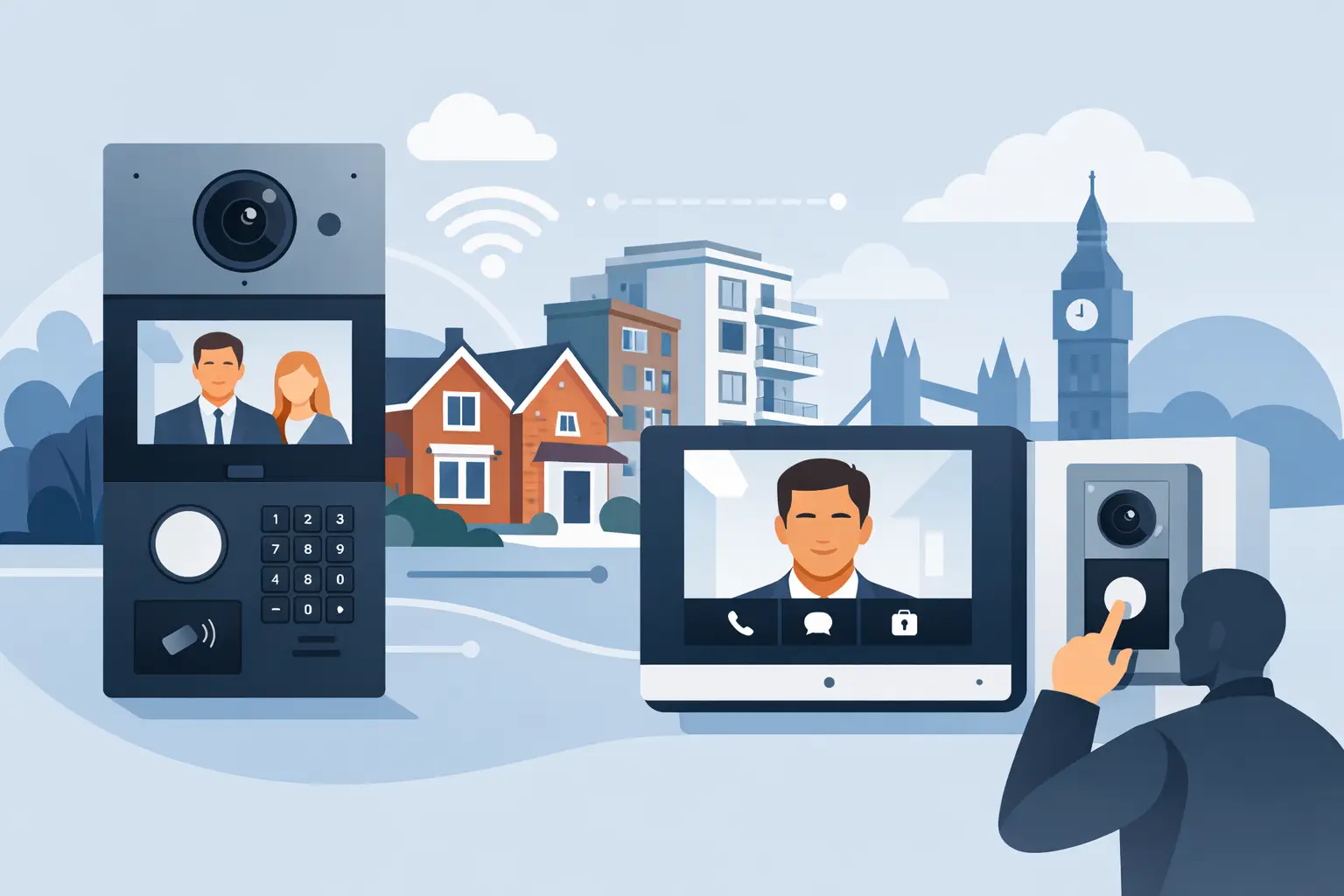
IP video door entry is often the most practical choice where the landlord wants greater control over the front door. A caller uses the external door station, and the resident, receptionist or manager receives video and audio at an internal monitor. They can speak to the visitor and release the door only when satisfied.
Dahua IP video door entry systems can support keypad, card and fob credentials alongside video calling. This is useful in multi-occupancy properties because residents have a straightforward way to admit legitimate visitors, while the building retains an organised access method for everyday entry.
A POE-connected 7-inch Android monitor provides a clear, fixed point for managing callers inside the flat or office. Power over Ethernet also allows power and network connectivity to be delivered through one suitable cable run, which can make installation cleaner and more dependable than relying on separate local power arrangements.
Video entry is not a replacement for good tenant procedures. Residents still need to avoid releasing the door to an unknown person simply because they claim to be a delivery driver. However, it provides the information needed to make a better decision at the point of entry.
Mobile credentials where management needs flexibility
Some access control systems allow users to enter through an authorised mobile device. This can be helpful for serviced accommodation, offices and properties with changing contractor access, as permission can be issued remotely and withdrawn when work is complete.
The appeal is clear, but mobile access should be considered carefully. Not every tenant wants to use a phone as a key, battery life can become an issue, and a dependable alternative is needed for those without a suitable device. In most rental settings, mobile credentials work well as an additional convenience alongside fobs, cards or a keypad.
Mechanical locks still have a place
Electronic access control does not mean every lock must disappear. A quality mechanical lock can remain appropriate for low-risk internal cupboards, individual tenanted rooms or a property with very few users. It is also sensible to consider emergency access and fire safety requirements from the outset.
The difference is that conventional keys create a rekeying problem when they are not returned. If keys are regularly lost, copied or passed between occupants, electronic access to the main communal and external doors will usually reduce the management burden over time.
Design around the building, not the catalogue
The effectiveness of access control is determined by the whole entrance route. A secure front door is of limited value if a side gate is left open, a rear entrance has poor lighting or the lock release can be reached from outside. During a site survey, the installer should look at door condition, frames, cabling routes, lock compatibility, escape routes and how residents will use the system in practice.
For multi-occupancy buildings, the position of the external call panel matters. It should be easily visible to legitimate visitors without exposing residents to unnecessary risk. Clear illumination helps callers use the panel and improves camera images after dark. Where a site has recurring issues around entrances or car parks, CCTV and intrusion detection can work alongside door entry to give a fuller picture of what is happening.
This is where a professionally specified system differs from a collection of off-the-shelf devices. The system should be installed so that the door closes correctly, releases safely, records the required events and remains usable when a tenant changes or a fob goes missing.
Keep administration simple and accountable
A well-installed system still needs a clear management process. Decide who can add and remove credentials, how quickly access is cancelled after a tenancy ends, and whether contractors receive permanent or temporary permission. Keep a record of issued fobs and cards, including the date they are returned.
Avoid making one communal code the default solution for everyone. If it is shared with guests, tradespeople and former occupants, it soon stops being a controlled-access measure. Individual fobs or cards provide better accountability, while a video entry panel gives residents a way to deal with genuine callers without circulating a door code.
Landlords should also plan for support. A failed door release, damaged panel or lost administrator credential can disrupt every resident in the building. Choosing an installer that can advise before the work starts and provide after-sales support helps protect the investment as well as the property.
Get the balance right between security and daily use
The strongest system is not necessarily the one with the most features. A small block may be best served by video door entry with fobs and a managed keypad. A larger building may benefit from separate access groups, individual credentials and CCTV coverage at key approaches. A landlord with frequent contractor visits may need remotely managed permissions, while a long-term residential property may value simple, reliable fob entry above all else.
NRI Security approaches this decision through a free site survey and no-obligation quotation, focusing on the doors, users and risks that matter at your property rather than adding equipment without purpose. A properly planned access control system gives tenants a safer arrival home and gives landlords a practical way to remain in control when keys, people and circumstances change.

CCTV for Flat Entrance Doors: What Works
CCTV for apartment building entrance: learn what to cover, camera types, night vision, privacy rules, and setup tips for safer shared entryways.

How to Upgrade Outdated CCTV System
Learn how to upgrade outdated CCTV system setups with better image quality, remote access, smart alerts and reliable coverage that works.

Best Access Control for Nurseries
Find the best access control for nurseries with practical advice on door entry, credentials, safeguarding, CCTV integration and daily usability.

Latest Perimeter Detection Technology Explained
See how latest perimeter detection technology combines smart CCTV, lighting and intrusion alerts to protect homes and business premises around the clock.

A Practical Guide to Home CCTV System Design
A practical guide to home CCTV system design, covering camera placement, night coverage, storage, remote viewing and choosing the right setup.

Intrusion Line Triggered CCTV: A Practical Guide
Intrusion line triggered cctv captures the moment someone crosses a boundary, improving night footage, alerts and evidence without constant false alarms.

A Nursery Security Upgrade Example That Works
See a practical nursery security upgrade example: controlled entry, CCTV and safer handovers designed around routines, privacy and safeguarding needs.

Smart Lighting CCTV That Actually Helps at Night
Security cameras with smart lighting improve night footage, deter intruders, and cut false alerts. Learn what matters, placement tips, and trade-offs.

Keypad Entry vs Key Fob: Which Fits Best?
Comparing keypad entry vs key fob systems for homes and businesses. Learn the trade-offs on security, control, cost and day-to-day use.

CCTV Maintenance Contract for Small Businesses
A CCTV maintenance contract for small businesses keeps cameras, recording and remote access reliable, compliant and ready when incidents happen.

Remote Monitoring Systems That Put You in Control
Remote monitoring systems give homeowners and businesses live visibility, faster alerts and practical control over CCTV, alarms and access points daily.