


Compare NVR vs DVR CCTV recorders for homes and businesses. Learn how cameras, cabling, remote viewing, costs and image quality shape the right choice.
Choosing a Dahua Door Entry Installer

If you are responsible for a front door that must stay controlled – a block entrance, a nursery gate, a shared office lobby, even a busy household – you already know the weak point is not the lock. It is the moment someone presses the call button and you have to decide, quickly, whether they should come in.
A Dahua IP video door entry system is built for that decision. But the difference between a system that feels dependable and one that becomes a daily frustration usually comes down to the installer. A capable Dahua door entry system installer does more than mount a panel and switch it on. They design the layout, protect the network, make sure the picture is usable in real light, and leave you with a setup that staff and residents can operate without workarounds.
What a Dahua door entry system actually needs to do
Most buyers start with the obvious requirement: see and speak to the person at the door. In practice, that is only step one. The system needs to support your policies and your building habits.
For a single home, that might mean answering a call on a 7-inch indoor monitor and optionally on a phone when you are out. For a multi-occupancy building, it is more about reliable calling to the right flat or office, controlled release, and an audit trail you can stand behind if there is an incident. In regulated settings such as nurseries, you may need a consistent procedure where staff can verify identity, record activity, and avoid “tailgating” at busy times.
Dahua’s IP door entry ecosystem fits these scenarios well because it can combine a door station with PoE-connected indoor monitors and multiple credential options such as keypad codes, cards, and fobs. The installer’s job is to specify the right combination and make it behave predictably every day.
Why “installer” matters more than the kit
Door entry is unforgiving. If the image lags, audio howls, the gate release is intermittent, or the monitor is in the wrong place, people stop trusting it. Then the door gets propped open, codes get shared, or someone starts letting visitors in on guesswork – which defeats the point.
A professional installer brings three things you cannot buy in a box.
First, correct infrastructure choices. Dahua IP systems commonly run over the network with PoE, which is clean and reliable when designed properly, but it depends on cable routes, switch capacity, and how the system is isolated from general office traffic.
Second, correct interface choices. It is easy to overspec features that never get used, or underspec the day-to-day workflow. The right installer asks who answers calls, where they sit, what happens after hours, and how visitors are expected to behave.
Third, correct finishing and after-care. Door entry is part security, part access control, part customer experience. A good install looks tidy, labels are clear, and the system is documented so that future changes do not turn into guesswork.
What to expect from a proper site survey
A serious Dahua door entry system installer starts on-site. Photos and floorplans help, but they do not reveal the awkward realities – the metal gate that blocks wireless signals, the shared riser that is already full, or the bright afternoon sun that turns faces into silhouettes.
During a survey, you should expect questions about the building and the people in it: how many users, how visitors arrive, whether deliveries need access, and what times are high risk. You should also expect the installer to check practical details such as existing cabling routes, power availability, and the condition of the door furniture.
The best surveys also include a conversation about policy. If you manage a block, do you want unique fobs per resident and an easy way to deactivate lost ones? If you run an office, do you want staff to release the door from a monitor at reception only, or from multiple points? If it is a nursery, do you want a strict “verify then release” process and clear accountability for staff training?
PoE, network design, and the “hidden” reliability issues
PoE is often the cleanest way to deploy Dahua indoor monitors and door stations because it reduces local power adapters and makes fault-finding simpler. But PoE is not magic. It has limits on distance and power budget, and it needs the right grade of cable and termination.
A competent installer will look at the network as part of the security perimeter. In some sites, it makes sense to keep door entry on a dedicated switch or VLAN so it is not affected by office bandwidth spikes or casual device changes. In other sites, especially smaller homes, a simpler approach can be perfectly adequate. This is where “it depends” is the honest answer – and where you want an installer who explains the trade-off instead of selling the most complicated option.
You should also expect sensible protection against common issues: ensuring the door release wiring is correct for the lock type, confirming the lock is suitable for the door and usage level, and making sure exit requests and fire safety requirements are met. Door entry sits on the boundary between security and life safety, so details matter.
Getting the door station position right (so the picture is actually usable)
A camera at the door is only as good as its angle and exposure. Too high and you capture hats, not faces. Too low and it is vulnerable to knocks and vandalism. Mounted beside a bright window, you can end up with a perfect image of the background and a dark blur where the visitor should be.
A good installer treats the door station like a CCTV camera: thinking about height, approach path, lighting, and background. In some entrances, adding or adjusting illumination makes more difference than upgrading the camera. If your wider security plan includes CCTV with smart illumination and intrusion-triggered colour night coverage, it is worth designing the door entry so it complements that – the door station for identification and interaction, and perimeter cameras for early warning and context.
Credential choices: keypad, card, fob – and when each makes sense
The “right” access method depends on who uses the door and how controlled you need it to be.
Keypads are straightforward and cost-effective, but shared codes get shared wider over time. For a small office with stable staff, that might be acceptable if codes are changed regularly. For multi-occupancy and regulated environments, it is usually not the strongest choice on its own.
Cards and fobs are better for accountability because they can be issued per person and deactivated when lost. They also allow you to control access without changing everyone’s routine. The trade-off is management: someone needs to enrol new users and remove old ones, and you need a process for lost credentials.
In many real buildings, the best approach is mixed. You might use fobs for residents, a temporary code for contractors that can be changed, and monitor-based release for visitors. The installer should steer you towards what will actually be followed, not what looks impressive on a spec sheet.
Multi-occupancy: calling, naming, and reducing day-to-day friction
Blocks of flats and multi-tenant offices succeed or fail on the small details. How are residents listed? Can names be updated without dismantling the panel? What happens when a tenant changes? Can you route calls to the correct monitor reliably and keep volume levels sensible?
Good installers plan for change. They document the system, label cabling, and set up a process for additions and removals. They also think about practicalities like visitor flow at peak times, delivery drivers who will not wait, and the reality that not everyone reads signage.
If you manage a building, ask specifically how the installer handles future changes and support calls. The cheapest installation often becomes the most expensive when every update requires a major revisit.
What “professional installation” should include
You are paying for certainty. At a minimum, you should expect tidy cable routing, correct weather sealing on external components, secure mounting, and a configuration that matches how your site operates.
Commissioning matters too. That includes checking call quality from the actual entrance in busy conditions, confirming lock release timing, verifying each credential type, and setting sensible admin controls so the system cannot be casually altered.
Training is part of the install. A short handover for staff or residents – how to answer, how to release, what to do if they cannot see the visitor clearly – prevents poor habits developing. Documentation should be clear enough that a facilities manager is not left guessing six months later.
Choosing the right installer: questions worth asking
Before you commit, ask how the installer approaches surveys and specification. If they cannot explain the difference between a simple domestic setup and a multi-occupancy deployment, or they gloss over network design, you will likely feel the pain later.
Ask about after-sales support as well. Door entry is a front-line system. When it is down, your building feels exposed. You want an installer who can respond, troubleshoot logically, and keep spares or compatible replacements available.
If you are looking for a consultative team that supplies, installs, and supports Dahua IP video door entry systems alongside broader CCTV and access control work, NRI Security Ltd builds installations around right-fit design, clear quoting, and dependable after-care.
A final thought before you book the work
Choose an installer who is willing to talk you out of the wrong system. The best Dahua door entry system installer is not the one who promises the most features – it is the one who leaves you with an entrance you can control confidently, even on the day it is busiest and you have the least time to think.

Remote Monitoring Systems That Put You in Control
Remote monitoring systems give homeowners and businesses live visibility, faster alerts and practical control over CCTV, alarms and access points daily.

How to Plan an Apartment Intercom Upgrade Safely
Learn how to plan apartment intercom upgrade work with clear entry rules, suitable IP equipment, resident communication and reliable ongoing support too.

CCTV Installation for Small Retail Shops
CCTV installation for small retail shops helps deter theft, protect staff and improve visibility. Get the right system, layout and support.

CCTV for Trades Yard Tool Theft Prevention
CCTV for trades yard tool theft prevention helps deter intruders, protect stock and capture clear evidence with the right design and placement.

Ajax Wireless Alarm Review for Homes and Firms
Ajax wireless alarm review for homeowners and businesses. See where it excels, where it has limits, and whether professional installation is worth it.

Nursery Safeguarding Camera Placement Example
See a nursery safeguarding camera placement example that protects children, supports staff and respects privacy, with CCTV design advice for UK settings.

Best CCTV for Night Vision: What Works
Choosing the best cctv for night vision? Learn what actually improves night footage: sensors, lighting, placement, and pro setup for real clarity.
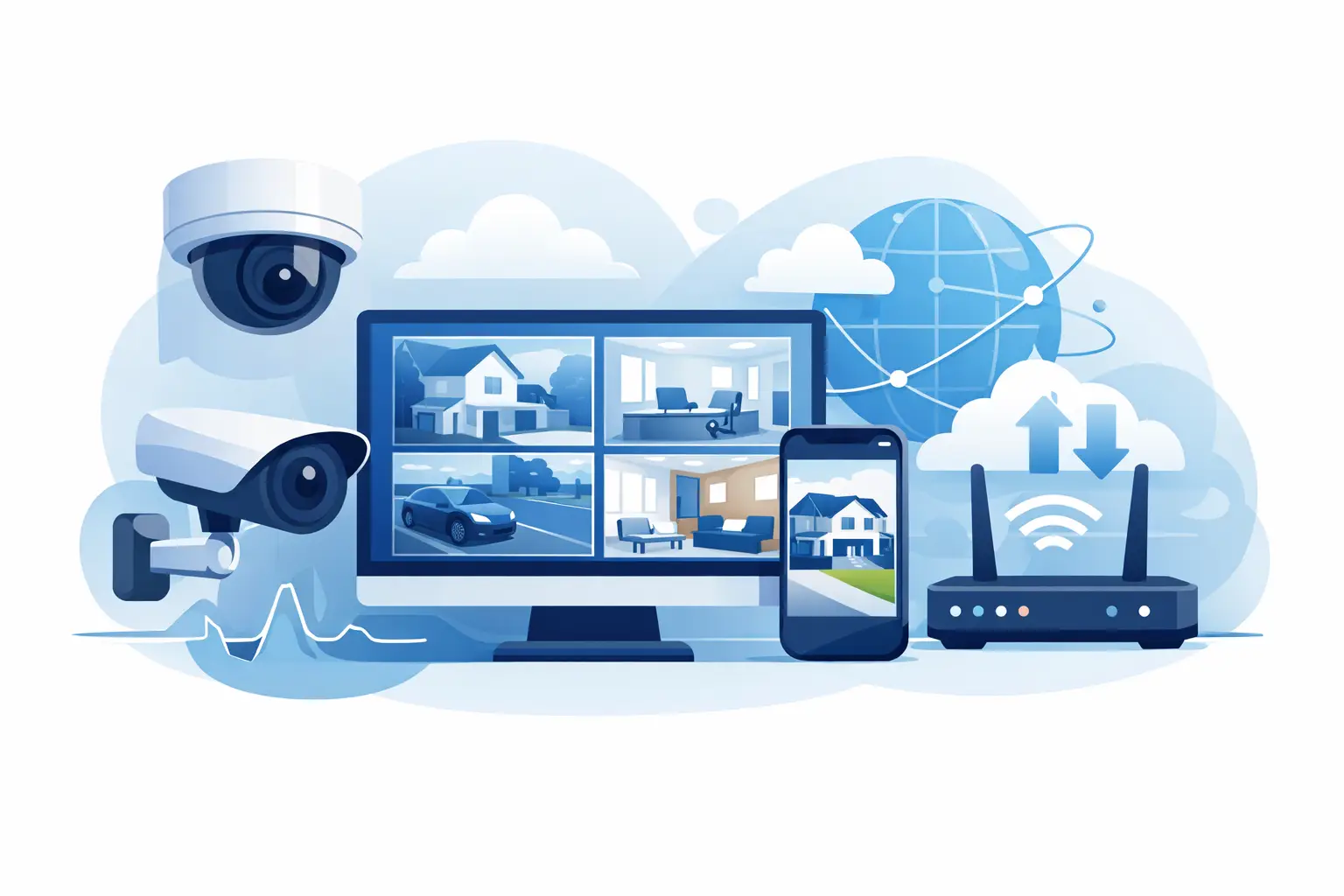
CCTV Internet Requirements for Reliable Viewing
Understand CCTV internet requirements for dependable remote viewing, clear footage and secure access at home, in flats, offices and managed buildings too.

Is CCTV Legal at Home in the UK?
Is CCTV legal at home UK? Yes, usually – but camera position, audio, neighbours and recorded footage all affect whether your setup stays lawful.

Ajax alarm app review for homes and businesses
Ajax alarm app review for UK homes and businesses. See how it handles alerts, user control, automation and daily use before you buy.

How to Reduce Blind Spots in CCTV
Learn how to reduce blind spots CCTV systems miss with better camera placement, lens choice, lighting and professional site surveys.