


Learn how to set CCTV motion zones correctly to cut false alerts, improve coverage and make sure your cameras catch the movement that matters.
Smart Home Security Installation Done Right

Most security problems start before anyone touches a cable. A camera goes up in the wrong place, a door entry panel is chosen for the wrong users, or a wireless alarm is fitted without thinking about the daily routine of the people who need to live or work with it. Smart home security installation is not just about adding devices. It is about making sure your property is covered where it matters, your entry points are controlled properly, and your system is simple enough to use every day without workarounds.
That matters whether you are protecting a family home, a rental property, a nursery entrance, or a small office with regular deliveries and staff movement. The right installation gives you deterrence, evidence, and control in your hand. The wrong one gives you blind spots, false confidence, and a system that gets ignored after the first few weeks.
What smart home security installation should actually achieve
A good system starts with outcomes, not product boxes. Most customers want three things. They want to know who is on the property, they want to control access without hassle, and they want a clear record if something happens.
That sounds straightforward, but each property has different demands. A detached house may need stronger perimeter awareness and driveway coverage. A block-managed entrance may need reliable visitor handling and multiple access credentials. A small business may need cameras that cover stock areas, staff entrances, and out-of-hours movement without creating confusion for authorised users.
This is why professional design matters. Camera positions, door entry layout, night-time lighting behaviour, app setup, recorder capacity, and user permissions all need to work as one system. If they do, the result feels simple. If they do not, the technology quickly becomes a nuisance.
The key parts of a modern smart home security installation
For most properties, installation falls into three core areas: CCTV, intruder protection, and access control. The best results come when they are specified together rather than treated as separate jobs.
CCTV that shows what happened, not just that something happened
There is a big difference between footage that is technically recorded and footage that is genuinely useful. Good CCTV design considers approach routes, face capture, vehicle movement, boundary lines, and how the scene changes after dark.
This is where newer surveillance systems make a real difference. Smart illumination and intrusion-triggered colour night coverage can provide clearer, more actionable images at the point an event occurs. That matters far more than headline claims on a spec sheet. If an incident happens at night, you need visibility that helps identify a person, clothing, or a vehicle movement pattern rather than a vague silhouette.
Placement matters just as much. A camera mounted too high may cover a large area but miss the detail needed for identification. A poorly positioned unit may be blocked by soffits, lighting glare, or vegetation within a few months. Professional installation accounts for all of that before the first fixings go in.
Smart alarms that fit the way the property is used
An alarm should be easy to set, easy to part-set where needed, and dependable when the property is empty. Wireless systems such as Ajax have become popular for a reason. They offer clean installation, strong app control, and flexibility in homes and businesses where running cables everywhere is not practical.
But even a good alarm platform can be badly specified. Sensor choice should reflect room use, pet movement, likely attack points, and how users enter and leave. A side door used daily by staff needs different thinking from a rarely used rear access in a private home. The aim is not to fit the maximum number of detectors. The aim is to protect the real risk points without creating avoidable false alarms.
Door entry and access control for everyday accountability
Many properties now need more than a bell push and an audio handset. Video door entry gives instant visibility and better control over who is requesting access, whether you are on site or checking remotely.
For multi-occupancy and managed environments, IP video door entry systems such as Dahua can be particularly effective because they support multiple credentials, including keypad, card, and fob access, with POE-connected indoor monitors that keep installation tidy and reliable. In practical terms, that means residents, staff, or authorised visitors can move through the building in a controlled way, while managers keep a clearer record of how access is being handled.
In a domestic setting, the same principle still applies. Seeing who is at the gate or front door before granting entry adds reassurance and reduces guesswork, especially for households with children, older relatives, or frequent deliveries.
Why installation quality matters more than the kit itself
There is no shortage of smart security products on the market. The challenge is not finding equipment. It is choosing the right combination and installing it properly.
A professionally installed system should account for power, network stability, recording settings, app permissions, Wi-Fi limitations, cable routes, tamper risks, and future maintenance access. It should also be commissioned correctly. That means notifications tested, detection zones adjusted, image settings balanced, and every user shown how to operate the system confidently.
This is often where DIY and low-cost installs fall short. On paper, the devices look similar. In reality, poor positioning, rushed setup, weak networking, or no user training can leave the customer with a system that underperforms from day one.
For homes and businesses alike, after-sales support matters here as well. If an app changes, a resident changes, or the access requirements evolve, you need support that continues beyond the install date.
Smart home security installation for homes and small businesses
There is overlap between domestic and commercial security, but the priorities are not identical.
In a home, the priority is usually a balance of protection and simplicity. Customers want strong coverage without turning the house into a control room. They want to answer a door entry call, check a camera, or set the alarm in seconds. They also want reassurance that key areas such as front approach, rear access, and vulnerable side paths are properly protected.
In a small business, the system often needs to support procedure as well as protection. You may need controlled staff access, recorded visitor entry, stock area surveillance, and remote checks outside trading hours. Accountability becomes more important, and so does resilience. If the system is part of how you manage the building day to day, corners in design become expensive very quickly.
That is why a site survey is so valuable. It allows the installer to assess the property layout, identify blind spots and practical constraints, and recommend what genuinely fits instead of simply selling a standard package. For customers who want straightforward advice rather than upselling, that makes the buying decision much easier.
How to choose the right installer for smart home security installation
The first thing to look for is whether the installer talks about your property and your risks before they talk about products. A good company will ask how the building is used, who needs access, what concerns you most, and what level of control you want from your phone or monitor.
The second is technical credibility without jargon for the sake of it. You should hear clear reasoning about camera angles, intrusion lines, door entry credentials, POE, recorder sizing, and night performance, but explained in plain language. You are not paying for buzzwords. You are paying for a system that works when needed.
The third is support. Security is not a one-off purchase. Users change, routines change, and sometimes a system needs adjustment once it has been lived with for a few weeks. An installer with a consultative approach and proper after-sales care will protect your investment far better than a contractor focused only on completion day.
This is where experience counts. A company that has spent years fitting security across homes, offices, flats, nurseries, and shared buildings is more likely to spot the details that affect day-to-day performance. NRI Security takes that approach seriously, with free site surveys, no-obligation quotations, and guidance built around the right-fit system rather than the biggest quote.
The best result is control you do not have to think about
The strongest security systems are not the ones with the longest feature list. They are the ones that quietly do their job, give you clear visibility, and make decisions easier when something needs attention.
If you are planning smart home security installation, think beyond the devices. Think about sightlines, access routines, night coverage, user habits, and support after handover. When the design is right and the installation is done properly, security stops feeling complicated and starts feeling dependable.

A Maintenance Plan for CCTV Cameras That Works
A maintenance plan for CCTV cameras keeps footage clear, alerts reliable and your property protected through every season, without unnecessary call-outs.

Business Access Control Guide for Safer Sites
A practical business access control guide for offices, flats and managed sites. Learn what to choose, how systems work and what really matters.

Where Should CCTV Cameras Go?
Learn how to choose CCTV camera placement for homes and businesses, with practical advice on entrances, blind spots, lighting and privacy.

A Case Study: Access Control for a Nursery
See how a nursery can control visitor entry, protect children and simplify daily arrivals with a professionally planned access control system on site daily.

Professional CCTV Installer Benefits
See the professional CCTV installer benefits that matter most – better coverage, cleaner setup, reliable recording and support after install.

What CCTV Cameras Need Internet?
What CCTV cameras need internet? Learn which systems work offline, when internet helps, and how to choose the right setup for home or business.

NVR vs DVR CCTV Recorders: Which Is Best?
Compare NVR vs DVR CCTV recorders for homes and businesses. Learn how cameras, cabling, remote viewing, costs and image quality shape the right choice.
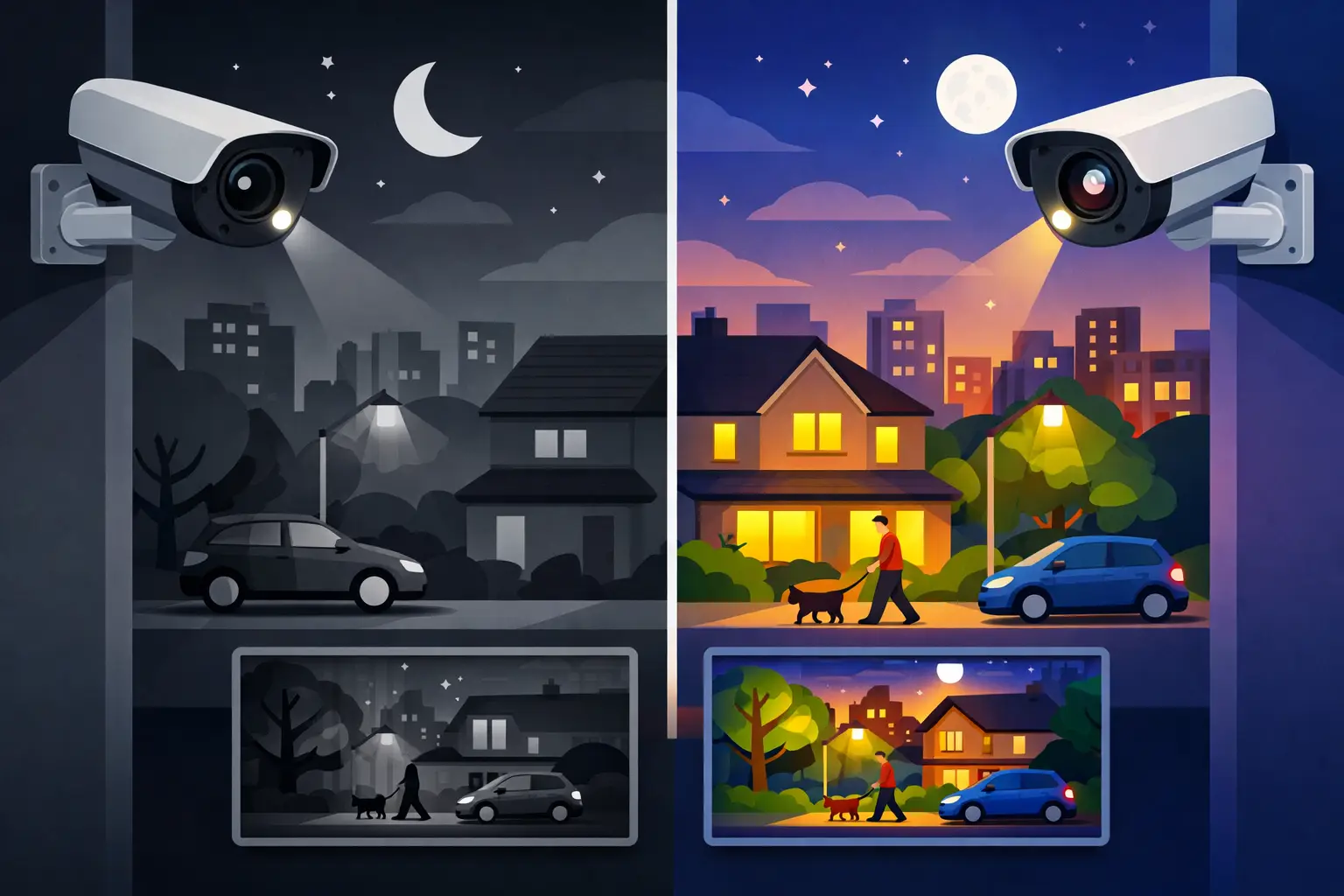
What Is Full Colour Night CCTV and How It Works
Understand what is full colour night CCTV, how it records useful colour after dark, and why camera placement and lighting still matter on every site.

Wireless Alarm Reliability: What Really Matters
Wireless alarm reliability depends on design, signal strength, power and support. See what a professional installation checks before an alarm is needed.

Smart Illumination Security Cameras Explained
Learn how smart illumination security cameras improve night-time visibility, deter intruders and give homes and businesses clearer evidence.

Best Access Control Options for Landlords
Compare the best access control options for landlords, from fobs to IP video entry, and choose a secure, manageable system for every property with ease.