


Use this guide to wireless alarm installation to plan reliable protection, smart device placement, app control and ongoing support for your property today.
What Is Full Colour Night CCTV and How It Works
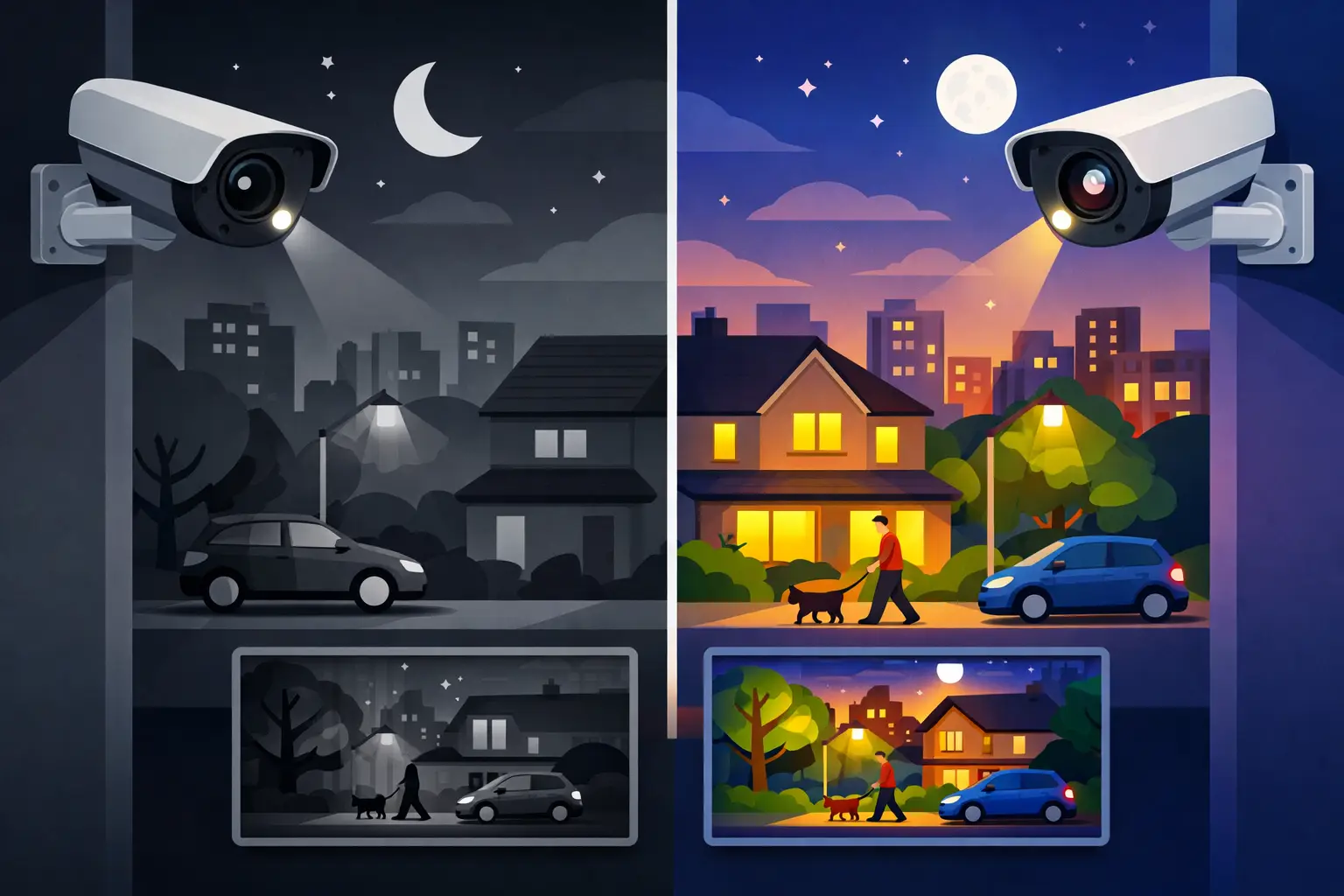
A figure at the gate, the colour of a vehicle, or the direction someone left can be the detail that turns a night-time recording into useful evidence. That is the practical answer to what is full colour night CCTV: a camera system designed to keep recording in colour after dark, rather than switching immediately to the familiar black-and-white infrared image.
For a homeowner, landlord or business manager, the benefit is not simply a brighter picture. It is better identification when an incident takes place. Full colour night CCTV can help distinguish clothing, vehicles, signage and other details that may be difficult to interpret in monochrome footage. However, it is not a magic setting that works equally well in every location. The camera choice, available light, viewing angle and professional installation all determine whether the system delivers footage you can rely on.
What is full colour night CCTV?
Full colour night CCTV uses highly light-sensitive camera sensors, wide-aperture lenses and, where required, built-in white-light illumination to capture a colour image in low-light conditions. Conventional CCTV cameras often use infrared LEDs after dark. Infrared produces a usable black-and-white image, but it cannot show actual colours because the scene is being lit with invisible infrared light.
A full colour camera works differently. It makes better use of low-level ambient light from street lighting, exterior lights, neighbouring buildings or moonlight. When there is not enough light to maintain colour, many models can activate a discreet white light. This illuminates the scene in visible light, allowing the camera to retain colour recording.
The result can be a clearer, more informative image at entrances, driveways, car parks, yards, communal areas and perimeter approaches. It is particularly valuable where you need to establish what happened, not merely confirm that someone was present.
Why colour footage matters after dark
Black-and-white infrared footage still has a place in security. It can cover dark areas without adding visible light, and it may be the right option for a secluded side passage or a long boundary with no nearby power for lighting. But monochrome images remove details that often matter when reviewing an event.
For example, colour footage may show whether a car was dark blue, red or silver; whether a person wore a high-visibility jacket or a distinctive coloured top; or whether packaging, tools or an object left at a doorway stood out from the background. These details can support identification and make footage easier to review quickly.
Visible white light can also act as a deterrent. If an intrusion-triggered camera or smart illumination activates when someone approaches a restricted area, it signals that the property is monitored. For many opportunist intruders, that moment of exposure is enough to make them leave.
That said, deterrence must be handled carefully. A light that comes on every time a fox crosses the garden, a customer walks past a shop front, or a vehicle passes the edge of a driveway soon becomes an annoyance. Correct detection zones and sensitivity settings are just as important as the camera itself.
How full colour cameras see in the dark
A good night-time image relies on a balance between light, lens and processing. Larger sensors and wide apertures allow more light to reach the camera. Advanced image processing then manages noise and preserves detail in darker parts of the frame.
Where ambient light is sufficient, the camera may remain in full colour without turning on any white LEDs. This is often ideal for front entrances, reception areas, forecourts and external spaces that already have controlled lighting. The picture looks natural and there is no additional glare or disturbance.
In darker locations, a camera may use one of two approaches. A dedicated full colour model can run with white-light assistance throughout the night. Alternatively, a smart dual-light camera can use infrared monitoring as its normal mode, then switch to white light and colour recording when it detects a person or vehicle. The second option can reduce unnecessary light while still providing colour at the critical moment.
Neither approach is automatically best. A business rear entrance with regular deliveries may benefit from consistent colour coverage. A residential side gate may be better suited to smart dual-light operation, provided the detection area is configured accurately.
Full colour CCTV versus infrared CCTV
The difference is not that one type records at night and the other does not. Both can provide night surveillance. The main difference is the information available in the image.
Infrared CCTV is often effective for monitoring movement in complete darkness. It is discreet because it does not visibly illuminate the area, although the LEDs may give off a faint red glow. Its limitations are black-and-white footage, possible reflection from close walls or rain, and loss of colour detail.
Full colour night CCTV provides greater context where there is enough light or where visible illumination is acceptable. It can improve evidence quality and create a more natural-looking image, but it may not suit every boundary, bedroom-facing window or quiet residential setting. The installer should assess both security performance and the effect on people nearby.
Where full colour night CCTV is most effective
Full colour technology is most useful at locations where recognition matters. At a front door, it can capture faces, clothing and deliveries more clearly. At a driveway, it can help identify vehicles and people approaching the property. Around office entrances, loading areas and car parks, it can provide valuable context when investigating unauthorised access, damage or disputes.
For flats, managed buildings and nurseries, cameras should be planned alongside access control rather than treated as separate systems. A Dahua IP video door entry system, for example, can manage who is requesting entry, while well-positioned CCTV records activity at the approach and communal entrance. This creates clearer accountability without making daily use complicated for residents, staff or visitors.
Perimeter coverage needs more thought. A camera looking across a large, unlit garden or yard may technically offer colour mode, but faces and number plates can still be too small or blurred to identify. It is usually better to cover the likely approach route with a correctly positioned camera than rely on one wide shot to do everything.
Installation details that decide the result
The specification on a camera box does not guarantee useful evidence. Poor positioning can leave a person backlit, a face obscured by a porch roof, or a number plate washed out by headlights. At night, these problems become more obvious.
Camera height is a common example. Mounting a camera too high may protect it from tampering, but it can leave you with the top of a hood or cap rather than a clear facial view. At entry points, the aim is generally to capture people at a useful angle as they approach, not simply to provide a broad overview of the area.
White-light positioning also matters. Lights aimed straight into reflective surfaces, pale walls or wet paving can create glare. Nearby vegetation can trigger motion alerts or reflect illumination back into the lens. A site survey should consider these practical factors before equipment is selected.
Recording settings deserve equal attention. Higher resolution is useful, but it must be supported by the right recording frame rate, storage capacity and network setup. A camera can produce a sharp live image while recording at settings that are too low to preserve movement clearly. For remote viewing, the system should also be set up so that authorised users can check live footage without weakening account security.
What full colour night CCTV cannot solve on its own
Full colour cameras improve visibility, but they cannot correct every challenge. Heavy rain, fog, dirty lenses, fast-moving subjects and severe backlighting can still reduce image quality. Number plate recognition is especially demanding because headlights, speed, angle and distance all affect the result.
Privacy must also be respected. Domestic cameras should be directed towards your own property wherever possible. Businesses and managed sites need clear justification for camera placement, appropriate signage, controlled access to recordings and sensible retention periods. A system designed for protection should not create unnecessary coverage of neighbours, public areas or staff spaces.
There is also a cost and maintenance consideration. White-light-enabled cameras may need more careful adjustment than basic infrared models, and any external camera needs periodic cleaning and checks. Cobwebs, insects and dirt around the lens or illumination can quickly compromise night footage. Professional support after installation helps keep the system working as intended rather than becoming something nobody checks until after an incident.
Choosing the right system for your property
Start with the risk you need to manage. Is the concern doorstep theft, access to a side gate, vandalism in a car park, unauthorised entry to an office, or safeguarding around a communal building? Each calls for a different camera position, lens choice and lighting approach.
A useful design normally combines overview cameras with focused identification points. The overview camera shows the wider event. The focused camera covers the entrance, gate or route where a face or vehicle can be captured properly. Smart intrusion lines and person or vehicle detection can then reduce nuisance notifications and bring relevant events to your attention quickly.
NRI Security approaches this as a site-specific decision, not an opportunity to sell the most cameras. A free survey and no-obligation quotation make it possible to assess existing lighting, likely approach routes, recording requirements and how you want to view footage day to day.
The most reassuring night CCTV system is not the one with the longest list of features. It is the one that gives you clear, usable coverage at the points that matter, with settings you understand and support available when you need it.
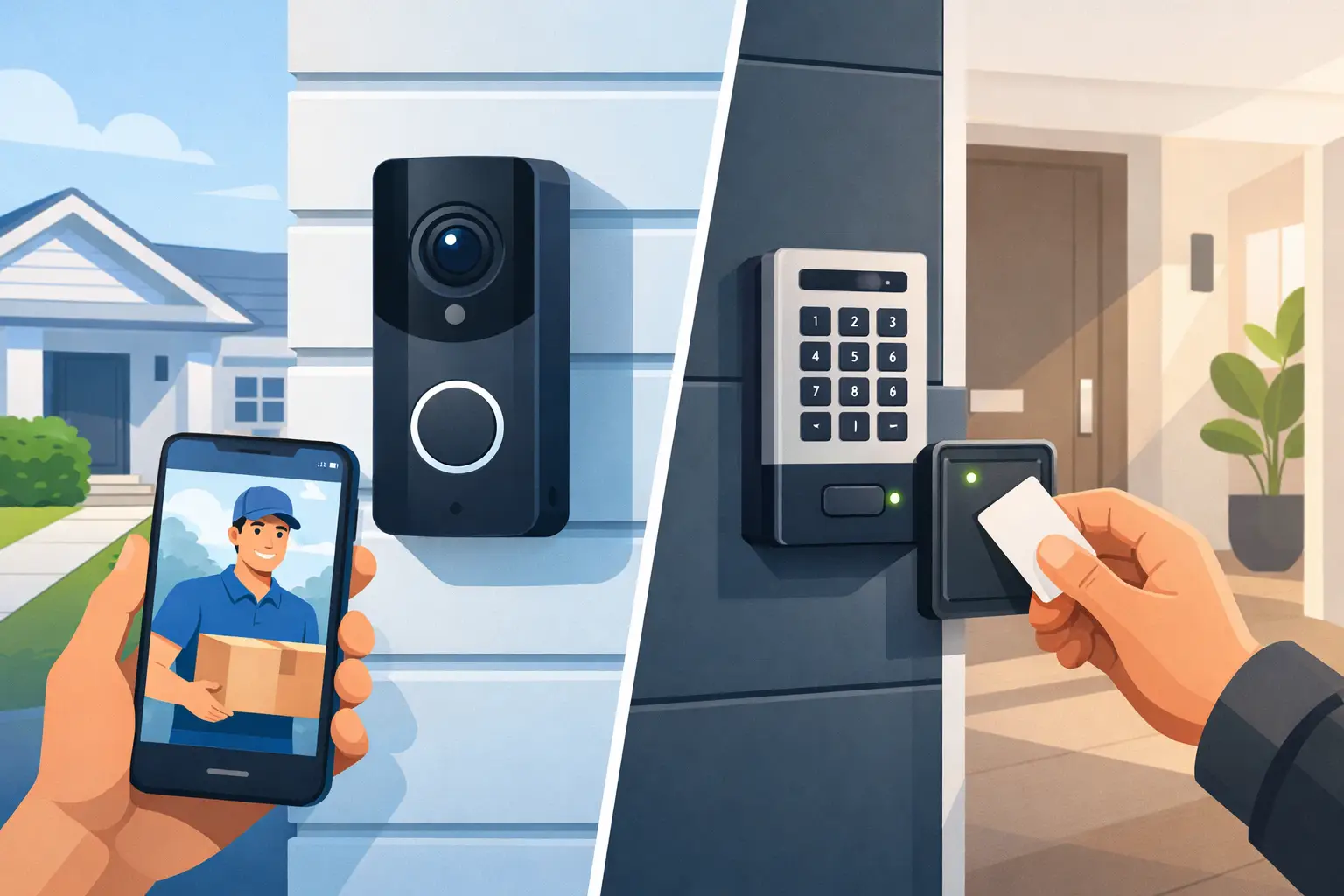
Video Doorbell vs Door Entry for Your Property
Compare video doorbell vs door entry systems for homes, flats and businesses. Choose practical access control, reliable visibility and support that lasts.

Cloud vs NVR CCTV Storage: Which Fits?
Compare cloud vs nvr cctv storage for homes and businesses. Learn the real trade-offs on cost, access, reliability and control.

Why Fully Insured Security Installers Matter
Choosing fully insured security installers protects your property, budget and liability while ensuring CCTV, alarms and access control are fitted properly.

NVR vs DVR CCTV Recorders: Which Is Best?
Compare NVR vs DVR CCTV recorders for homes and businesses. Learn how cameras, cabling, remote viewing, costs and image quality shape the right choice.

CCTV for Warehouses and Yards That Works
CCTV for warehouses and yards helps deter theft, protect stock and improve visibility with smart, professionally planned coverage day and night.

Ajax alarm app review for homes and businesses
Ajax alarm app review for UK homes and businesses. See how it handles alerts, user control, automation and daily use before you buy.

Where Should CCTV Cameras Go?
Learn how to choose CCTV camera placement for homes and businesses, with practical advice on entrances, blind spots, lighting and privacy.

Best Video Door Entry Monitors for UK Properties
Compare the best video door entry monitors for homes, flats and workplaces, with clear advice on screens, POE, access control and installation choices.

Smart Door Entry for Nurseries Safeguarding
Smart door entry for nurseries safeguarding helps control access, verify visitors and support staff with clear, reliable entry records and video.

Smart Lighting CCTV That Actually Helps at Night
Security cameras with smart lighting improve night footage, deter intruders, and cut false alerts. Learn what matters, placement tips, and trade-offs.

How to Secure Apartment Block Entrances
Learn how to secure apartment block entrances with smarter door entry, CCTV, lighting and layout choices that improve control and resident safety.