


The future of app controlled security brings clearer remote oversight, smarter alerts and safer entry – when systems are designed around real daily risks.
A Case Study: Access Control for a Nursery

The front door of a nursery is not simply an entrance. At busy drop-off and collection times, it is the point where children, parents, staff, contractors and unexpected visitors all meet. This case study of access control for a nursery shows how a properly specified door entry system can give staff control of that moment without making the setting feel unwelcoming.
The challenge is rarely just fitting a lock or adding a keypad. Nursery managers need to know who is asking to enter, communicate with them before releasing the door, keep a clear process for staff and maintain reliable access throughout a long working day. The right answer has to support safeguarding first, while remaining practical for parents and the people running the nursery.
The nursery access challenge
A typical nursery may have one main entrance, a reception area that is not always manned and a busy internal routine. Staff move between rooms, outdoor spaces and care duties. They cannot be expected to leave children unattended every time a visitor presses a bell.
At the same time, a simple shared key can create a weak point. Keys are easily copied, misplaced or passed on without a record. A door left on a latch during collections may seem convenient, but it removes the control that parents expect from a professional childcare environment.
In this representative case, the nursery required a system that would allow authorised staff to enter quickly, enable visitors to request access clearly and keep the final decision to open the door with the team inside. The solution also needed to suit a managed setting where different people require different levels of access.
Case study access control for a nursery: the brief
The starting point was a free site survey rather than a standard package. Door type, existing wiring routes, reception layout, gate position and the daily flow of people all affect the best design. A system that works well in an office can be frustrating or unsuitable at a nursery if the call point, monitor or locking arrangement is poorly positioned.
The nursery’s priorities were straightforward: staff needed to see and speak to a caller before granting entry; authorised team members needed a quick way in; and the entrance had to remain secure if reception was temporarily empty. Management also wanted a solution that could be explained easily to new staff and supported after installation.
There were trade-offs to consider. A keypad is convenient, but a code can be shared. Cards and fobs make access simpler to issue and withdraw, but need to be managed when someone leaves. Video verification adds a valuable safeguarding layer, though the monitor needs to be located where staff can answer it without interrupting supervision. Good access control is about making sensible choices around those day-to-day realities.
The installed approach
A Dahua IP video door entry system provided the central control point. A visitor at the entrance uses the outdoor call station, allowing staff to receive a call on a 7-inch Android monitor connected via Power over Ethernet, commonly known as POE. The monitor provides live video and two-way audio, so staff can identify the person at the door and speak with them before releasing it.
This is a meaningful improvement on an audio-only buzzer. A parent who has arrived to collect a child may be familiar to staff, while a delivery driver, contractor or unfamiliar visitor can be dealt with according to the nursery’s visitor procedure. Staff do not have to make an entry decision based only on a voice or an opened door.
For regular authorised users, the system can support keypad codes, proximity cards or fobs. The suitable combination depends on the nursery’s staffing model. A small team may prefer fobs for all permanent staff, with a separate process for temporary workers. A larger setting may use cards or fobs by role, making it easier to remove access when employment ends or duties change.
The external door was connected to an appropriate locking arrangement and a safe internal exit method. This detail matters. An entrance must resist unauthorised access from outside without creating obstacles for people leaving the building safely. Equipment selection, cabling and door hardware should always be assessed together, rather than treating the intercom as a standalone product.
Why POE suited the site
POE allows network data and power to travel through a single cable to compatible equipment. For a nursery, this can reduce unnecessary power supplies around reception and support a clean, professional installation. It also gives the system a clear, maintainable structure, particularly where the call station and internal monitors need to work reliably every day.
That does not mean POE is automatically the right option for every property. Existing building construction, cable routes and the location of network equipment all need reviewing first. A site survey identifies whether a wired IP system is the best long-term choice or whether another configuration better suits the premises.
Day-to-day control without slowing the nursery down
The value of access control is seen in the ordinary moments. A staff member arriving for an early shift can use their assigned credential instead of waiting for someone else to unlock the building. A parent who has forgotten something can call at the door and be verified. A contractor can be admitted only after staff are ready to receive them.
During the busiest collection periods, the system allows the nursery to keep its entry process consistent. It does not replace staff judgement or safeguarding procedures, but it gives staff the information and control to apply them properly. The door stays closed until a member of the team chooses to release it.
Clear procedures remain essential. Credentials should not be shared, lost fobs should be reported quickly, and access should be removed as soon as a staff member leaves. Nursery managers should also decide who is authorised to release the door and how visitors are received once inside. The technology supports the process – it cannot create a process on its own.
Planning for safeguarding, not just convenience
A video door entry system can strengthen a wider safeguarding approach when it is installed as part of a considered plan. The external call point should be visible and at a usable height, while avoiding a position that exposes it to needless weather damage or tampering. Internal monitors should be accessible to responsible staff but not placed where children can interfere with them.
CCTV may also have a role around the entrance, depending on the site layout and the nursery’s policies. A well-positioned camera can provide coverage of the approach to the building, gate or perimeter, helping staff understand what is happening before a visitor reaches the door. However, CCTV and door entry serve different purposes. The door entry system controls the conversation and release of the lock; CCTV provides wider visual oversight.
If a nursery has an outdoor gate, separate staff entrance or shared building access, those points should be considered at the same time. Securing only the front door may leave an unmanaged route elsewhere. Equally, adding control to every possible door can be unnecessary and disruptive. The appropriate level depends on the building, risk assessment and how people actually move through the site.
Installation and support matter
The best equipment will not perform as intended if cabling is exposed, locks are incorrectly fitted or the system is not demonstrated properly to staff. A professional installation should include tidy cable routing, reliable door operation, testing of calls and release functions, and a clear handover for the people using the system.
At NRI Security, the approach begins with understanding the property and its daily operation, not pushing an oversized system. That means discussing the number of doors, staff access needs, visitor arrangements and any existing CCTV or alarm provision before providing a no-obligation quotation.
After installation, the nursery should know who to contact for support, how to report a lost credential and what to do if a monitor or door release does not behave as expected. Security equipment is relied upon every day, so after-sales support is part of the protection, not an optional extra.
A well-planned nursery entrance gives staff one less uncertainty during an already demanding day. When a caller appears on screen, the team can see, speak, decide and act – with the children’s safety kept where it belongs: under their control.

Where Should CCTV Cameras Go?
Learn how to choose CCTV camera placement for homes and businesses, with practical advice on entrances, blind spots, lighting and privacy.
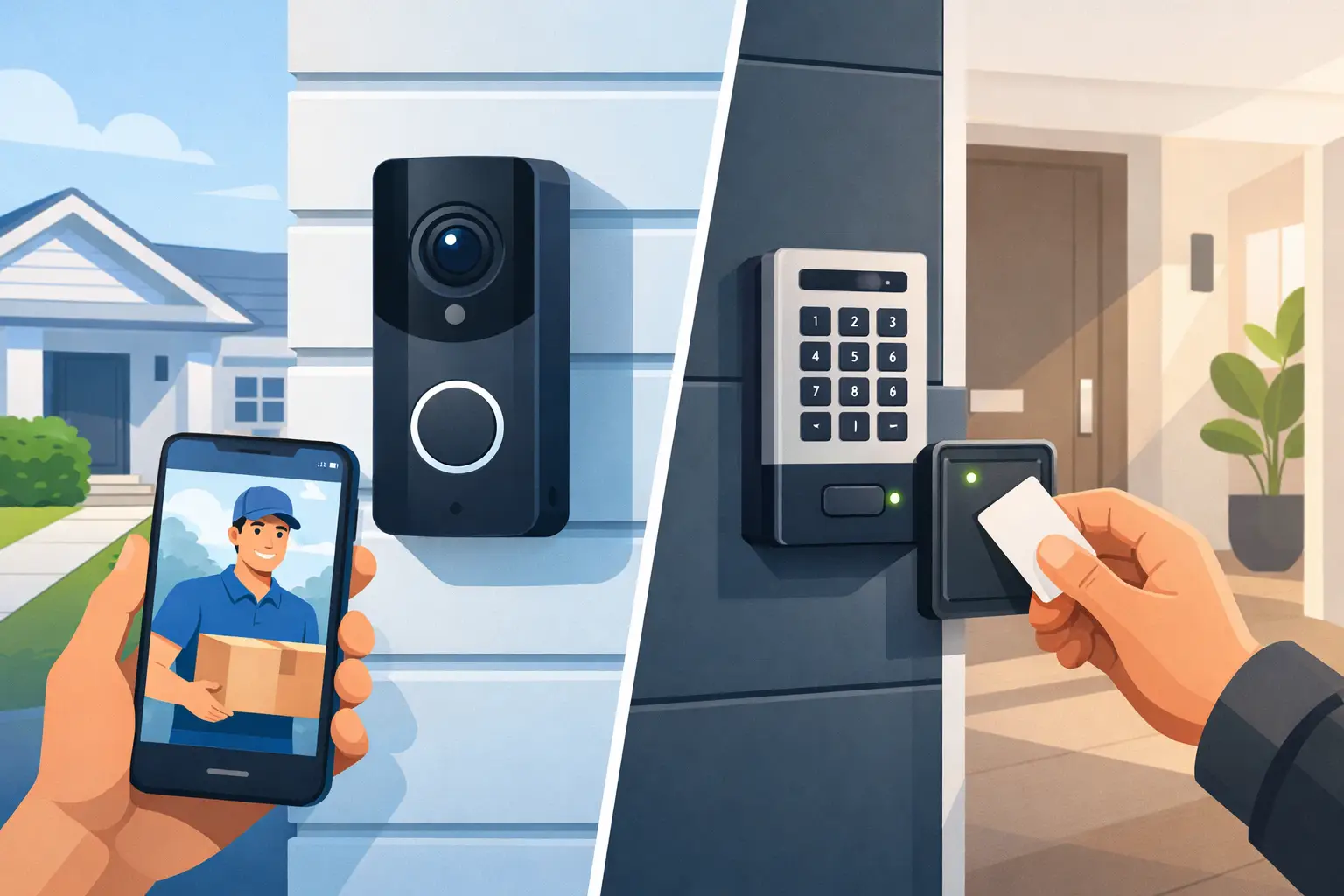
Video Doorbell vs Door Entry for Your Property
Compare video doorbell vs door entry systems for homes, flats and businesses. Choose practical access control, reliable visibility and support that lasts.

Intrusion Line Triggered CCTV: A Practical Guide
Intrusion line triggered cctv captures the moment someone crosses a boundary, improving night footage, alerts and evidence without constant false alarms.
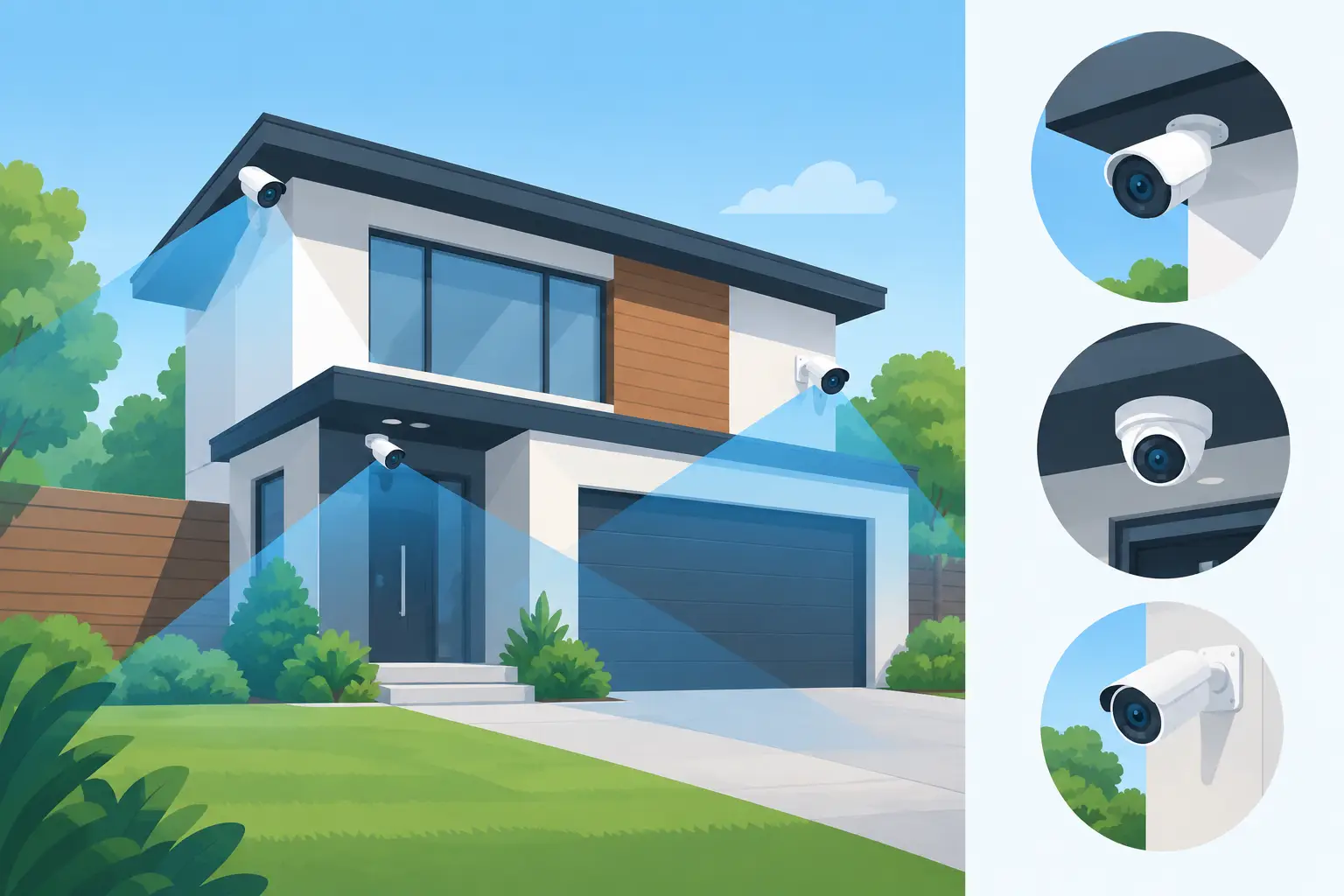
How to Position Security Cameras Properly
Learn how to position security cameras for clear evidence, safer access points and dependable night coverage at home or your business property every day.

Cloud vs NVR CCTV Storage: Which Fits?
Compare cloud vs nvr cctv storage for homes and businesses. Learn the real trade-offs on cost, access, reliability and control.

IP Video Door Entry Installation That Works First Time
Planning ip video door entry system installation? Learn what to specify, where installs fail, and how to get reliable entry control in GB properties.

How Many Cameras for Office Security?
Find out how many cameras for office security you really need, based on layout, risk points, blind spots, lighting and day-to-day use.

Video Door Entry for Safer Premises
Video door entry gives homeowners and businesses better control of visitors, access and accountability with clear, professionally installed systems.

Commercial CCTV That Fits the Job
Commercial CCTV should deter, identify and inform. Learn what to specify, where systems fail, and how to choose the right setup.

What CCTV Cameras Need Internet?
What CCTV cameras need internet? Learn which systems work offline, when internet helps, and how to choose the right setup for home or business.

Access Control for Small Business Office Use
Access control for small business office sites improves safety, accountability and day-to-day entry management without adding unnecessary complexity.