
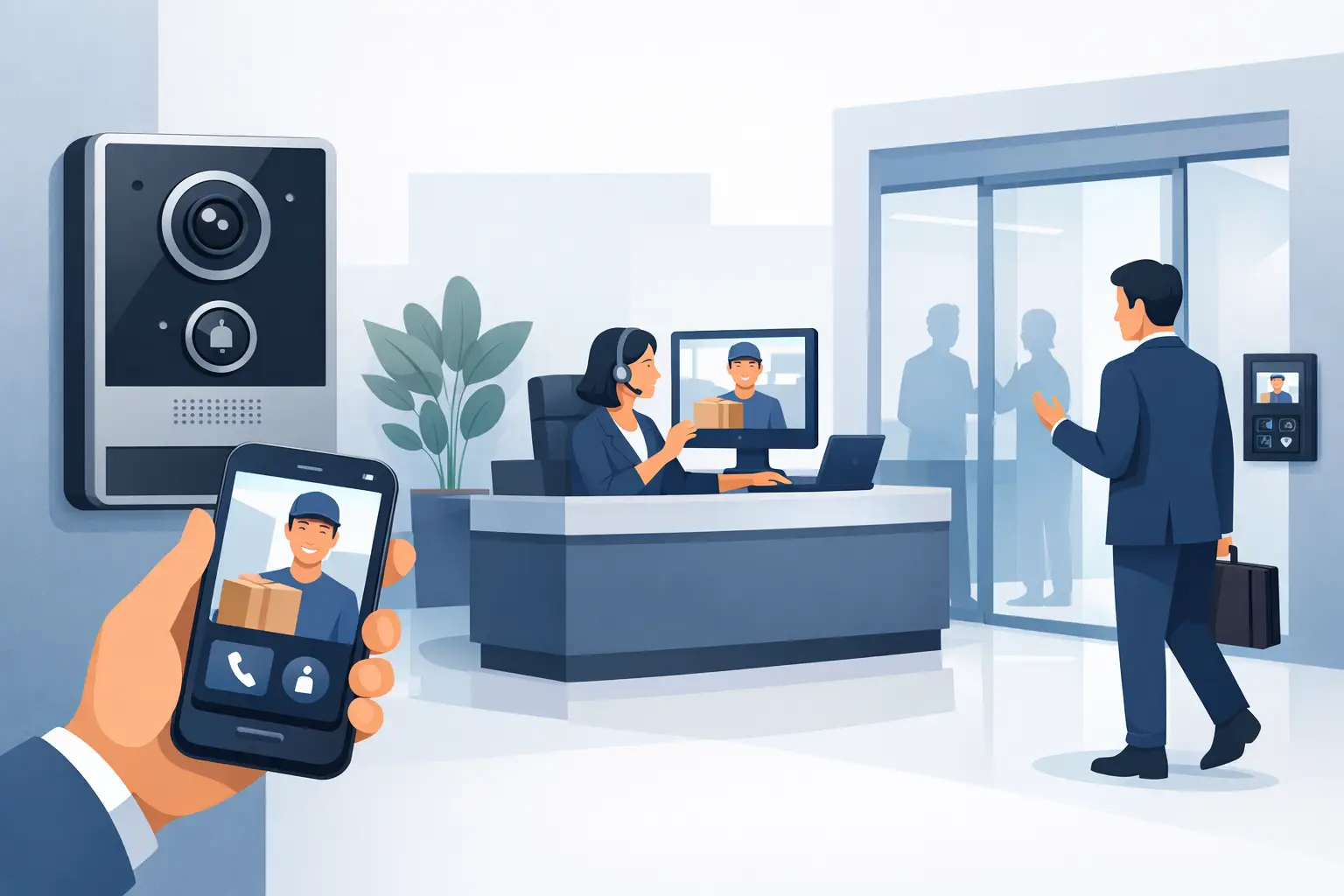


Video door entry for office reception gives staff controlled access, clear visitor checks and reliable records. Learn what the right system should include.
Business Access Control Guide for Safer Sites

The weak point in most buildings is not the lock on the door. It is the lack of control over who comes in, when they come in, and how that movement is recorded. A good business access control guide starts there. If you run an office, manage a block, oversee a nursery or look after a mixed-use property, access control is not just about entry. It is about accountability, safety and making daily access simple for the right people while putting a firm barrier in front of everyone else.
Too many businesses still rely on keys, ad hoc intercoms or a patchwork of older hardware that no longer suits how the site is used. That usually works until a key goes missing, a former staff member still has access, or deliveries and visitors begin arriving through doors that no one is properly watching. At that point, what looked cheap and familiar becomes a risk.
What a business access control guide should help you decide
The right system depends on the building, the people using it and the level of control you actually need. A single-door office with a small team needs something very different from a multi-occupancy entrance serving residents, staff, parents, contractors and visitors.
At its simplest, access control replaces a traditional key with managed credentials such as a code, card or fob. In more advanced setups, it becomes part of a wider security plan that includes video door entry, live monitoring, audit trails and remote management. That matters because access is rarely an isolated issue. Entry points, CCTV coverage, lighting and intrusion response all work better when they are planned together.
For many business owners and site managers, the real value is day-to-day control. You can issue credentials without cutting keys, remove permissions quickly, and keep access rules aligned with working hours, staff roles and tenancy changes. In regulated or sensitive environments, that level of control is often the difference between a system that merely opens doors and one that actively protects the site.
Business access control guide: start with the building
Before choosing hardware, look at how the building functions. Who needs access? At what times? Through which doors? How are visitors handled? Where do deliveries arrive? Which entrances need verification before release?
A front entrance for a nursery, for example, must balance safeguarding with smooth entry for authorised staff and parents. A block of flats may need resident access, visitor call points and dependable internal monitoring. An office building often needs staff credentials, controlled shared areas and a clear record of entry events. These are different use cases, and trying to fit them into a one-size-fits-all system usually creates friction.
This is why site surveys matter. Good access control is designed around the property rather than sold off a shelf. Door construction, cable routes, power availability, network layout and user numbers all affect the final specification. A system that looks right on paper can become awkward or unreliable if those practical details are ignored.
Choosing between keypad, card, fob and video door entry
Most businesses are choosing from a few core methods of access, and each has strengths and trade-offs.
A keypad is straightforward and cost-effective. It can work well for smaller teams or lower-risk internal areas, but codes can be shared, forgotten or left unchanged for too long. It is convenient, though it is rarely the best standalone choice where accountability is a priority.
Card and fob systems give tighter control. Individual credentials can be issued and withdrawn quickly, which is especially useful for staff changes, tenant turnover or temporary contractors. If someone loses a fob, you do not need to change the whole lock. You simply remove that credential and issue another. For many managed buildings, this is a more practical and secure route than physical keys.
Video door entry adds another layer. Instead of simply allowing access, it helps you verify the caller before release. For offices, flats and nurseries, this can be a major improvement because staff or residents can see who is requesting entry rather than relying on voice-only confirmation or blind trust. Modern Dahua IP video door entry systems are particularly well suited to these environments because they support multiple credential options while also giving visual verification at the point of access.
Where internal convenience matters, POE-connected 7-inch Android monitors can make daily use much easier. They provide a clear, stable point for communication and release without the disruption of separate power arrangements at each monitor location. In the right property, that keeps the setup cleaner and more reliable.
Why integration matters more than many buyers expect
An access control door that works on its own is useful. An access control system that works with CCTV is far better.
When entry events can be matched with video footage, you move from assumption to evidence. If there is a dispute, a safeguarding concern or an out-of-hours entry, you can review what actually happened. That is particularly important in shared entrances, managed sites and any premises where multiple people may be moving through the same access point across the day.
Lighting also plays a part. If an entrance is poorly lit, identification becomes weaker precisely when you need it most. A well-planned security setup considers camera position, smart illumination and the quality of night-time coverage so that access events remain useful after dark. This is one of the reasons consultative installation has real value. The door hardware may be only one piece of the answer.
Common mistakes when buying access control
The first mistake is buying for price alone. Low-cost equipment can look appealing, but if it is unreliable, difficult to manage or badly suited to the building, you pay for it later in service issues, user frustration and weak security.
The second is under-specifying the system. Many sites start with one entrance in mind, then realise they also need side access, internal doors or better visitor management. It is often wiser to choose a system that can scale rather than one that forces a full replacement when the property’s needs change.
The third is ignoring usability. If a system is awkward, staff will work around it. Doors get propped open, codes get shared and procedures get bypassed. Security has to be practical or it will be undermined by everyday behaviour.
The fourth is treating installation as a one-off transaction. Access control is part of the site’s daily operation. You need a system that is specified properly, installed neatly and supported after handover. When credentials need changing or settings need adjusting, responsive after-sales support is not a luxury. It is part of what keeps the system useful.
What to expect from a professional installation
A proper installation should begin with questions, not pressure. A good installer will want to understand the property, traffic flow, risk points and operational needs before recommending equipment. That protects you from ending up with a system that is either too limited or more complex than necessary.
You should also expect clear advice on credentials, door hardware compatibility, monitor locations, network requirements and how the system will be used in practice. In multi-occupancy and managed sites, that means considering both security and convenience. Residents, staff and visitors all need to be able to use the system without confusion.
Neat cabling, reliable configuration and a sensible handover are all part of the job. So is support after installation. If you are trusting a company with site security, you should know they will still be there when you need adjustments, maintenance or guidance. That is one of the reasons many customers prefer a company such as NRI Security Ltd, where the process starts with a free site survey and no-obligation quotation, then continues with ongoing support rather than ending at the day of install.
How to know what is right for your site
If you manage a smaller office, a simple card or fob system may give you the control you need without overcomplicating daily use. If you run a nursery or oversee a residential block, IP video door entry is often the stronger option because visual verification is part of the requirement, not an extra. If the site already has CCTV or needs improved coverage, it makes sense to consider access control as part of a joined-up security design rather than as a standalone purchase.
The best choice is rarely the one with the longest feature list. It is the one that matches the way your building actually works, gives you confidence in who is coming and going, and remains easy to manage over time.
If you are weighing up your options, focus less on the box of hardware and more on the outcome. You want controlled entry, clear accountability and a system your staff or residents will actually use properly. Get that right, and the door does more than open and close. It becomes a point of control you can rely on every day.

Office CCTV that actually helps on a bad day
Commercial cctv installation for offices: learn what to specify, where to place cameras, and how to get usable evidence plus safe access control.

CCTV Installation for Small Retail Shops
CCTV installation for small retail shops helps deter theft, protect staff and improve visibility. Get the right system, layout and support.

Best Video Door Entry Monitors for UK Properties
Compare the best video door entry monitors for homes, flats and workplaces, with clear advice on screens, POE, access control and installation choices.

Secure Remote Access to CCTV Explained
Secure remote access to CCTV gives you live viewing without opening your system to avoidable risk. Here’s how to set it up the right way.
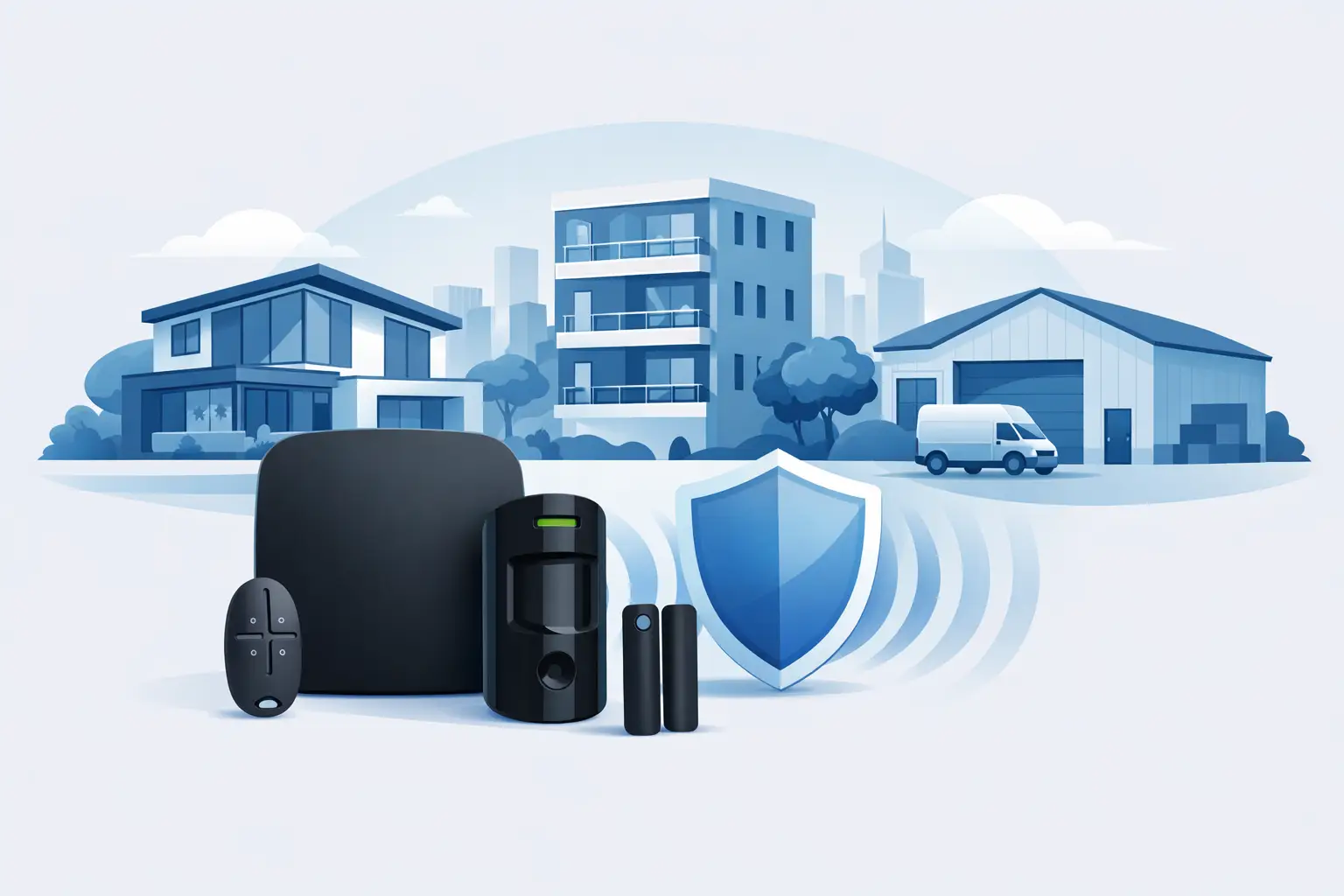
Ajax Alarms: Protection That Fits Your Property
Ajax alarms give homes and businesses reliable intrusion detection, instant alerts and simple control. See how professional design makes protection count.
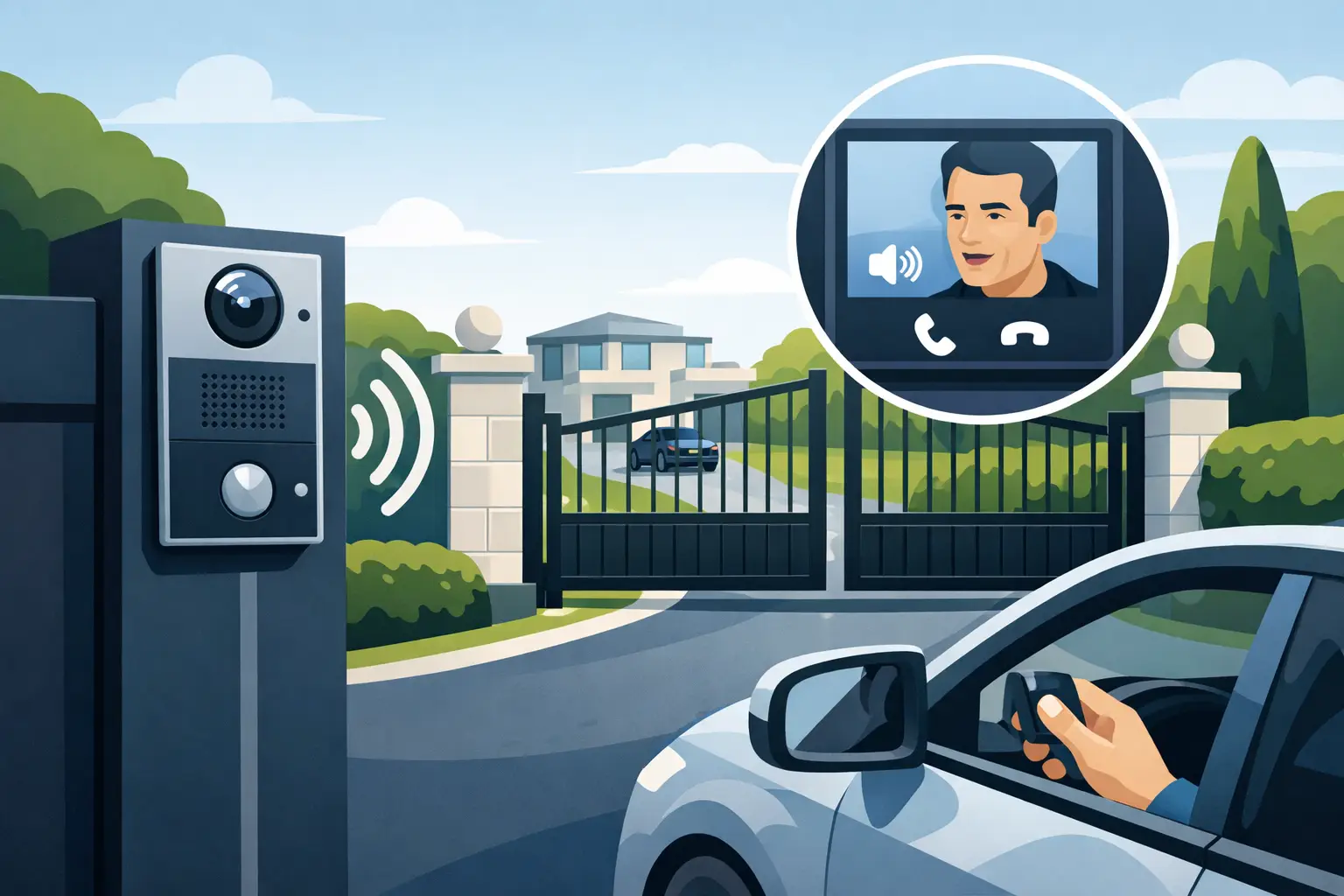
Gate Intercom System for a Private Driveway
Choose a gate intercom system for private driveway access with clear video, reliable calling and professional installation advice for lasting control daily

Perimeter Security Cameras for Rear Garden
Perimeter security cameras for rear garden spaces improve deterrence, colour night coverage and control with smarter placement and setup.

Choosing a Panic Button Alarm for Home Security
A panic button alarm for home gives you a fast way to raise an alarm. Learn where it helps, key features and why professional fitting adds confidence.

Monitored Alarm Versus Self Monitoring Compared
Monitored alarm versus self monitoring explained: compare response, cost and control to choose dependable protection for your home or business today.

Nursery Safeguarding Camera Placement Example
See a nursery safeguarding camera placement example that protects children, supports staff and respects privacy, with CCTV design advice for UK settings.

CCTV Recording Retention Period UK Explained
Understand the CCTV recording retention period UK organisations should set, balancing security evidence, storage capacity and UK data protection duties.