


A free cctv site survey shows what cameras you need, where they should go, and what it will cost. Avoid blind spots and overspend.
IP Intercom vs Analogue Intercom: Which Fits?
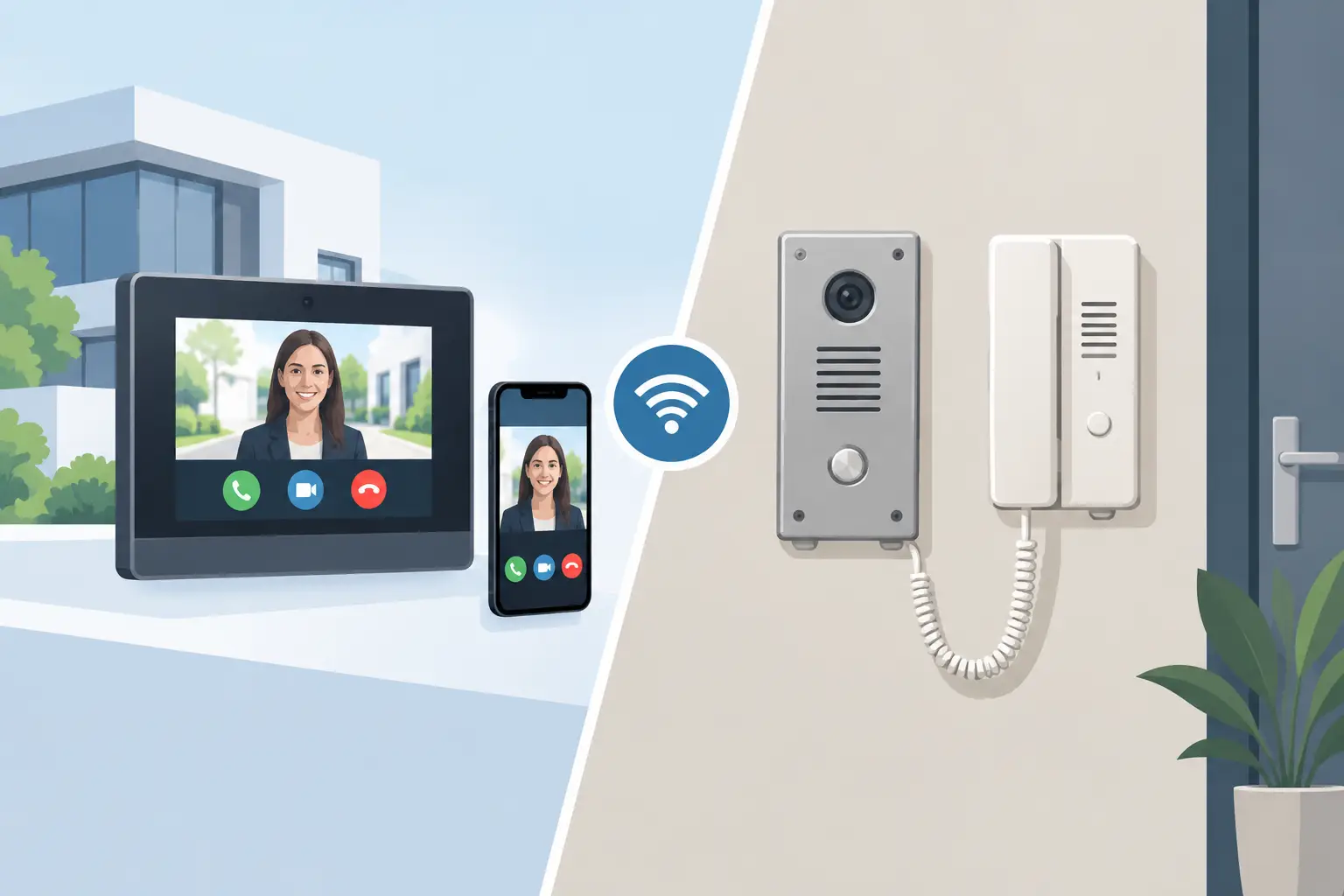
A door entry system is only useful when the person answering it can clearly see, hear and control who is at the entrance. The choice between an IP intercom vs analogue intercom affects far more than the handset or screen on the wall. It shapes how visitors are managed, how easily the system can grow, and what happens when a tenant, employee or delivery driver needs access.
For a single home with a straightforward gate, an analogue system can still be a sensible, dependable choice. For multi-occupancy blocks, offices, nurseries and sites where remote answering matters, IP door entry is usually the stronger long-term option. The right answer depends on the building, cabling, user needs and the level of control required – not on buying the most expensive equipment.
IP intercom vs analogue intercom: the core difference
An analogue intercom sends audio, video and door-release signals through dedicated low-voltage cabling. The system is generally self-contained: an external panel calls an internal handset or monitor, the occupant speaks to the visitor, then releases the door if appropriate. It is familiar technology, simple to use and well suited to smaller installations.
An IP intercom uses the building’s data network. The door station, internal monitors and, where required, access-control devices communicate across an Ethernet network. Many IP systems use Power over Ethernet, known as PoE, which allows one network cable to carry both power and data to compatible equipment.
That network connection changes what the system can do. An IP video door entry system can support high-resolution video, multiple internal monitors, mobile-device calling, credential-based access and central management across several entrances. It can also be integrated more naturally with wider security infrastructure, including CCTV and access control.
Neither approach is automatically right for every property. A well-installed analogue system is better than a poorly designed IP installation. The key is matching the system to the way people enter, work and live at the site.
Where analogue door entry still makes sense
Analogue intercoms remain a practical choice where requirements are uncomplicated. A homeowner may only need to speak to visitors at a front gate and release an electric lock from one or two handsets indoors. A small office with one entrance and stable occupancy may have similar needs.
The main advantage is simplicity. There is no dependence on the wider computer network for everyday operation, and users are often already comfortable with a conventional handset or basic video monitor. If suitable existing cabling is in place, an analogue replacement may also reduce installation disruption and initial cost.
There are limits, however. Expanding an analogue system can mean running additional cables and working around the capacity of the original control equipment. Remote answering is less straightforward, image quality may be lower, and managing a large number of users can become time-consuming. In a block of flats or a busy commercial building, those constraints soon matter.
Analogue equipment can also be the sensible route where the priority is replacing a failed legacy system without major building works. That decision should be made after checking the cable condition, lock operation, power supplies and the availability of suitable replacement equipment. Retaining old wiring is only a saving if it remains reliable.
Why IP intercoms give more control
IP intercoms are designed for properties where access needs to be visible, flexible and easier to manage. A Dahua IP video door entry system, for example, can combine an external video panel with PoE-connected 7-inch Android monitors, giving occupants a clear view of visitors before they release the door.
For homeowners, the benefit is reassurance. A visitor can be identified at the gate or front door rather than relying on voice alone. For businesses, it creates a clearer record of who is requesting entry and lets authorised staff respond from suitable points around the premises.
IP systems are particularly useful in shared or managed buildings because they can support different ways of granting access. Depending on the design, users may enter by keypad, card, fob or approved mobile credentials. That is valuable when staff change, residents move, or a lost fob needs to be removed quickly without changing every lock.
Remote access is another genuine advantage, but it needs to be configured correctly. Calling an approved smartphone can help a homeowner answer a delivery at the gate or allow a facilities manager to deal with a visitor when away from reception. It should never mean that every user has unrestricted access to every door. Permissions, user accounts and release settings need to reflect the building’s actual security policy.
Wiring, network capacity and power
The practical installation difference is often more important than the feature list. An analogue system may use dedicated multi-core cable between the entrance panel, handsets, power supply and lock. An IP system normally relies on structured network cabling, switches and PoE where appropriate.
If a property already has good-quality Cat5e or Cat6 cabling and a suitable network location, IP door entry can be efficient to install. One cable to a PoE door station is neat and can reduce the need for local power at the entrance. But the network must be planned properly. A busy office network, for example, may need appropriate switch capacity, protected equipment and sensible separation of security devices from general user traffic.
Power planning also deserves attention. The intercom itself may receive PoE, while an electric strike, maglock, gate controller or emergency release arrangement has its own requirements. The lock type, door condition, fire safety obligations and escape route must all be assessed before equipment is specified. Door entry is not simply a screen and a button – it is part of the building’s access and life-safety arrangement.
For external entrances, the panel position matters too. Camera height, lighting, weather exposure, visitor approach and the ability to read keypads all affect day-to-day performance. A site survey helps prevent common problems such as a camera facing low sun, a call button placed beyond reach, or a lock that does not release consistently.
Costs: look beyond the first invoice
Analogue equipment may carry a lower upfront price for a small, fixed installation. If only one entrance and one or two internal points are required, that can be entirely appropriate. It is also often quicker to understand for users who want a familiar, no-frills system.
An IP intercom usually costs more at the outset when network equipment, monitors, installation time and configuration are included. The value comes from flexibility. Adding another monitor, managing credentials, covering a second entrance or extending the system to another part of the premises can be easier than rebuilding a dedicated analogue arrangement.
For landlords and facilities managers, the ongoing administration should be part of the comparison. Consider how easily users can be added or removed, whether the entrance can be answered from more than one location, and what support is available if a monitor, fob or network device fails. A cheaper system that creates repeated access problems is rarely the lower-cost option over its working life.
Choosing the right system for your property
Choose analogue door entry when the site is small, the access requirement is fixed, existing compatible cabling is in good order and remote management is not a priority. It remains a reliable solution for straightforward homes and small premises.
Choose IP door entry when you need video quality, more than one entrance or monitor, flexible credentials, remote answering, easier user management or a route to future expansion. It is often the stronger choice for blocks of flats, offices, nurseries and managed sites where accountability matters.
There are also middle-ground cases. A homeowner may want an IP video panel at the gate but only one internal monitor. A small business may start with a single entrance and later add staff fobs, CCTV coverage or a second door. A good system design allows for those likely changes without forcing unnecessary equipment into the first installation.
NRI Security approaches door entry as part of the wider protection of a property, not as a box to be fitted quickly. A free site survey and no-obligation quotation allow the entrance, cabling, lock requirements and user needs to be checked before a recommendation is made.
The most useful question is not whether IP is newer than analogue. It is whether the system will give the people responsible for the property clear, dependable control at the door – on an ordinary working day and when it matters most.

CCTV Installation for Small Retail Shops
CCTV installation for small retail shops helps deter theft, protect staff and improve visibility. Get the right system, layout and support.

A Case Study: Access Control for a Nursery
See how a nursery can control visitor entry, protect children and simplify daily arrivals with a professionally planned access control system on site daily.

Business Access Control Guide for Safer Sites
A practical business access control guide for offices, flats and managed sites. Learn what to choose, how systems work and what really matters.

Managed Building Entry Systems Explained
Managed building entry systems give flats, offices and nurseries tighter access control, clearer accountability and simpler day-to-day use.

Perimeter Security Cameras for Rear Garden
Perimeter security cameras for rear garden spaces improve deterrence, colour night coverage and control with smarter placement and setup.

Which CCTV Cameras Deter Burglars Best?
Find out which CCTV cameras deter burglars, where to place them and which features deliver clear evidence and control for homes and businesses every day.

How to Choose a Home CCTV Installer
Learn how to choose home CCTV installer with confidence. Compare surveys, support, system design and quotes before you commit.

Card Access Versus Mobile Access: Which Fits?
Compare card access versus mobile access for homes, flats and offices. See the security, cost and management factors shaping the right choice for all.

Access Control Installation for Apartment Blocks
Access control installation for apartment blocks improves entry security, resident safety and daily management with the right system design.
What Is Full Colour Night CCTV and How It Works
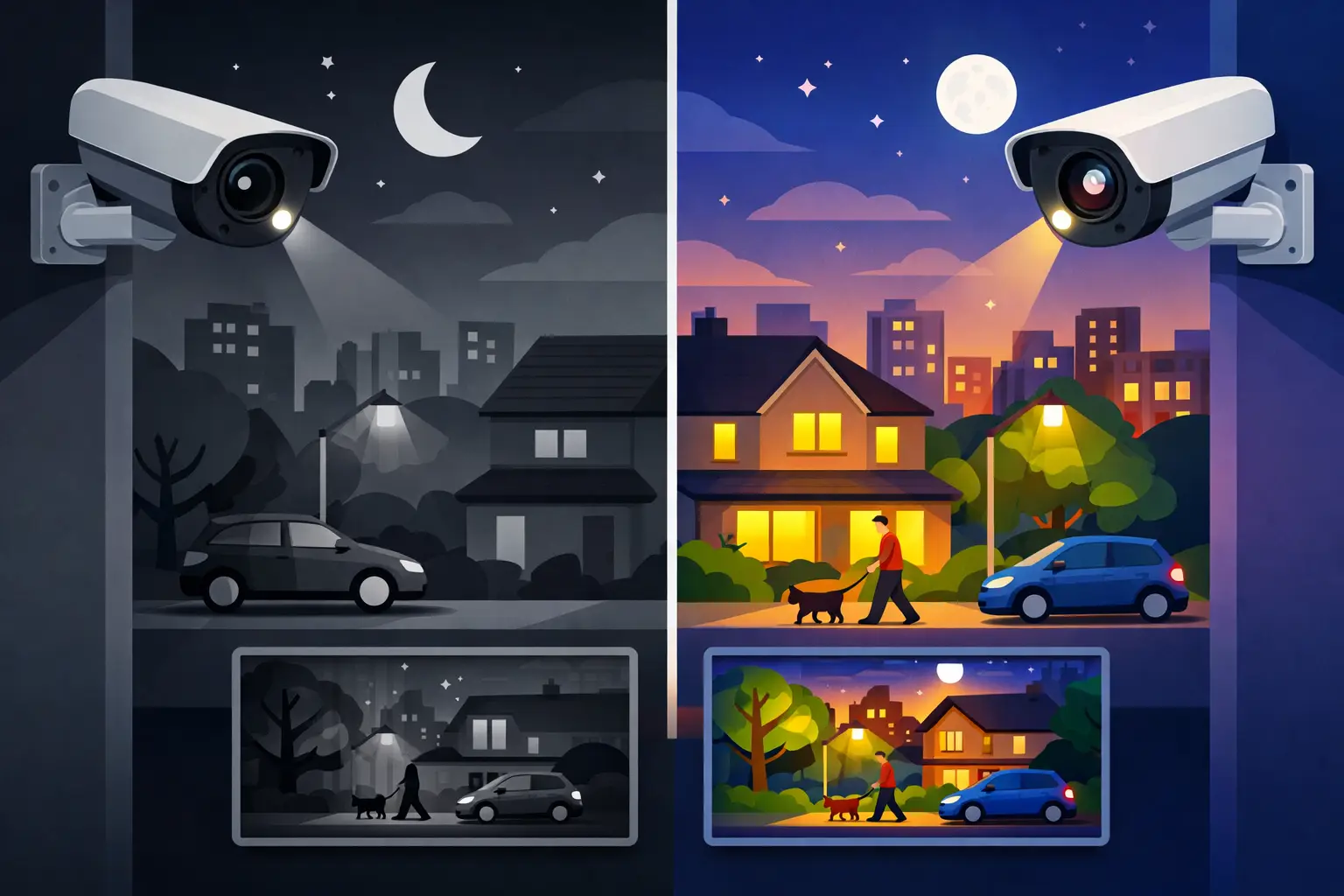
Understand what is full colour night CCTV, how it records useful colour after dark, and why camera placement and lighting still matter on every site.

Remote Monitoring Systems That Put You in Control
Remote monitoring systems give homeowners and businesses live visibility, faster alerts and practical control over CCTV, alarms and access points daily.