
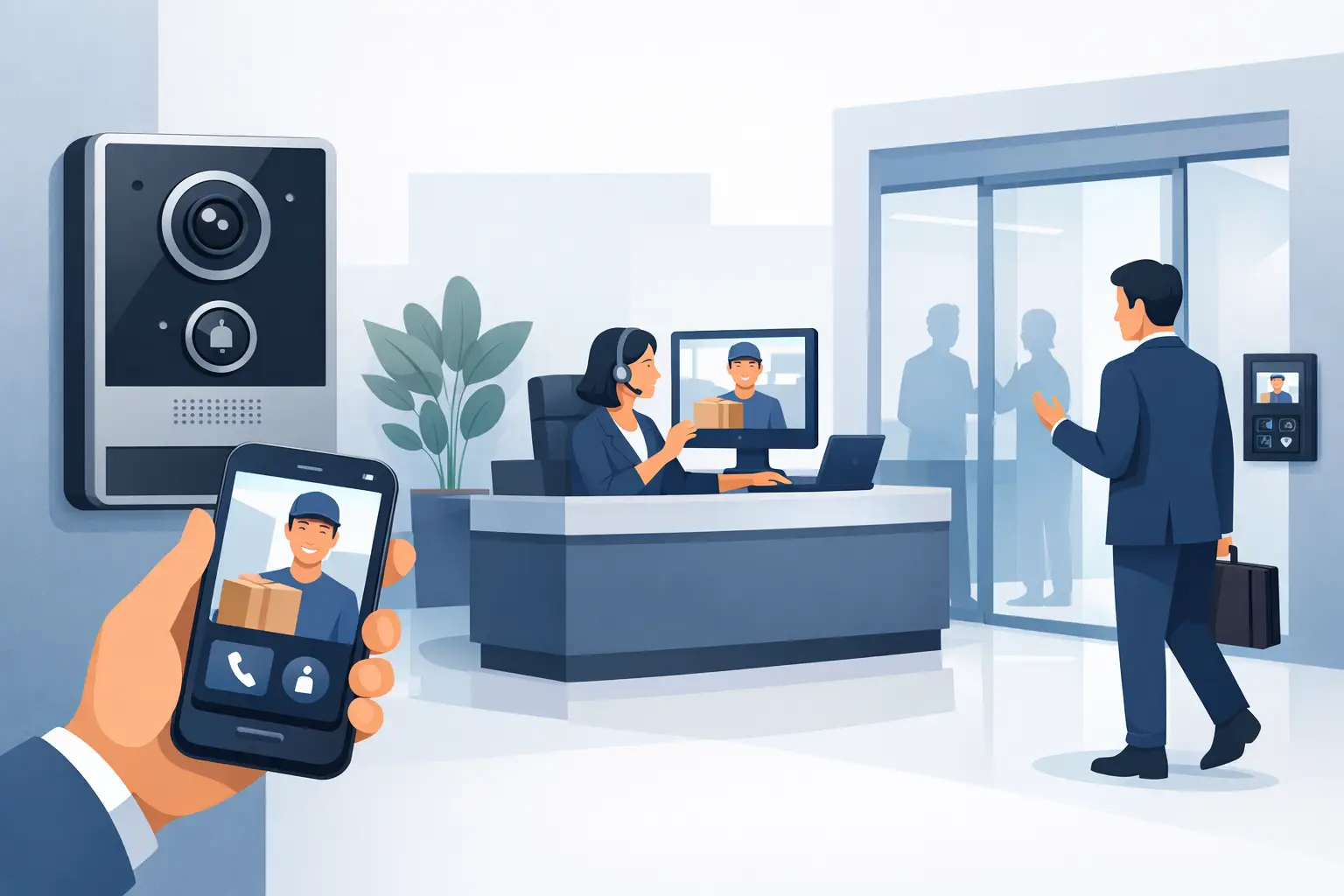


Video door entry for office reception gives staff controlled access, clear visitor checks and reliable records. Learn what the right system should include.
Monitored Alarm Versus Self Monitoring Compared

A security alert at 2.15am creates one immediate question: who is expected to act? That is the real difference in the monitored alarm versus self monitoring decision. Both can put alarm activity on your phone within seconds, but only one places responsibility for responding with a dedicated monitoring centre when you cannot pick up, are abroad, or simply do not know whether an alert is genuine.
For homeowners, landlords and business operators, the right choice is not always the system with the most features. It is the arrangement that gives you reliable protection without leaving a weak point in the response plan. A well-designed alarm, correctly installed and configured around the property, matters just as much as the method used to monitor it.
What a professionally monitored alarm does
A professionally monitored alarm communicates with an Alarm Receiving Centre, often called an ARC. When a detector, door contact, panic button or other device triggers, the system sends a signal to trained operators. They follow an agreed response procedure, which may include contacting nominated keyholders, checking alarm information, arranging a guard response where contracted, or escalating through the relevant channels.
The exact service depends on the provider and the level of monitoring selected. It is sensible to ask precisely what happens after an activation, who will be called first, and how quickly the centre is expected to act. A monitored connection is not a promise that police will attend every alarm. Police response has its own requirements, including system standards, maintenance and response arrangements. Clear expectations are far more useful than broad claims.
The major benefit is continuity. Your alarm remains watched even when you are in a meeting, asleep, driving, on holiday or unable to use your phone. For a small business, that can reduce the pressure on an owner or manager who would otherwise receive every out-of-hours activation. For a landlord managing several properties, it creates a clearer process than relying on one person to notice an app notification.
Professional monitoring also gives value when an incident is stressful. An alarm activation may be a false trigger, a delivery arriving early, a staff member entering at the wrong time, or a genuine attempted break-in. A trained operator working to an agreed plan brings order to those first important minutes.
Where monitoring makes the strongest case
Monitored alarms are particularly suitable for premises that are frequently empty, contain valuable equipment, or have several people with access. Offices, nurseries, managed blocks and shops often need a documented response process rather than an informal arrangement between staff members.
It is also worth considering for households where everyone travels regularly, works shifts or may not be able to attend quickly. A large detached home, an outbuilding, or a property with vulnerable occupants can justify the extra reassurance. The purpose is not to create unnecessary complexity. It is to make sure an alarm does not become an ignored notification at the wrong moment.
How self monitoring works in practice
Self monitoring uses an app, push notifications, calls or messages to place alerts directly in your hands. Modern wireless alarm systems can show the state of doors and windows, let you set or unset areas remotely, and notify selected users when an intrusion line activates. When paired with CCTV, you may be able to view the relevant camera immediately and decide whether there is a genuine concern.
This level of control is attractive. There is no need to wait for somebody else to tell you what has happened, and ongoing costs can be lower than a fully monitored arrangement. For an occupied family home or a small office with attentive owners nearby, it can be a practical and effective choice.
However, self monitoring is only as dependable as the people and connections behind it. Someone must receive the alert, understand what it means, access the cameras if available, and decide what to do next. That person also needs working mobile coverage, a charged phone and the confidence to act appropriately. If all nominated users are on a flight, at a wedding, asleep after a night shift, or looking after young children, the plan can quickly lose its strength.
Self monitoring should never mean confronting an intruder. If you see suspicious activity, remain safe, contact the police where appropriate and avoid entering a property alone. Cameras and alarm notifications provide valuable information, but they are not a reason to take personal risks.
The hidden work behind a self-monitored system
A self-monitored setup needs clear ownership. Decide who receives alerts, who holds keys, who can check the premises, and what should happen if the first contact does not respond. Businesses should review this when staff leave or change roles. Landlords should avoid making a tenant the only person able to manage an alarm at a communal or vacant property.
The technical setup also deserves attention. App permissions, notification settings, user codes, broadband reliability and backup communications all affect whether an alert reaches you. A professionally installed system can be configured with suitable zones, sensible entry and exit times, and reliable device placement to reduce false alarms. That protects the credibility of the system and makes each notification more meaningful.
Monitored alarm versus self monitoring: the real trade-offs
The choice usually comes down to responsibility, cost and the consequences of a missed alert. Self monitoring generally has a lower monthly commitment and gives direct day-to-day control. Professional monitoring adds an ongoing cost, but it provides a defined response when you are unavailable.
There is no single answer for every property. A homeowner who works locally, keeps a close eye on their property and wants app control may be well served by a self-monitored Ajax wireless alarm with carefully positioned detectors and camera coverage. A business with stock, multiple keyholders and periods of complete vacancy may benefit more from an ARC-backed service and a formal escalation plan.
Many properties sit between those two positions. A hybrid approach can be sensible: app access for owners and managers, CCTV verification where appropriate, plus professional monitoring for alarm activations. This gives users everyday visibility without making them the sole line of defence.
Do not judge the decision on subscription price alone. Consider the cost of an unanswered activation, disruption after a break-in, potential damage, lost trading time and the burden placed on staff or family members. Equally, do not pay for a monitoring package that does not match the actual risks at your site. The right system should be proportionate and clearly explained.
CCTV improves visibility, not the response plan
A quality CCTV installation can make either option stronger. Smart illumination and intrusion-triggered colour night coverage can provide clearer, more actionable images when movement is detected around a perimeter or entrance. Rather than trying to assess a grainy black-and-white image, an owner or monitoring process may have better information about what is happening.
That said, CCTV does not replace an alarm response plan. A camera can show a person at a gate, but it cannot guarantee that somebody will see the notification, identify the risk correctly or attend safely. The strongest security designs bring together detection, lighting, video coverage and a response procedure suited to the building.
For commercial properties, access control can add another useful layer. IP video door entry, keypad or fob credentials, and recorded entry events can help distinguish authorised access from a concern that needs attention. In shared buildings, this improves accountability while reducing the temptation to give out physical keys without control.
Questions to settle before choosing
Before deciding, be honest about how your property operates. Ask who will be responsible for alerts at night, at weekends and during holidays. Consider whether they can reach the building safely and quickly, and whether they have enough information to make a sound decision.
You should also check how the system communicates if broadband fails, whether it has battery backup during a power cut, and what maintenance is needed to keep it reliable. For commercial premises, establish who can add or remove users, test the alarm and update keyholder details. These details are not extras. They are what make a security system dependable after installation.
A free site survey is the right time to discuss these practical points. An experienced installer can assess entry routes, vulnerable areas, lighting conditions, existing CCTV coverage and the way people move through the building. They can then recommend whether self monitoring, professional monitoring or a blended arrangement fits the real risk rather than selling a one-size-fits-all package.
The best alarm decision is the one you can rely on at the least convenient moment. Choose a system with clear coverage, dependable communication and a response plan that does not depend on luck.

CCTV Compliance for Small Businesses Made Clear
CCTV compliance for small businesses explained: plan lawful coverage, clear signs, secure footage and staff awareness without buying more than you need.

Perimeter Security Cameras for Rear Garden
Perimeter security cameras for rear garden spaces improve deterrence, colour night coverage and control with smarter placement and setup.

CCTV vs Intruder Alarm: Which Do You Need?
CCTV vs intruder alarm – understand what each system does, where it works best, and when combining both gives stronger protection and control.

Security Site Survey Guide for Safer Installs
A practical security site survey guide for homes and businesses. Learn what installers assess, what affects cost, and how to plan smarter protection.

IP Video Door Entry Installation That Works First Time
Planning ip video door entry system installation? Learn what to specify, where installs fail, and how to get reliable entry control in GB properties.

How to Upgrade Outdated CCTV System
Learn how to upgrade outdated CCTV system setups with better image quality, remote access, smart alerts and reliable coverage that works.

Best Video Door Entry Monitors for UK Properties
Compare the best video door entry monitors for homes, flats and workplaces, with clear advice on screens, POE, access control and installation choices.

Business Access Control Guide for Safer Sites
A practical business access control guide for offices, flats and managed sites. Learn what to choose, how systems work and what really matters.

Access Control for Small Business Office Use
Access control for small business office sites improves safety, accountability and day-to-day entry management without adding unnecessary complexity.

Do I Need Signs for CCTV in the UK?
Do I need signs for CCTV in the UK? Learn when CCTV signs are required, when they help, and how to stay compliant at home or work.

Access Control Installation for Apartment Blocks
Access control installation for apartment blocks improves entry security, resident safety and daily management with the right system design.