
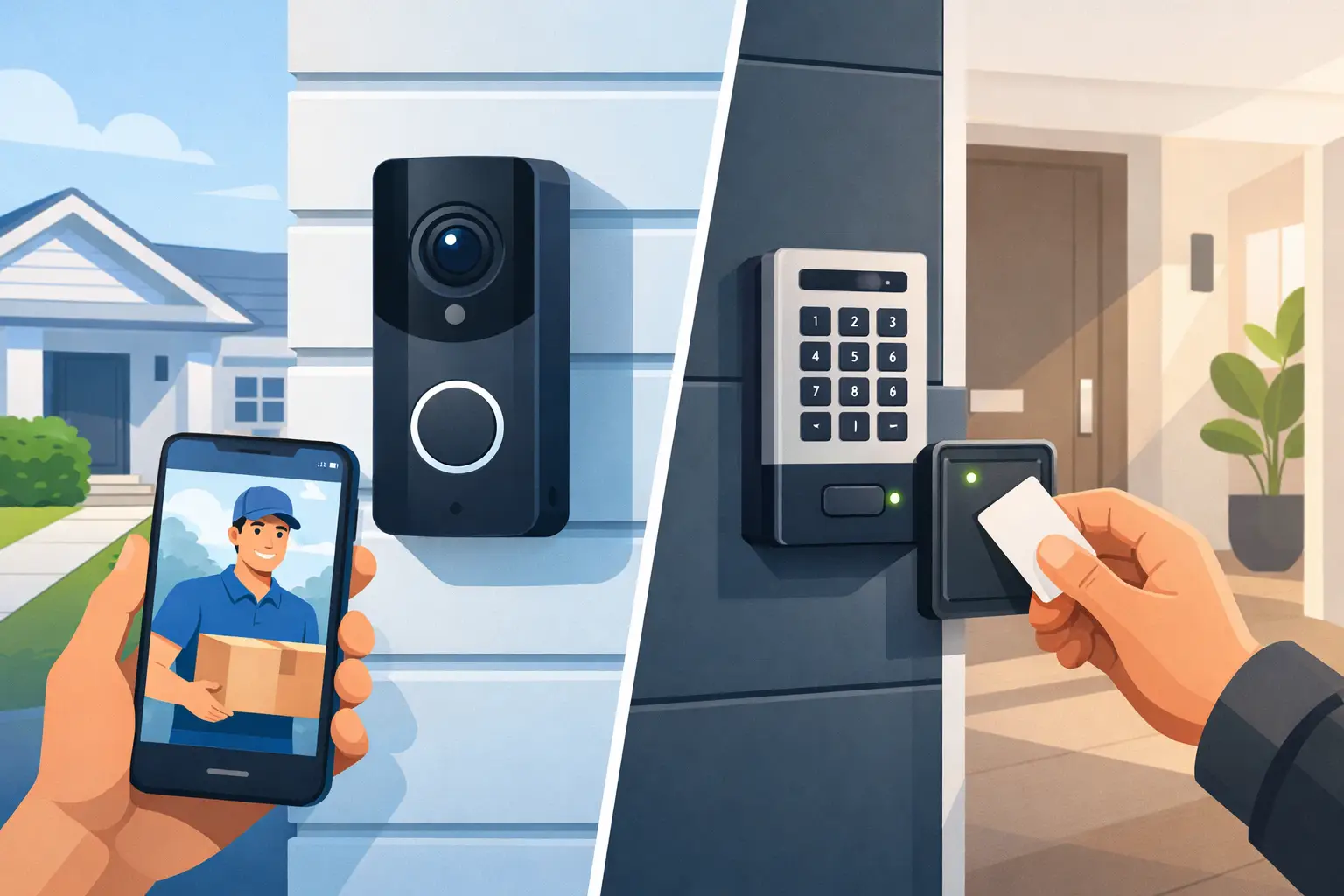


Compare video doorbell vs door entry systems for homes, flats and businesses. Choose practical access control, reliable visibility and support that lasts.
CCTV for Flat Entrance Doors: What Works

You only need to review a couple of incidents to see why entrance coverage is different to “general CCTV”. A parcel goes missing, a resident holds the door for someone they do not know, or a tradesperson arrives while the concierge is off-site. The front door becomes the single point where most problems start – and where the right footage can stop arguments, support police reports, and deter repeat attempts.
This is where cctv for flat building entrance needs to be planned like an access system, not just a camera on a wall. You want clear faces, clear actions, and a timeline that makes sense, without creating blind spots or upsetting residents with intrusive placement.
What “good entrance CCTV” actually needs to prove
If your footage cannot answer basic questions in under a minute, it will not deliver when you need it. For a shared entrance, you typically need to prove three things: who approached, how they got in (or tried to), and where they went next.
That means facial detail at the threshold, not just a wide shot of the lobby. It also means capturing the approach route – the steps, gate, or path leading to the door – so you can see whether someone was tailgating a resident or loitering with intent.
You also want a clear view of the door hardware and any access control point. If there is a keypad, proximity reader, or fob access, the camera should show the interaction without zooming so far in that you lose the person’s face. In practice, that often requires more than one camera, because a single wide-angle view tends to produce “nice scene footage” and poor identification.
Camera placement at entrances: why one camera is rarely enough
A lot of entrance systems fail because the camera is mounted too high, too wide, or too far back. High mounting feels safer from vandalism, but it can give you mostly hats and hoods. Too wide and you capture plenty of floor and ceiling, but not the detail that matters.
For most blocks, the best results come from two complementary angles: one camera positioned to capture faces as people approach the door, and another covering the immediate threshold and lobby movement. The first angle is your identification shot. The second shows what happened next – tailgating, forced entry attempts, or someone trying multiple doors.
If your entrance has a canopy, glass vestibule, or bright external lighting, placement needs even more care. Glass can reflect infrared night vision and turn faces into white blur. Strong backlighting can silhouette people at the door. In those scenarios, you would normally specify cameras with strong wide dynamic range (WDR) and set them up with the right exposure priorities so faces do not disappear.
Night coverage: it is not just “infrared on or off”
Entrance incidents often happen in the hours where most systems look their worst. Standard black-and-white infrared footage can be enough to show movement, but it is not always enough to identify clothing, a vehicle, or a bag.
This is where modern approaches help. Smart illumination can keep the scene usable without flooding your entrance with harsh light. More importantly, intrusion-triggered colour night coverage can switch to brighter, full-colour recording when a person crosses a defined line or enters a set zone. That gives you colour detail at the moment it matters, while keeping light levels sensible the rest of the time.
The trade-off is that colour night performance depends on the environment. A pitch-dark, rural entrance will need either controlled lighting or a camera designed for low-light colour. A well-lit urban doorway may already have enough ambient light, but you still need the camera settings right, otherwise motion blur will ruin the moment someone turns their head.
Integrating CCTV with door entry and access control
If your block relies on residents buzzing people in, or uses fobs/cards, the best evidence is often the combination of video and access events. When CCTV is aligned with door entry, you can match a time-stamped access event with the exact moment the door opened.
For multi-occupancy buildings, IP video door entry is usually the practical step up because it keeps things manageable: PoE connectivity, centralised administration, and monitors that residents can actually use. Systems such as Dahua IP video door entry support multiple credential options (keypad, card, fob) and can be paired with PoE-connected 7-inch Android monitors, which suits managed buildings where you want clear visitor verification without relying on a single handset or a weak audio-only intercom.
A common “it depends” here is whether you need full access control or just better verification. If your issue is tailgating, a camera alone may not stop it. You may need a door closer adjustment, a timed release setting, or a second controlled door (vestibule) so one resident cannot accidentally grant access to multiple people.
Recording, retention, and remote viewing: get the basics right
Entrance footage is only as useful as your ability to retrieve it quickly. In practical terms, that means:
You should record continuously at the entrance, not only on motion. Motion recording is fine for quieter areas, but entrances have constant lighting changes and frequent movement that can cause missed clips or poor pre-event capture.
Retention should reflect your building’s reality. A small block may only need 14-30 days. A larger building with regular deliveries, contractors, and higher turnover often benefits from longer retention so you can investigate issues reported late. More days means more storage, and higher resolution means more storage again, so this is best set as a conscious decision rather than whatever the recorder came with.
Remote viewing is a benefit, but it must be controlled. For facilities managers and managing agents, being able to check the entrance from a phone is genuinely useful. For residents, access needs careful thought – you do not want a free-for-all that creates complaints or misuse. Many sites choose a managed approach where authorised staff can review footage, with resident requests handled through a clear process.
Privacy and compliance in shared residential buildings
Shared entrances are legitimate locations for CCTV, but you still need to approach privacy properly. The goal is to protect residents, not to over-monitor them.
Cameras should focus on access points and shared areas, not into private living spaces. If the entrance is close to ground-floor windows, angles and privacy masking should be used so the system does not look into flats.
Clear signage is not optional. Residents and visitors should know CCTV is in operation and who controls the data. You also need a policy for how footage is stored, who can access it, and how long it is retained. This protects residents and protects you as the responsible party if an issue is raised.
If you have staff on-site, you should also be mindful of workplace monitoring expectations. The system should be justified by security needs, and access to footage should be limited and accountable.
Common entrance mistakes that cost you later
Most disappointments come from predictable choices made at the start.
The first is buying cameras based on resolution alone. A high-megapixel camera badly positioned still produces poor identification. Lens choice, angle, lighting, and correct settings matter just as much.
The second is putting all your confidence in a single view of the lobby. You end up with a nice overview and no face detail. For entrances, identification is the priority.
The third is ignoring the door itself. If the door is misaligned, the closer is weak, or the lock release time is too long, you will keep capturing the same avoidable incidents. CCTV is strongest when it sits alongside a properly controlled door.
The fourth is leaving the system unmanaged. If nobody checks time and date settings, updates passwords, or confirms recording health, the system can quietly fail. A professional install should include a handover that makes it clear who owns what tasks, and what support is available when you need changes.
Getting a right-fit design without being upsold
A good entrance design starts with a site survey, not a catalogue. You want someone to stand at the entrance at the times problems happen – dusk, school run, late evening – and assess sightlines, lighting, and resident flow.
From there, the “right fit” is usually a balanced specification: the few cameras that give you the angles you actually need, a recorder configured for reliable capture and sensible retention, and door entry or access control where it will reduce risk rather than just add gadgets.
If you want a consultative approach that focuses on coverage and accountability, NRI Security Ltd carries out free site surveys and no-obligation quotations, then supports systems after installation – which is often what building managers value most once the initial project is complete.
A safer entrance is not about watching more. It is about seeing the right moment clearly, so residents feel protected and you can act with confidence when something goes wrong.

CCTV retention duration: how long is right?
Set a CCTV retention duration that protects your property, supports investigations and respects UK data protection duties without wasting storage space.

CCTV Compliance for Small Businesses Made Clear
CCTV compliance for small businesses explained: plan lawful coverage, clear signs, secure footage and staff awareness without buying more than you need.

CCTV Recording Retention Period UK Explained
Understand the CCTV recording retention period UK organisations should set, balancing security evidence, storage capacity and UK data protection duties.

How to Reduce Blind Spots in CCTV
Learn how to reduce blind spots CCTV systems miss with better camera placement, lens choice, lighting and professional site surveys.

Ajax Alarm System Review UK
Ajax alarm system review UK – a clear look at features, app control, reliability, costs and whether Ajax suits homes and businesses.
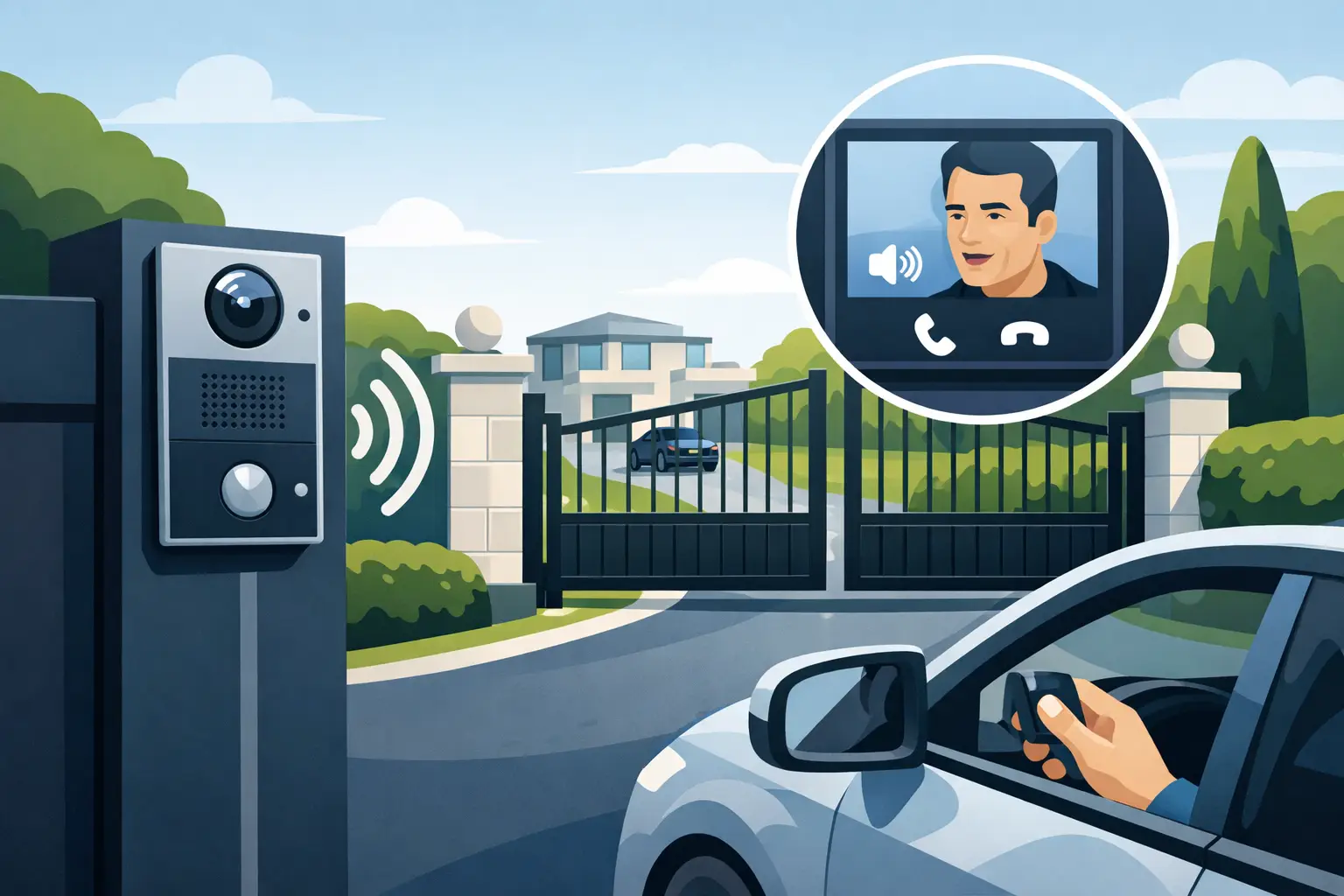
Gate Intercom System for a Private Driveway
Choose a gate intercom system for private driveway access with clear video, reliable calling and professional installation advice for lasting control daily

What Happens During a Security Survey Visit?
Find out what happens during a security survey, from identifying weak points to choosing CCTV, access control and alarms suited to your property needs.

Residential Video Entry Guide for Safer Access
Residential video entry guide for homeowners and landlords. Learn what matters, what to compare, and how to choose a reliable system.
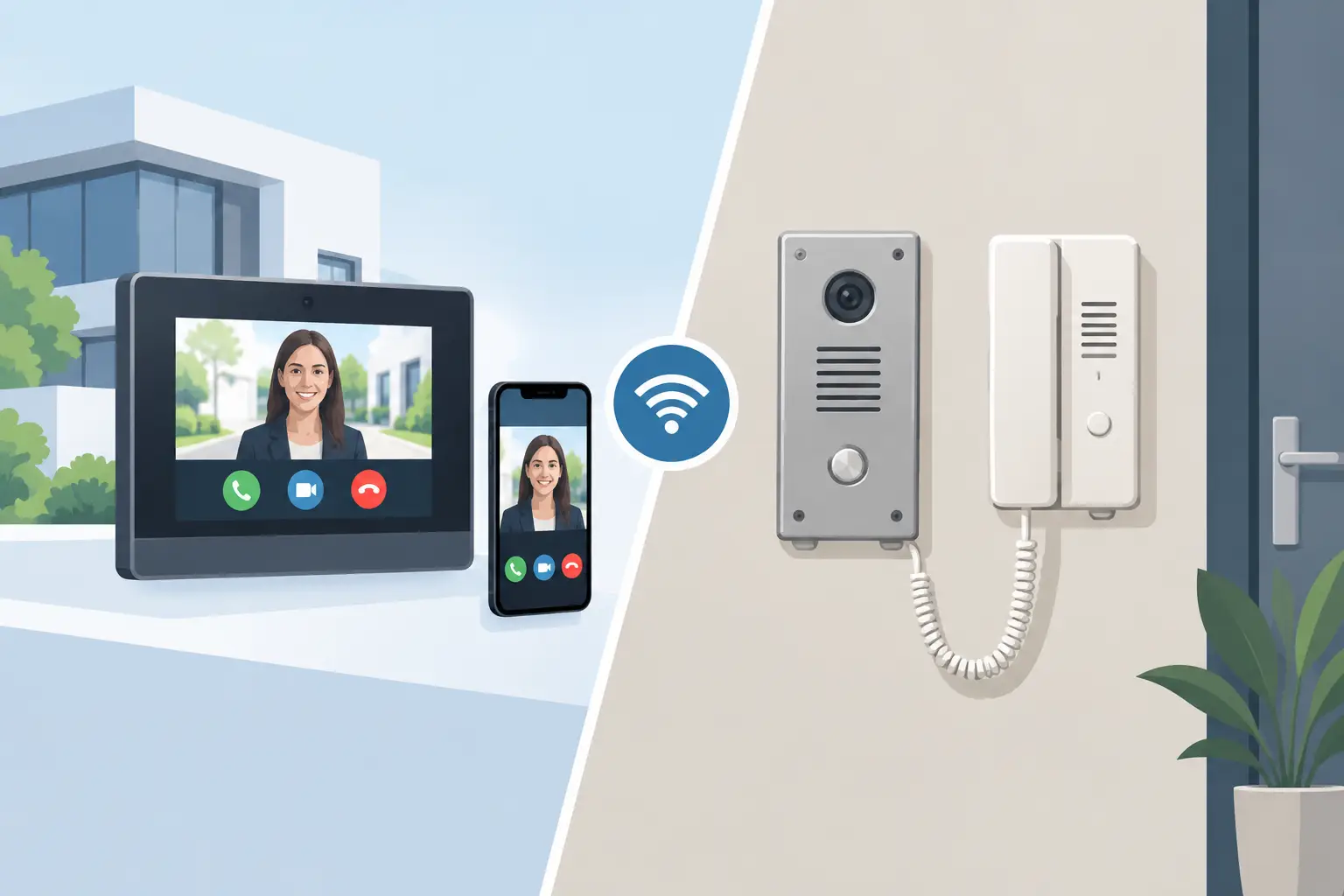
IP Intercom vs Analogue Intercom: Which Fits?
Compare IP intercom vs analogue intercom systems for homes, flats and businesses. Understand wiring, remote access, costs and the right fit for your site.

A Practical Guide to Home CCTV System Design
A practical guide to home CCTV system design, covering camera placement, night coverage, storage, remote viewing and choosing the right setup.

Monitored Alarm Versus Self Monitoring Compared
Monitored alarm versus self monitoring explained: compare response, cost and control to choose dependable protection for your home or business today.