


CCTV installation for small retail shops helps deter theft, protect staff and improve visibility. Get the right system, layout and support.
How to Reduce Blind Spots in CCTV

A camera can be working perfectly and still miss the moment you actually need to see. That is usually the problem when people ask how to reduce blind spots CCTV systems leave behind. The issue is rarely just the camera itself. More often, it is the angle, the lens, the height, the lighting, or the way the system was planned in the first place.
For homeowners and business managers alike, blind spots create a false sense of security. You may have footage of someone arriving on site, but not the moment they forced a gate. You may see a person entering a corridor, but not where they came from or what they did just outside frame. If your CCTV is there to deter, verify and support action, those gaps matter.
What causes blind spots in CCTV systems?
Blind spots happen when an area falls outside the field of view, or when the image in that area is too poor to be useful. That can happen for obvious reasons, such as a wall, fence, tree or parked vehicle blocking sightlines. It can also happen in less obvious ways, such as a wide-angle lens making distant detail unusable, bright backlight washing out a doorway, or poor night performance turning the edge of a car park into a dark mass.
A common mistake is assuming that more cameras automatically means better coverage. In practice, badly positioned cameras often duplicate the same view while leaving key routes exposed. Another is placing cameras too high. A very high mounting point may protect the device from tampering, but it can also give you the top of a person’s head instead of a recognisable face.
For commercial sites, blind spots often appear around delivery areas, side entrances, fire exits, bin stores and shared access points. In homes, the weak spots tend to be side paths, rear gardens, garage approaches and front doors with strong contrast from daylight or porch lighting.
How to reduce blind spots CCTV setups often leave behind
The first step is to stop thinking in terms of camera count and start thinking in terms of coverage objectives. Ask what you need to see, not just where you can fix a camera. There is a difference between monitoring movement, identifying a face, reading a registration plate and confirming whether a door was forced. One camera position rarely does all four well.
A proper plan usually starts with routes and decision points. Where does a person approach from? Where do they pause? Which entrance matters most? What area would an intruder use if they wanted to avoid being seen? Once those answers are clear, the camera positions become easier to justify.
Overlapping views are often more effective than a single very wide shot. If one camera covers the approach and another covers the door itself, you reduce the chance of losing detail at the critical moment. This is especially useful on corners of buildings, where one camera can never fully see around the structure. Two well-placed cameras at different angles usually solve what one larger camera cannot.
Lens choice also matters more than many buyers expect. A wide lens covers more area, but it spreads the pixels over a larger scene. That is useful for general awareness, but less useful for identification. A narrower view gives more detail where it counts, but covers less ground. The right answer depends on the purpose of that camera. At entrances, tighter framing is often the better choice. Across open yards or car parks, a mix of overview and target-specific cameras works better.
Camera placement is more important than camera quantity
If you want to know how to reduce blind spots CCTV installations create, placement is usually where the biggest gains are made. A modest system that has been designed properly will often outperform a larger one installed without a site-led plan.
Height should be chosen carefully. For facial recognition at an entrance, lower positioning can be better, provided the camera remains protected and compliant. For general perimeter coverage, a higher position may help with a broader view. The trade-off is detail. This is why different parts of the property may need different mounting heights rather than a one-size-fits-all approach.
Corners, choke points and transitions between spaces deserve special attention. A side gate leading to a rear garden, the turn into a service alley, or the doorway between reception and private offices can all become weak points if the camera only sees the space after someone has already moved through it. A good installer looks at where coverage begins and ends, not just the centre of the frame.
Obstructions should be checked in real conditions, not just on a clear day. Foliage grows. Delivery cages get moved. A roller shutter changes the light. A van parked in the usual place may wipe out half the useful image from a low-mounted camera. These practical site details are often what separate a system that looks good on paper from one that performs reliably.
Night-time blind spots are a different problem
Many CCTV blind spots only appear after dark. During the day, the camera sees enough to reassure you. At night, the same area may become a silhouette, a glare source or a patch of darkness where movement is visible but detail is lost.
This is where lighting and camera technology need to work together. Infrared has its place, but it is not always the best answer if you need usable evidence rather than basic motion visibility. Smart illumination and intrusion-triggered colour night coverage can make a significant difference because they preserve scene detail when an event actually occurs. Instead of a flat monochrome image with bright hotspots, you get more actionable visibility.
There are trade-offs. Too much visible light can create complaints in residential areas or draw attention where discretion matters. Too little, and the image remains weak. Positioning lights badly can also cause reflection from walls, soffits or number plates. For that reason, lighting should be treated as part of the CCTV design, not an afterthought added later.
Entrances and perimeters need different strategies
A front entrance usually needs face-level detail, visitor verification and reliable performance in changing light. A perimeter usually needs early detection, route tracking and enough clarity to support a response. Trying to make one camera do both jobs often produces compromise on each.
At doors, a dedicated camera focused on the approach or threshold tends to reduce blind spots better than relying on a broad overview from higher up the wall. In managed buildings, flats and office environments, this may sit alongside a video door entry system so you can clearly see who is requesting access and keep control of credentials.
Around the perimeter, blind spots often appear where fence lines change direction, where outbuildings block the view, or where there is a gap between the lit area and the unlit edge of the site. In those locations, intrusion lines, carefully aimed fixed cameras and selective supplementary lighting are often more effective than simply fitting a wider lens.
Why a site survey matters
This is one area where guesswork costs money. You can buy better cameras and still keep the same blind spots if the underlying design is wrong. A proper site survey looks at approach routes, risk points, lighting conditions, cabling options, mounting positions and what evidence standard you actually need from each view.
That consultative approach is what protects customers from overspending in the wrong areas. Sometimes the answer is an extra camera. Sometimes it is repositioning one camera by a metre, changing the lens, or adding smart illumination to remove a dark patch. In other cases, the right solution is integrating CCTV with access control or perimeter detection so you are not relying on passive recording alone.
For sites such as nurseries, shared residential buildings and offices, this matters even more. You may need strong visibility without making the system difficult for staff or residents to use. Coverage has to be reliable, but the daily experience must still be straightforward.
When to upgrade and when to redesign
If your footage is regularly missing faces, events occur just outside frame, or night recordings are poor, it does not always mean the entire system needs replacing. In many cases, the problem is design rather than age. A redesign of positions, lenses and lighting can deliver a much better result.
That said, older cameras with limited low-light performance or low resolution can make blind spots harder to solve. If the camera cannot produce enough detail in the area you need to monitor, no amount of repositioning will fully fix that. The sensible route is to assess each camera by job role. Keep what still works. Replace what does not. That is usually better than changing everything at once.
A professional installer should be able to explain these decisions plainly. Not every property needs the latest feature in every location. What it does need is coverage that matches the risks of that site and remains useful when something actually happens.
If you are reviewing how to reduce blind spots CCTV systems leave on your property, start with the areas you assume are already covered. That is often where the gaps are hiding. A clearer view, properly planned, gives you more than footage. It gives you confidence that when something happens, your system will show what matters.
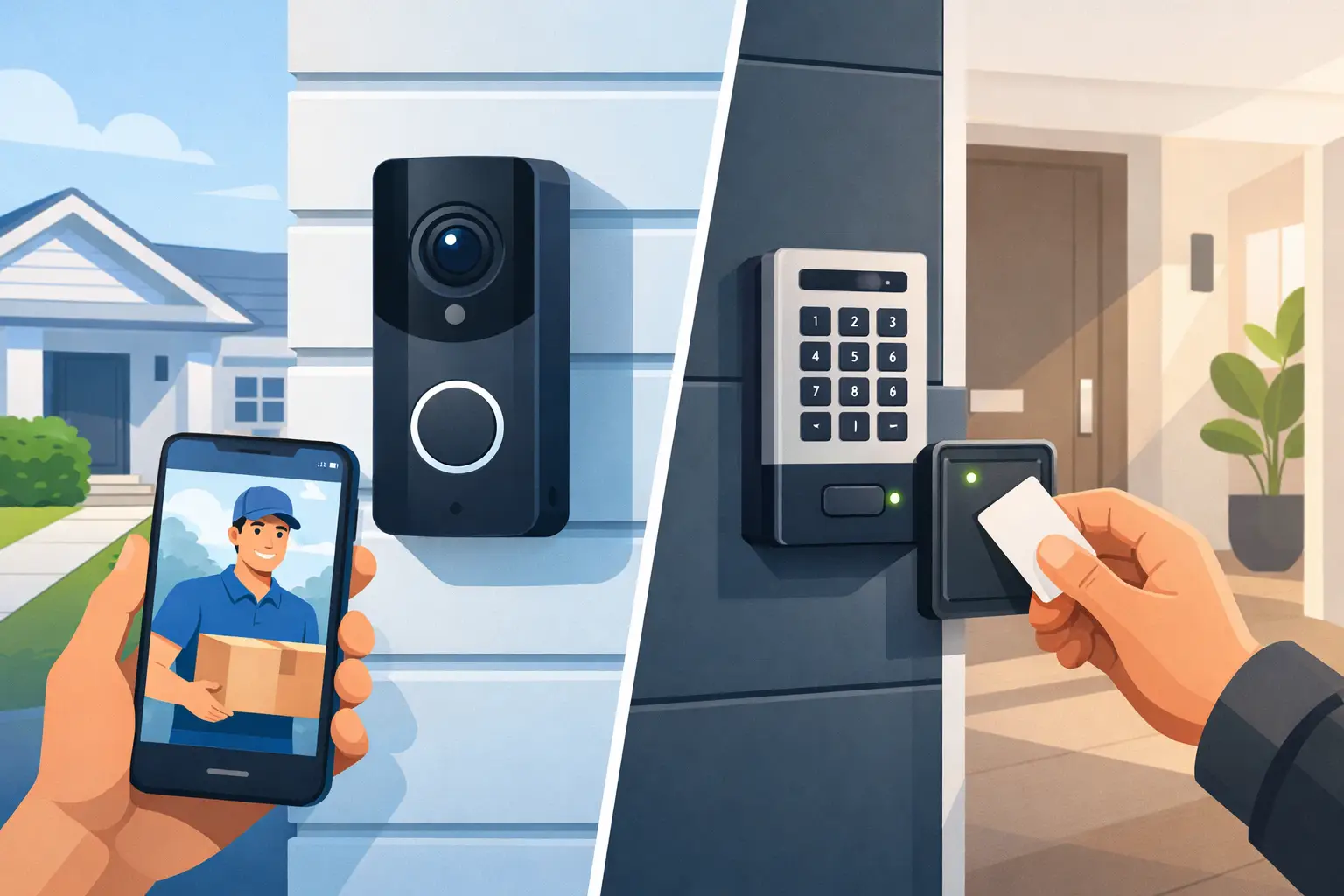
Video Doorbell vs Door Entry for Your Property
Compare video doorbell vs door entry systems for homes, flats and businesses. Choose practical access control, reliable visibility and support that lasts.
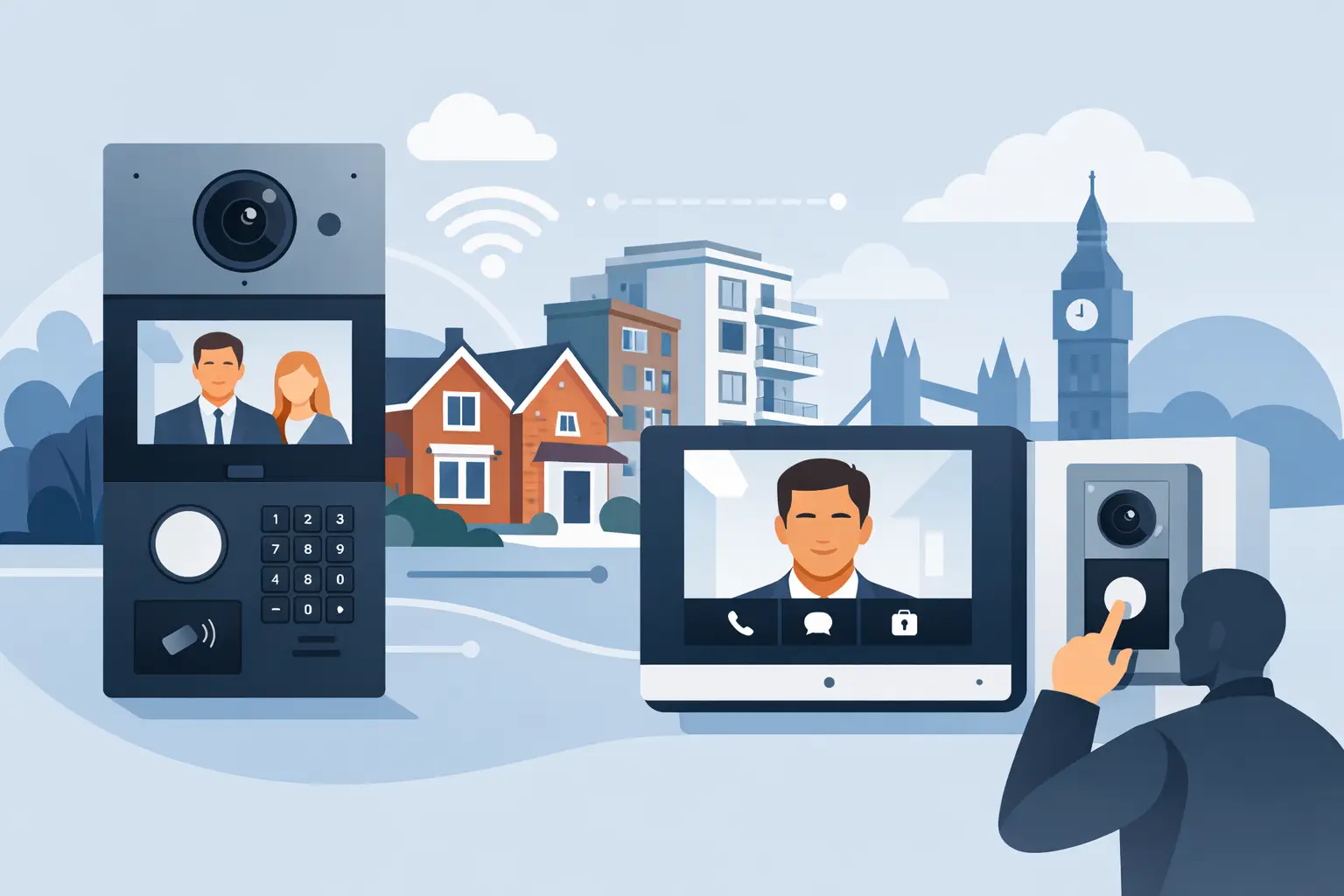
Dahua IP Intercom System Review for UK Properties
Read our Dahua IP intercom system review for a clear look at door entry, PoE monitors, remote access, installation and who it suits best in the UK today.

How to Choose a Home CCTV Installer
Learn how to choose home CCTV installer with confidence. Compare surveys, support, system design and quotes before you commit.

Access Control Installation for Apartment Blocks
Access control installation for apartment blocks improves entry security, resident safety and daily management with the right system design.

Keypad Fob Card Access Control Explained
Keypad fob card access control gives homes and businesses safer entry, better tracking and simpler daily use when specified and installed properly.

CCTV Systems That Protect Homes and Businesses
CCTV systems give homes and businesses evidence, stronger deterrence and remote reassurance. Learn how to specify coverage that works when it matters most.

Best Access Control for Nurseries
Find the best access control for nurseries with practical advice on door entry, credentials, safeguarding, CCTV integration and daily usability.

What Happens During a Security Survey Visit?
Find out what happens during a security survey, from identifying weak points to choosing CCTV, access control and alarms suited to your property needs.

Best Commercial Security System Features
Compare the best commercial security system features for dependable CCTV, controlled entry and faster response across offices, flats and managed sites.

Ajax Wireless Alarm Review for Homes and Firms
Ajax wireless alarm review for homeowners and businesses. See where it excels, where it has limits, and whether professional installation is worth it.

Smart Lighting CCTV That Actually Helps at Night
Security cameras with smart lighting improve night footage, deter intruders, and cut false alerts. Learn what matters, placement tips, and trade-offs.