


Wired alarms vs Ajax wireless – compare reliability, disruption, cost and control to choose the right alarm system for your home or business.
CCTV Cameras Versus Video Doorbells Compared

A delivery driver at the front door, a vehicle stopping outside after dark, a contractor arriving at a side entrance – these are very different security events. The choice between CCTV cameras versus video doorbells comes down to what you need to see, where you need control, and how quickly you need to act.
A video doorbell can be an excellent first line of contact at one entrance. CCTV is designed to watch the wider property, record activity and provide stronger evidence when an incident does not happen neatly at the front door. For many homes and business premises, the right answer is not one or the other. It is a properly planned combination, installed around the real risks on site.
CCTV cameras versus video doorbells: the key difference
A video doorbell is primarily an access and visitor-management device. It alerts you when somebody presses the bell or approaches the doorway, gives you a live view, and usually allows two-way audio through an app. For a homeowner expecting parcels, or a small office with regular visitors, that immediate contact is useful and reassuring.
CCTV is a surveillance system. Cameras can cover driveways, rear gardens, side passages, loading areas, car parks, shared corridors and vulnerable access routes. They record activity across a wider area and can be configured for remote viewing, event alerts and night-time coverage. A professionally designed system does more than show who is standing at the door. It helps establish where somebody came from, what they did and where they went.
That distinction matters after an incident. A doorbell may capture a face close to the entrance. CCTV can provide the sequence of events before and after that moment, including a vehicle arriving, a gate being opened or a person testing another access point.
When a video doorbell is the right fit
A video doorbell is often a sensible choice where the front entrance is the main concern and the property has a clear, direct approach. It provides an easy way to see and speak to callers whether you are upstairs, at work or away on holiday.
For homeowners, it can reduce uncertainty around unexpected callers and missed deliveries. For a small business, it can help staff check visitors before opening the door. It is particularly useful where the entrance is not constantly staffed.
However, a doorbell has limits. Its field of view is fixed around the doorway. Depending on its position, it may not properly cover the driveway, a vehicle on the road, a side gate or a rear entrance. It can also be less effective if somebody deliberately avoids the front door or approaches from an angle outside the camera view.
Wireless doorbells can be convenient, but their reliability depends on good Wi-Fi coverage, sensible mounting and an adequate power arrangement. Battery-powered models need routine charging or battery replacement. A wired or professionally integrated solution reduces some of these compromises, but it still does not replace broader surveillance where the risk extends beyond the doorstep.
Where CCTV provides stronger protection
CCTV becomes the stronger option when you need coverage rather than conversation. A well-positioned system can watch the boundaries and routes that matter: gates, driveways, rear doors, alleyways, stock areas and shared access points. This is especially valuable where a property has more than one vulnerable entrance.
For businesses, landlords and facilities managers, CCTV also creates accountability. Cameras can help investigate damage, unauthorised access, fly-tipping, delivery disputes and out-of-hours activity. In a nursery, office building or block of flats, the objective is not simply to receive a visitor alert. It is to maintain a clear record of activity at the points where people enter, leave and move around the site.
Modern CCTV can provide useful colour images at night when specified correctly. Smart illumination and intrusion-triggered colour night coverage can bring a scene into view when movement occurs, rather than leaving critical detail hidden in a dark, grainy image. This should be planned with care. Lighting, camera angle, distance and the direction of travel all affect whether footage is genuinely actionable.
Visible cameras can also act as a deterrent. They make it clear that a premises is protected and that activity may be recorded. Deterrence should not be the only reason for installation, but it is a meaningful benefit when paired with reliable recording and sensible camera placement.
Coverage is more valuable than camera quantity
More cameras do not automatically mean better security. A poorly placed camera can create blind spots, face into glare, record only the top of a person’s head or miss the number plate that matters. Equally, one carefully chosen camera may protect a small driveway far better than several low-cost devices mounted without a plan.
A site survey should begin with practical questions. Which doors are actually used? Where could someone enter without being seen? Is there a side passage, rear boundary or shared route? Where do vehicles stop? What happens after dark? For a business, consider where keys, stock, equipment and sensitive information are kept, as well as how staff and visitors move through the building.
The answers determine the system design. A front-door camera may need to identify callers. A driveway camera may need to capture vehicles and movement. A rear camera may need night coverage and a view that does not intrude unnecessarily on neighbours’ property. Each task calls for the right camera type, lens, height and recording settings.
Door entry is not the same as a video doorbell
For shared buildings and managed premises, a dedicated IP video door entry system is usually more appropriate than a consumer-style doorbell. A Dahua IP video door entry system can provide controlled access alongside clear visitor verification, with POE-connected 7-inch Android monitors and options such as keypad, card and fob credentials.
This gives a nursery, office or block of flats greater control over who can request entry and who can be granted access. It also avoids relying on a single resident’s phone as the only point of contact. The system can be designed around the building’s users, access rules and management responsibilities.
CCTV complements door entry in these settings. Door entry manages the decision to let someone in. CCTV records activity around the entrance and other relevant areas. One controls access; the other provides oversight. Treating them as separate but connected layers normally produces a more dependable result.
Think about recording, alerts and day-to-day use
Both products can send notifications, but constant alerts are not security. Too many false notifications quickly lead to users ignoring the app. Sensible settings, correctly defined detection zones and suitable camera positions are essential.
CCTV recording also needs consideration. Ask how long footage should be retained, who needs access, and how recordings will be retrieved if an event occurs. For commercial and multi-occupancy sites, access permissions and data protection responsibilities should be clear from the outset. Cameras should protect people and property without casually recording areas that are not relevant to the purpose of the system.
Remote viewing is valuable, but it should support proper security rather than replace it. You need a system that remains useful when you are busy, asleep or unable to answer a notification immediately. Local recording, dependable network equipment and professional configuration all help protect that continuity.
A practical choice for common property types
For a small terraced home with one obvious front entrance, a video doorbell may be a good starting point, particularly if the main concern is callers and parcels. If there is a rear lane, garden access or a driveway, adding CCTV is likely to provide the missing coverage.
For a detached home, CCTV is often the better foundation because there are usually several routes around the property. A video doorbell can still add useful two-way communication at the main entrance.
For shops, offices, workshops and small warehouses, CCTV should normally take priority. Stock, staff safety, customer movement and multiple entrances make broader coverage essential. Controlled door entry may be added where access needs to be restricted.
For blocks of flats, nurseries and managed offices, an IP door entry system and CCTV generally work best together. The right balance depends on the number of entrances, users, management arrangements and the level of control required.
Choose a system around the risk, not the trend
A video doorbell is not inferior to CCTV. It simply has a narrower job. It is a strong tool for managing a front-door interaction, while CCTV provides wider visibility and a more complete record of activity across a property.
The most cost-effective installation is rarely the one with the most features on paper. It is the one that covers the real risks, remains straightforward to use and is supported after installation. NRI Security can assess those risks through a free site survey and provide a no-obligation quotation based on the protection your property genuinely needs.
Before choosing, stand at your entrance after dark and walk the route an unwanted visitor might take. The places you cannot see are usually where your security plan should begin.

CCTV Installation for Small Retail Shops
CCTV installation for small retail shops helps deter theft, protect staff and improve visibility. Get the right system, layout and support.

Ajax Alarm System Review UK
Ajax alarm system review UK – a clear look at features, app control, reliability, costs and whether Ajax suits homes and businesses.
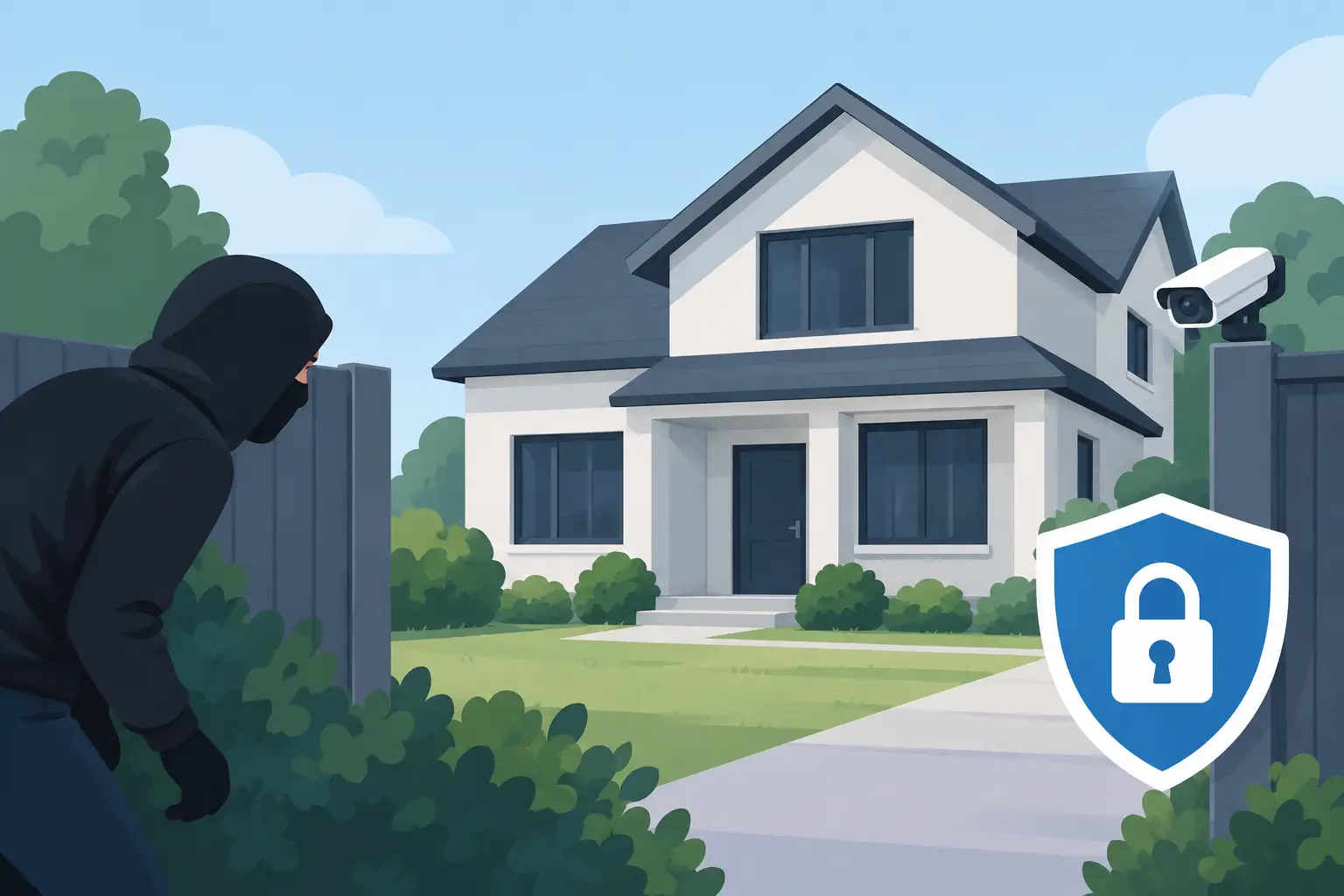
How to Protect Vacant Property From Intruders
Learn how to protect vacant property with practical CCTV, lighting, access and inspection measures that deter intrusion and reveal on-site problems early.

How to Improve Apartment Entry Security
Learn how to improve apartment entry security with better access control, CCTV, lighting and door entry planning for safer shared buildings.

Perimeter Security Cameras for Rear Garden
Perimeter security cameras for rear garden spaces improve deterrence, colour night coverage and control with smarter placement and setup.

How to Secure Shared Entrances Properly
Learn how to secure shared entrances with the right door entry, CCTV, lighting and access control for flats, offices and managed buildings.

Wireless Alarm Reliability: What Really Matters
Wireless alarm reliability depends on design, signal strength, power and support. See what a professional installation checks before an alarm is needed.

CCTV for Nurseries: What Good Security Looks Like
CCTV installation for nursery security: camera placement, night coverage, entry control, privacy rules and how to choose a reliable installer for safeguarding.

Which CCTV Cameras Deter Burglars Best?
Find out which CCTV cameras deter burglars, where to place them and which features deliver clear evidence and control for homes and businesses every day.

What Home CCTV Tech Is Worth Buying?
Learn which latest CCTV technology for homes genuinely improves security, from smart alerts to colour night vision and professional setup.

Choosing a Dahua Door Entry Installer
Need a dahua door entry system installer? Learn what to expect from a proper survey, POE setup, access options, and reliable after-care.