


Access control installation for apartment blocks improves entry security, resident safety and daily management with the right system design.
Best Security Cameras for Shared Entrances

One camera over a shared front door can solve a problem or create one. In blocks of flats, converted houses, office foyers and mixed-use buildings, the best security cameras for shared entrances need to do more than record movement. They need to give you clear evidence, respect privacy, support controlled entry and work reliably every day without turning into a source of disputes.
That is why choosing the right camera is less about picking a popular model and more about matching the system to the entrance itself. A shared entrance has different demands from a private driveway. You may need to identify visitors at a door, monitor tailgating, cover deliveries, confirm access events and still avoid filming areas you should not be recording. The right answer usually comes from proper design, not guesswork.
What makes the best security cameras for shared entrances different
Shared entrances are busy, layered environments. Residents, staff, visitors, tradespeople and delivery drivers all use the same access point. Lighting changes quickly, people move in groups, and incidents often happen in a small window of time – just before someone gains entry, or immediately after.
A camera in this setting must capture usable detail at the point of decision. That normally means strong face-level coverage near the door, a wider overview of approach routes, and dependable recording in poor light. It also means thinking about how the entrance is managed. If there is an intercom, door release or fob access system in place, the camera should support that broader security picture rather than sit separately with no context.
For many sites, a single camera is not enough. One fixed lens may show the doorway but miss the path leading up to it. A wide-angle view may cover the whole lobby but stretch faces too far for reliable identification. The best systems often use two viewpoints with different jobs.
The camera types that work best
For most shared entrances, turret and dome cameras are the strongest starting point. They are compact, professional in appearance and suitable for wall or soffit mounting near access points. A good turret camera tends to perform especially well at night because it handles infrared reflection better than many domes in tight spaces.
Bullet cameras can also work well where you need stronger visual deterrence or longer coverage along an approach. If the entrance sits back from the pavement or has a gate, path or car park feeding into it, a bullet camera with the correct lens can monitor movement before someone reaches the door.
Doorbell-style cameras are often the wrong fit for truly shared entrances. They can be useful on a single dwelling, but in a multi-occupancy environment they usually lack the coverage, recording flexibility and access integration that managed buildings need. A proper IP CCTV system, paired where appropriate with video door entry, gives better accountability and a more stable result.
Image quality matters, but placement matters more
Buyers often start with resolution, and that is understandable. Higher resolution can help, particularly when you need to identify faces or read details around an entrance. But resolution alone does not fix poor positioning.
A badly placed 8MP camera can deliver less useful evidence than a correctly positioned 4MP camera. If the lens is too high, faces disappear under hoods and caps. If it is too wide, people become small in frame. If it points into strong backlight from glass doors or exterior glare, identification suffers when you need it most.
For shared entrances, the practical goal is simple: capture people in a way that supports recognition, not just general observation. This usually means one camera dedicated to face capture at a sensible height and angle, then a second camera if broader context is needed.
Night coverage is where systems often fail
A shared entrance rarely has perfect lighting. Porch fittings are often weak, lobbies can be dim, and external lights may create harsh contrast. This is where low-light performance becomes a decisive feature.
The best security cameras for shared entrances should be able to provide clear night footage with usable detail, not just grainy motion clips. Cameras with smart illumination and intrusion-triggered full-colour coverage are particularly effective here. Instead of relying only on black-and-white infrared footage, they can improve visibility at the moment someone approaches or crosses a set line. That gives you more actionable images when there is genuine movement to review.
This is especially useful at entrances where incidents happen quickly – unauthorised access, attempted door forcing, package interference or someone following a resident inside. Better night footage does not just help after the event. It can support active management while the incident is happening.
Privacy and compliance cannot be treated as an afterthought
Shared entrances sit close to private lives. That means privacy needs to be considered from the outset. In practical terms, the camera should cover the access point and relevant approach area without unnecessarily recording neighbouring windows, private corridors or spaces with no security purpose.
This is another reason professionally specified systems outperform off-the-shelf installs. Features such as privacy masking, restricted viewing permissions and correctly defined recording zones can make a major difference. The aim is proportionate coverage – enough to protect residents, staff and property, without creating avoidable problems.
If more than one party uses the entrance, accountability around footage access matters too. Who can review recordings, for what reason, and how long they are retained should all be clear before the system goes live.
Why shared entrances often need CCTV and door entry together
A camera can show you what happened. A door entry system helps control what happens next. In many shared buildings, the most effective setup combines both.
If residents or staff need to identify a visitor before granting access, a Dahua IP video door entry system can add a practical layer of control. With keypad, card and fob options, plus POE-connected internal monitors, it becomes easier to manage everyday access without compromising security. In offices, nurseries and blocks of flats, this joined-up approach is often more valuable than adding extra cameras alone.
It also improves incident clarity. If someone gains entry, you are not relying solely on corridor footage afterwards. You have a clearer record of the approach, the call point interaction and the access event itself. For managed properties, that can make investigations faster and less contentious.
Wired systems usually make more sense than wireless
Wireless cameras have their place, but shared entrances are not usually it. In a communal setting, reliability should take priority over convenience. A hard-wired IP system with proper network configuration and recording hardware is generally more stable, more secure and better suited to continuous use.
POE – Power over Ethernet – is particularly useful because it allows both power and data through one cable. That simplifies installation, supports cleaner finishes and reduces the number of points that can fail. It also gives you a stronger foundation if the system expands later.
For landlords, facilities managers and business operators, this matters. A shared entrance camera is not a gadget. It is part of the building infrastructure, and it should be treated that way.
What to look for before you commit
The right specification depends on the site, but a few features consistently matter. Good low-light performance, sensible lens selection, motion or intrusion-based analytics, remote viewing, reliable recording retention and integration with access control all add genuine value when properly configured.
Just as important is after-sales support. Shared entrance systems are used daily, often by multiple people. If settings need adjusting, access permissions change, or an issue appears months after installation, you want support from the same team that designed the system. That continuity protects your investment and avoids the all-too-common situation where no one takes responsibility once the equipment is fitted.
A free site survey is often the most efficient place to start because entrance security is highly dependent on layout. The width of the doorway, the height of the canopy, the position of lighting, whether the door opens in or out, and how people approach the building all affect the answer. There is no benefit in overbuying, and there is equal risk in under-specifying a critical access point.
The best choice is the one designed for your entrance
If you are comparing the best security cameras for shared entrances, the real decision is not between brand names on a product list. It is between a generic camera purchase and a system designed around how your building is actually used.
For a small converted property, that may mean one well-placed turret camera and a simple entry solution. For a larger block, nursery or office building, it may mean layered coverage with CCTV, video door entry and defined access credentials. The best result is the one that gives clear evidence, dependable day-to-day control and reassurance for everyone using the entrance.
If you are unsure what your entrance really needs, that is usually a sign to pause before buying. A proper survey, honest advice and a right-fit installation will nearly always save time, money and frustration later – and leave you with coverage you can trust when it matters.

How to Reduce Blind Spots in CCTV
Learn how to reduce blind spots CCTV systems miss with better camera placement, lens choice, lighting and professional site surveys.

Office Entry Audit Trail Example for Secure Access
See an office entry audit trail example, what each record should show, and how access control helps managers investigate incidents with clear confidence.

Commercial CCTV That Fits the Job
Commercial CCTV should deter, identify and inform. Learn what to specify, where systems fail, and how to choose the right setup.

Wireless Alarm Reliability: What Really Matters
Wireless alarm reliability depends on design, signal strength, power and support. See what a professional installation checks before an alarm is needed.

How to Secure Apartment Block Entrances
Learn how to secure apartment block entrances with smarter door entry, CCTV, lighting and layout choices that improve control and resident safety.

Best Access Control for Nurseries
Find the best access control for nurseries with practical advice on door entry, credentials, safeguarding, CCTV integration and daily usability.

Which CCTV Cameras Deter Burglars Best?
Find out which CCTV cameras deter burglars, where to place them and which features deliver clear evidence and control for homes and businesses every day.
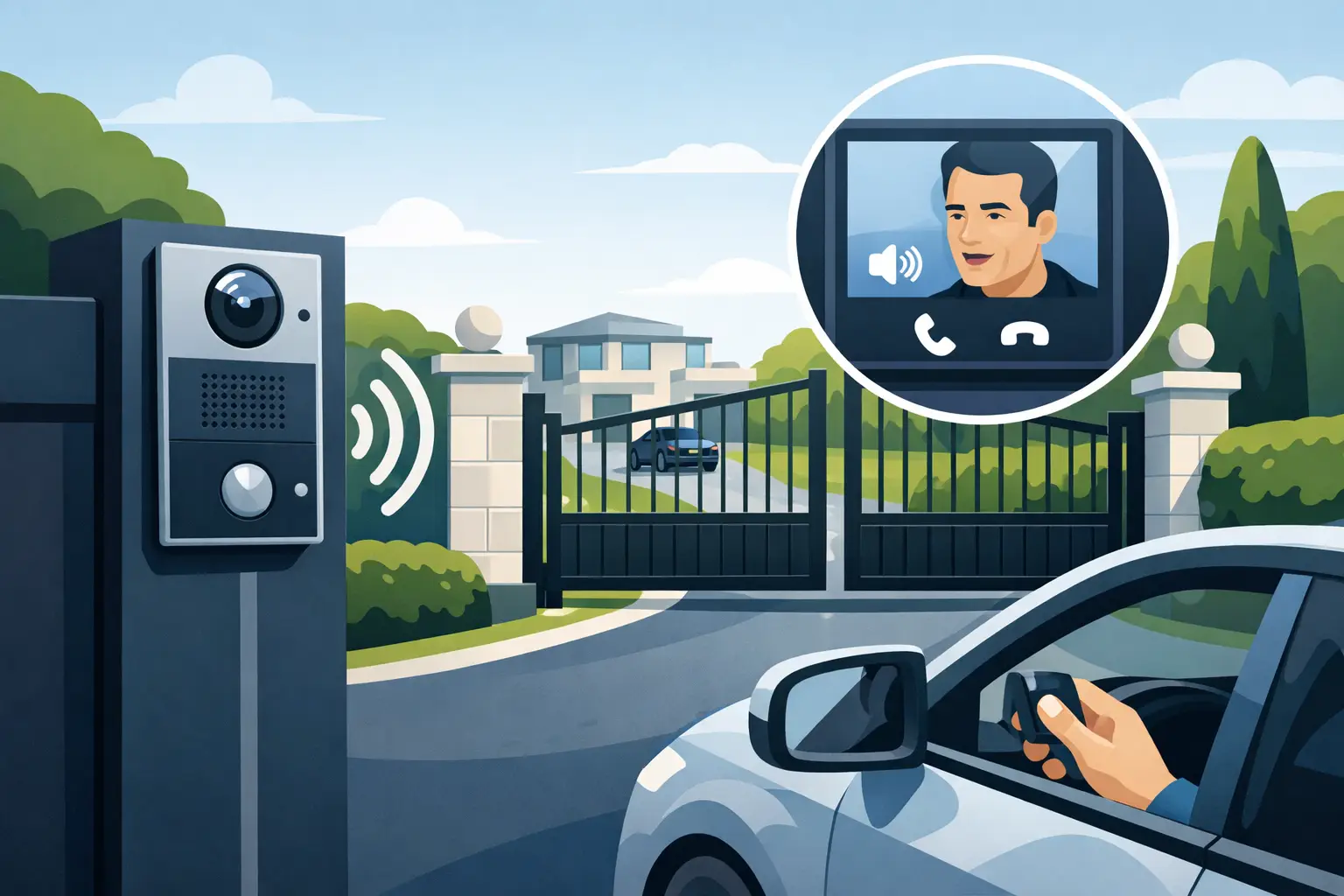
Gate Intercom System for a Private Driveway
Choose a gate intercom system for private driveway access with clear video, reliable calling and professional installation advice for lasting control daily

Remote Monitoring Systems That Put You in Control
Remote monitoring systems give homeowners and businesses live visibility, faster alerts and practical control over CCTV, alarms and access points daily.
Best Commercial Security System Features
Compare the best commercial security system features for dependable CCTV, controlled entry and faster response across offices, flats and managed sites.
Ajax Alarms: Protection That Fits Your Property
Ajax alarms give homes and businesses reliable intrusion detection, instant alerts and simple control. See how professional design makes protection count.