
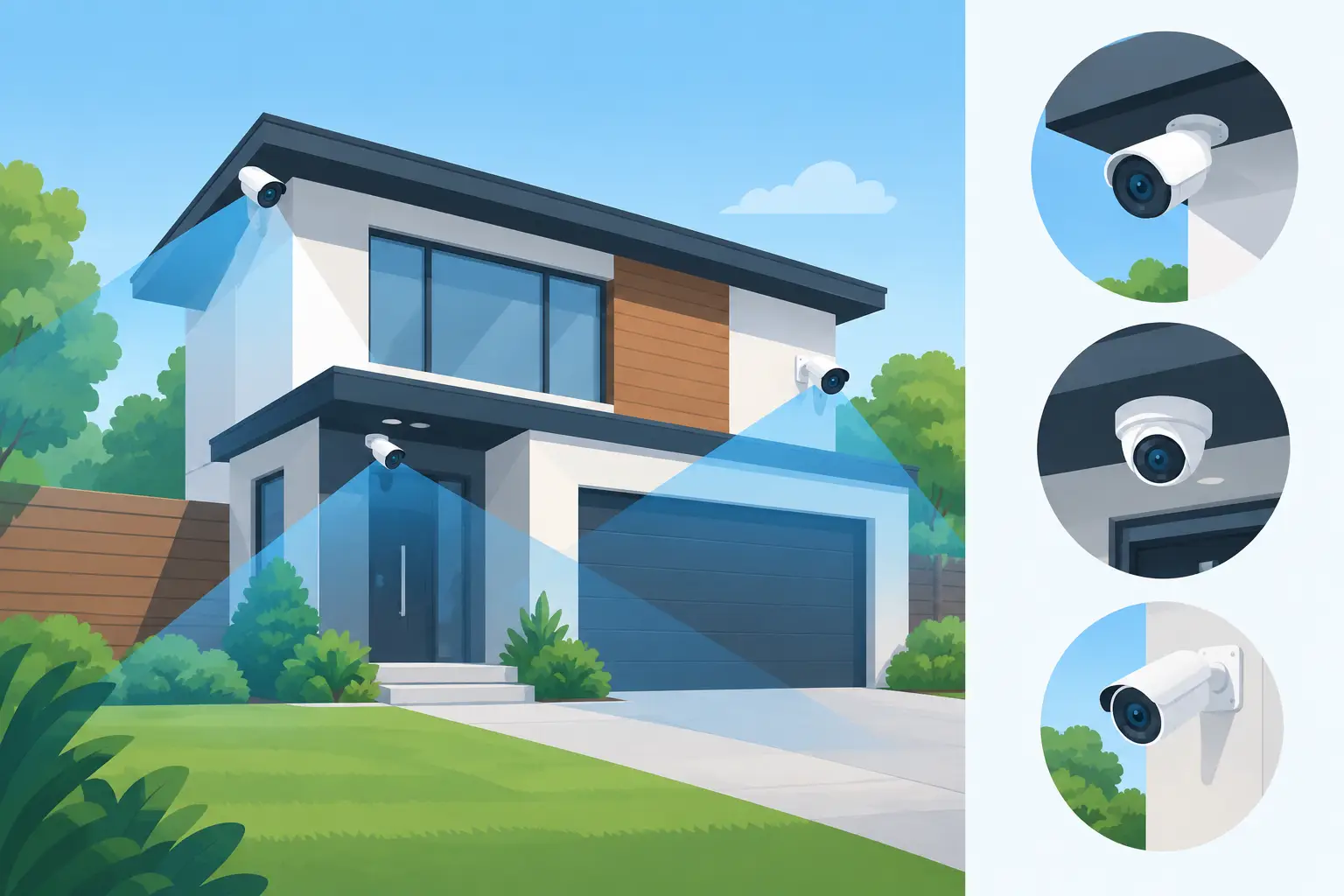


Learn how to position security cameras for clear evidence, safer access points and dependable night coverage at home or your business property every day.
Best Commercial Security System Features
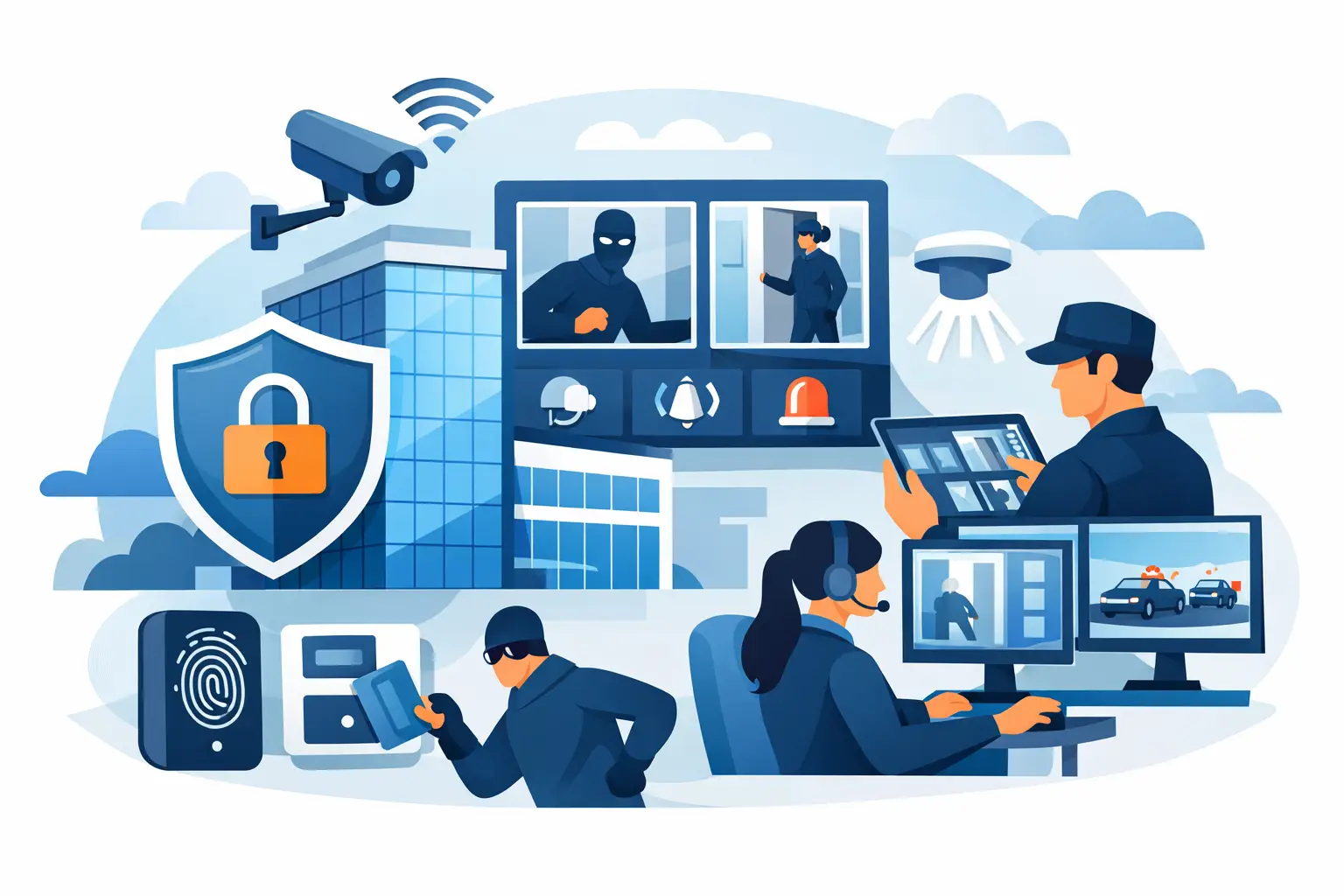
A break-in rarely begins at the point where a camera happens to be looking. It starts at an unlit side gate, a delivery entrance left unsecured, or a shared door where nobody can confirm who entered. The best commercial security system features address those gaps as one joined-up plan: visible deterrence, clear evidence, controlled access and a reliable alert when something changes.
For an office, nursery, block of flats or managed site, more equipment is not automatically better protection. The right system depends on how people use the building, where visitors arrive, what must be protected and who needs to act when an incident occurs. A professional site survey turns those details into coverage that is useful rather than simply impressive on paper.
CCTV that captures usable evidence
CCTV is often the starting point, but a camera is only as valuable as the image it records at the moment it matters. A wide view of a car park may help show activity, while a tighter, correctly positioned camera at a doorway is more likely to identify a face, clothing or a vehicle registration plate.
Camera placement should follow the route an intruder, visitor or staff member actually takes. Entrances, reception areas, loading points, fire exits, side passages and perimeter gates each need a different view. Cameras should not be fitted so high or so wide that a person becomes a few unusable pixels in the frame.
Colour night coverage where it counts
Night-time performance is one of the most important differences between a basic CCTV installation and a system designed for real protection. Black-and-white infrared footage can show movement, but colour often provides the details needed to make a recording actionable. The colour of a vehicle, a jacket or an item carried can make a meaningful difference after an incident.
Smart illumination and intrusion-triggered colour night coverage help provide that extra clarity without keeping every area brightly lit all night. When a defined intrusion line is crossed, the system can bring light and colour recording into play at the point of concern. This is particularly effective at rear access points, bin stores, yards and perimeter routes that become vulnerable after staff have left.
There is a balance to strike. Lighting must support the camera image without causing glare, disturbing neighbours or creating unnecessary light spill. It should be planned around the premises, not treated as an add-on.
Detection that reduces wasted time
A system that records every movement from rain, shadows, trees and passing traffic can quickly become difficult to manage. Useful CCTV should be configured with meaningful detection areas and rules. This may include tripwires across a gate, protected zones around a door, or alerts for movement in an area that should be empty outside working hours.
The aim is not to receive constant notifications. It is to receive the right notification quickly enough to check live footage, make a decision and, where necessary, call for assistance. Remote viewing puts coverage in the palm of your hand, but it works best when alerts have been set up carefully for the people responsible for the site.
Access control that creates accountability
A lock answers one question: can this door be opened? Commercial access control answers more useful questions: who opened it, when, and should they still have permission?
For shared buildings and workplaces, controlled entry prevents a lost key from becoming an ongoing risk. Credentials can be issued and removed without changing cylinders throughout the building. Depending on the needs of the premises, users may enter with a keypad code, card or fob. This works well for offices with changing staff, blocks of flats, nurseries and other environments where different people require different levels of access.
Video door entry for informed decisions
A door entry system should allow staff or residents to see and speak with a visitor before releasing the door. Dahua IP video door entry systems provide a practical option for managed environments, combining camera-based verification with controlled release.
POE-connected 7-inch Android monitors reduce the need for separate local power at each internal screen and provide a clear, familiar point of control. At a busy reception, that means a visitor can be checked before access is granted. In a multi-occupancy property, it gives residents greater confidence over who is requesting entry.
The feature to look for is not merely a screen at the door. It is a properly designed entry process. Consider delivery drivers, contractors, staff arriving outside normal hours and the route from the entrance to sensitive areas. A system should prevent tailgating where possible and avoid forcing users to prop doors open because access is inconvenient.
Alarm protection that responds to intrusion
CCTV shows what happened. Access control governs who comes in. An intruder alarm provides the immediate warning that something is wrong.
Modern wireless alarm systems, including Ajax-based solutions where appropriate, can protect doors, windows and internal spaces without extensive disruption to an occupied building. Sensors can detect opening, movement and glass-break risks, while external devices can help secure approaches before an intruder reaches the building itself.
For many commercial sites, partitioning is essential. A cleaner may need access to communal areas after hours while private offices remain armed. A landlord may want common entrances protected separately from individual units. Zones should reflect how the premises operate, so the alarm supports daily work rather than becoming a nuisance.
Alarm response also needs a clear plan. Decide who receives notifications, who has authority to attend, and what should happen if the nominated contact cannot respond. The system is only one part of the process. Clear responsibilities turn an alert into protection.
Integration should solve a real operational problem
The best commercial security system features are strongest when CCTV, door entry, access control and alarm protection support one another. An access event at a door can be checked against the corresponding camera view. An alarm activation can direct attention to the relevant area. A manager can review an incident without searching through hours of footage.
That does not mean every property needs every possible integration. A small office with one entrance may need excellent camera placement, a video door entry panel and a straightforward alarm. A larger managed building may benefit from multiple entrances, individual user credentials, shared-area surveillance and separated alarm zones.
The decision should be led by risk and use, not by a catalogue of features. Systems that are too complicated are often underused. Systems that are too basic can leave the very gaps that cause concern.
Reliability is a feature, not an afterthought
Security equipment should be specified with its working environment in mind. Outdoor cameras need suitable weather protection. Networked equipment needs secure, dependable connections. Recording capacity must be sized for the number of cameras, image quality and required retention period. If footage is overwritten before an incident is discovered, the camera has not done its job.
Power continuity also deserves attention. Consider what happens during a power cut, whether key devices need battery backup, and how the system reports faults. A camera that has lost connection or a door that is no longer communicating should not remain unnoticed until an incident exposes the problem.
Cybersecurity matters too. Default passwords, poorly managed user accounts and unnecessary remote access can introduce risks of their own. Access should be limited to authorised users, with accounts removed promptly when staff or contractors leave. Day-to-day administration should be simple enough that those controls are actually maintained.
Installation and support make the difference
A feature list cannot replace competent design and installation. The correct camera lens, mounting height, lighting angle, cable route and network configuration all affect whether a system delivers clear evidence and dependable operation. The same is true of access control: a high-quality door panel cannot compensate for a poorly chosen door release or a weak entry procedure.
Before accepting a quotation, ask how the installer will survey the site, identify blind spots and discuss the way your staff, tenants or visitors use the building. Ask what happens after installation if a user needs to be added, an alert requires adjustment or a fault develops. Straight answers are usually a good sign.
NRI Security Ltd takes a consultative approach because a system should fit the property and its risks, rather than push a customer towards equipment they do not need. A free site survey and no-obligation quotation give decision-makers the chance to understand the options before committing.
The right commercial security system should make the building easier to manage, not harder to run. Start with the points where control is lost – the unobserved gate, the poorly lit rear door, the shared entrance and the empty office after closing – then build protection around them with equipment that is clear, dependable and properly supported.

Case Study: CCTV for Convenience Store Theft Prevention
A case study of CCTV for convenience store theft prevention, showing how planned coverage, lighting and review reduce loss and strengthen evidence daily.

Latest Perimeter Detection Technology Explained
See how latest perimeter detection technology combines smart CCTV, lighting and intrusion alerts to protect homes and business premises around the clock.

Nursery Safeguarding Camera Placement Example
See a nursery safeguarding camera placement example that protects children, supports staff and respects privacy, with CCTV design advice for UK settings.

Remote CCTV Monitoring Apps That Feel Reliable
Choosing a remote cctv monitoring app? Learn what matters: alerts, playback, privacy, user access, and setup for homes and small businesses.

Analogue CCTV vs IP: Which Should You Choose?
Analogue CCTV vs IP – compare image quality, cost, cabling, remote access and future upgrades to choose the right system for your property.
How to Protect Vacant Property From Intruders
Learn how to protect vacant property with practical CCTV, lighting, access and inspection measures that deter intrusion and reveal on-site problems early.

Is a PoE Video Intercom Worth It?
Choosing a poe video intercom with indoor monitor? Learn what PoE really changes, what to specify, and how to avoid common installation pitfalls.

CCTV Installation for Small Retail Shops
CCTV installation for small retail shops helps deter theft, protect staff and improve visibility. Get the right system, layout and support.

Access Control Installation for Apartment Blocks
Access control installation for apartment blocks improves entry security, resident safety and daily management with the right system design.

Best CCTV Camera Locations Around a House
Find the best CCTV camera locations around a house for stronger deterrence, clearer footage and practical coverage that protects key entry points.

CCTV Maintenance Checklist for Businesses
Use this CCTV maintenance checklist for businesses to test cameras, recordings, remote access and lighting, so your premises stay protected every day.