


A free cctv site survey shows what cameras you need, where they should go, and what it will cost. Avoid blind spots and overspend.
CCTV for Warehouses and Yards That Works

A missing pallet at 6am, an open gate no one can explain, a lorry reversing through a blind spot after dark – this is where CCTV for warehouses and yards either proves its value or exposes its weaknesses. In these environments, patchy coverage and poor night images are not small issues. They leave gaps in accountability, make incidents harder to investigate, and reduce your ability to act quickly when something is wrong.
Warehouse and yard security needs a different standard of planning from a small retail unit or office. You are dealing with wider spaces, changing light levels, moving vehicles, staff access points, perimeter risks and high-value stock. The right system should not just record events. It should help deter intruders, give you clear evidence, and put day-to-day visibility back under your control.
What good CCTV for warehouses and yards should achieve
The first job is deterrence. Visible cameras, well-planned positioning and smart illumination all send a clear message that the site is monitored properly. That matters in yards especially, where theft often depends on speed, darkness and easy access.
The second job is usable evidence. A system that shows a vague shape moving across a yard is not doing enough. You need images that can identify people, vehicles, registration plates and the sequence of events around loading bays, shutters, gates and pedestrian routes. If an incident reaches insurers or the police, clarity matters.
The third job is operational oversight. CCTV is not only about crime. It can help managers check deliveries, monitor out-of-hours activity, review health and safety concerns, and resolve disputes over damage, access or timing. For many warehouse operators, this practical value is what makes the system pay for itself over time.
Why warehouses and yards are harder to cover than they look
Large open areas can give a false sense of simplicity. In reality, yards create awkward surveillance conditions. During the day, strong backlight, shadows and reflective vehicle surfaces can reduce image quality. At night, the same space can become unusable if the cameras rely on basic low-light performance alone.
Warehouses have their own problems. Internal aisles, racking, roller shutters and mixed-use zones mean one camera rarely covers as much as expected. If goods move from the yard into the building, you also need continuity. It is no use seeing someone approach a loading bay if the trail disappears once they enter the warehouse.
This is why camera count should never be guessed. A proper design starts with how the site works – where people enter, where vehicles stop, where stock sits, where blind spots form, and where incidents are most likely to happen.
The night-time problem most businesses underestimate
Many incidents happen in poor light, and not all night images are equal. Standard black-and-white night footage may record movement, but it can miss the detail that makes the footage actionable. Clothing colour, vehicle paintwork and environmental context can all matter.
For that reason, smart illumination and intrusion-triggered colour night coverage can make a significant difference. Instead of accepting dark, flat footage, the system can provide clearer images when a line is crossed or movement is detected in a critical area. That is especially useful at gates, fence lines, loading areas and external storage zones.
Planning camera positions around risk, not guesswork
The most effective systems are built around priority areas. Perimeter lines, gates, loading bays, roller shutters, staff entrances, external plant, fuel stores and high-value stock locations all deserve close attention. A broad overview camera has its place, but it should be supported by cameras designed for identification at key points.
In a yard, height and angle matter. Place a camera too high and you may get a useful overview but poor facial detail. Place it too low and it becomes vulnerable to tampering or glare from headlights. The right balance depends on what that camera is meant to prove.
Inside a warehouse, the design should reflect movement patterns. Forklift routes, picking areas, goods-in and goods-out zones, and access to restricted rooms often need different types of coverage. What works over a door does not necessarily work along a long aisle or above a dispatch area.
CCTV for warehouses and yards and the value of smart detection
Continuous recording still has value, but modern systems can do more than passively store footage. Smart detection allows the system to respond when something crosses a defined boundary, enters a restricted area or behaves differently from normal site activity.
This is particularly useful for yards outside working hours. You do not want repeated alerts every time rain hits a fence or a fox cuts across the edge of the site. You want alerts that are more meaningful, so the footage you review is relevant and your confidence in the system stays high.
That said, smarter analytics are only as good as the design and set-up behind them. A badly positioned camera or poorly drawn detection zone can create nuisance alerts or miss genuine events. This is one reason a professional site survey matters. The technology is powerful, but it must be applied correctly.
Storage, remote access and the question of who needs to see what
Most warehouse and yard operators want remote access, and rightly so. Being able to check the site from your mobile phone or another device adds reassurance and speeds up decision-making when alarms, staff queries or delivery issues arise. Coverage in your hand is not a gimmick. It is a practical management tool.
But access should be controlled. A site manager may need broad visibility, while a business owner wants full oversight and an operations supervisor may only need certain cameras. Retention is another consideration. If your footage is overwritten too quickly, key evidence may be gone before an issue comes to light.
There is no single retention period that suits every site. It depends on your operation, risk level and any compliance considerations. The important point is to agree this before installation, not after an incident.
Integration often gives better protection than CCTV alone
CCTV is strongest when it works with the rest of your security. Gates, external lighting, intruder alarms and access control all add context and control. If someone enters the site out of hours, you want a joined-up response, not isolated systems working independently.
For example, smart illumination can support clearer footage in low light, while controlled entry points reduce uncertainty over who accessed the premises and when. In some locations, external detection and internal coverage together create a better chain of evidence than cameras alone.
This is where a consultative installer adds real value. Not every site needs the same level of integration, and not every problem should be solved by adding more cameras. Sometimes the better answer is to improve lighting, reposition coverage, tighten access control or protect the perimeter more effectively.
Common mistakes when buying warehouse and yard CCTV
The biggest mistake is buying on camera count alone. Eight cameras can be too many for one site and nowhere near enough for another. Without a proper design, the number means very little.
Another common issue is over-focusing on the building and under-protecting the yard. External areas often carry the higher risk because they are less controlled, more exposed and harder to monitor after hours. If your first sign of trouble is a damaged shutter, your coverage started too late.
There is also the temptation to cut corners on night performance. This usually looks acceptable on a specification sheet and disappointing in real conditions. The same goes for poorly planned storage, weak remote access set-up or cheap equipment that becomes unreliable when you need it most.
What to expect from a proper installation process
A good installer should start with a site survey, not a sales pitch. That means looking at your perimeter, building layout, lighting conditions, access points, operational routines and known concerns. From there, the system can be specified around your site rather than forced into a standard package.
You should also expect straightforward advice. If a certain area does not need specialist coverage, you should be told. If another area is vulnerable and needs better protection than you first assumed, that should be explained clearly as well. The aim is the right-fit system, not the biggest quote.
For businesses that want dependable performance and support after installation, this matters just as much as the hardware itself. NRI Security takes that approach because security only works properly when the design, installation and after-sales support all line up.
When CCTV for warehouses and yards is planned well, you notice the difference quickly. Incidents are easier to verify, staff know the site is properly watched, and the business has a clearer grip on what happens inside and outside the building. That kind of control is not about watching everything all the time. It is about knowing that when something matters, your system will show you exactly what happened.

Best CCTV for Night Vision: What Works
Choosing the best cctv for night vision? Learn what actually improves night footage: sensors, lighting, placement, and pro setup for real clarity.

How to Set CCTV Motion Zones Correctly
Learn how to set CCTV motion zones correctly to cut false alerts, improve coverage and make sure your cameras catch the movement that matters.

Can Neighbours Complain About My CCTV UK?
Can neighbours complain about my CCTV UK? Learn when complaints are valid, what the law says, and how to position cameras properly.

PoE Cameras vs WiFi Cameras: Which Fits?
PoE cameras vs WiFi cameras – compare reliability, image quality, installation and cost to choose the right CCTV setup for home or business.

Do I Need Signs for CCTV in the UK?
Do I need signs for CCTV in the UK? Learn when CCTV signs are required, when they help, and how to stay compliant at home or work.

Choosing a Dahua Door Entry Installer
Need a dahua door entry system installer? Learn what to expect from a proper survey, POE setup, access options, and reliable after-care.
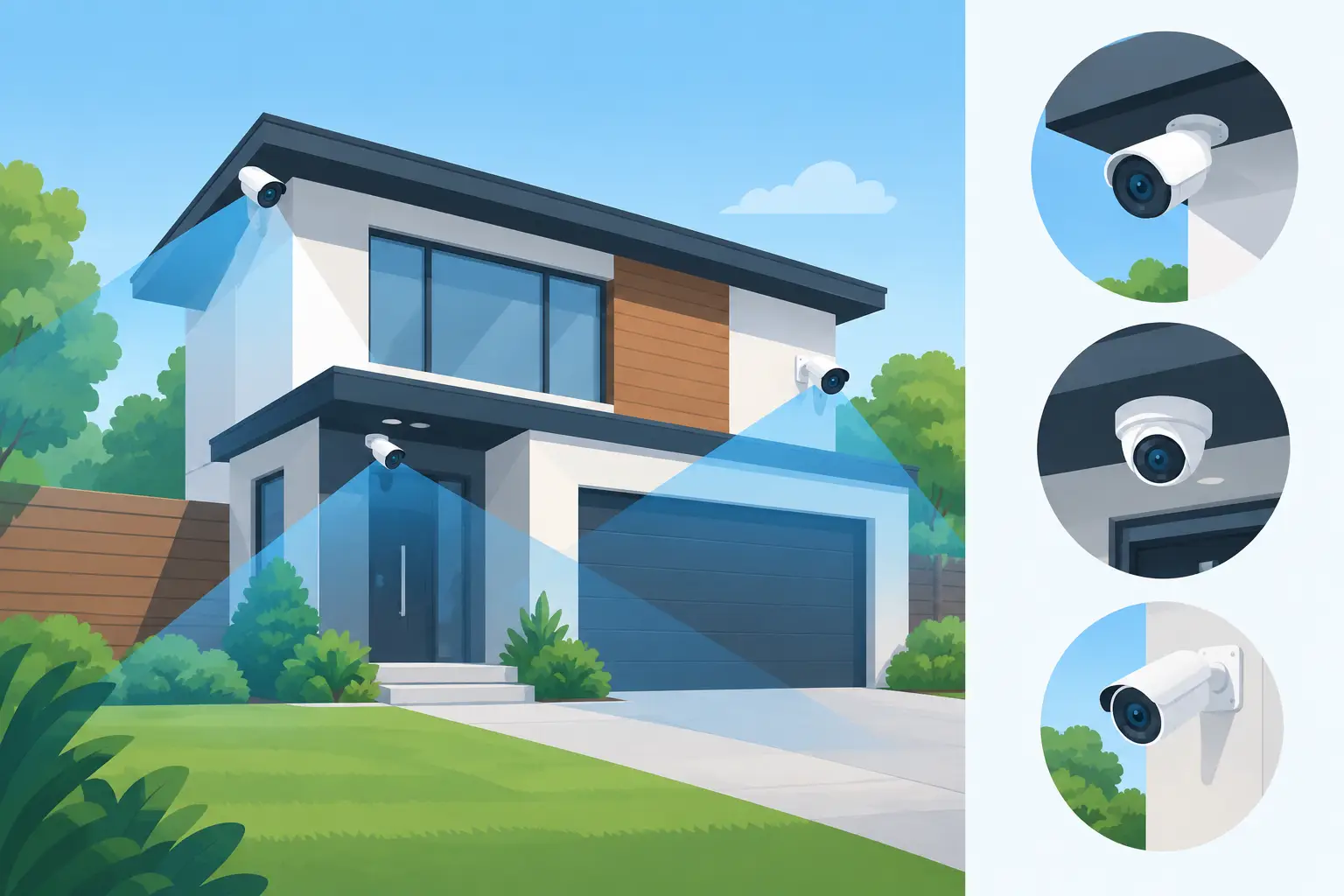
How to Position Security Cameras Properly
Learn how to position security cameras for clear evidence, safer access points and dependable night coverage at home or your business property every day.

8 Best Ways to Deter Trespassers at Home
Learn the best ways to deter trespassers with practical CCTV, lighting, access control and boundary advice for homes and businesses across the UK today.

CCTV for Flat Entrance Doors: What Works
CCTV for apartment building entrance: learn what to cover, camera types, night vision, privacy rules, and setup tips for safer shared entryways.

Is CCTV Legal at Home in the UK?
Is CCTV legal at home UK? Yes, usually – but camera position, audio, neighbours and recorded footage all affect whether your setup stays lawful.

How to Choose a Home CCTV Installer
Learn how to choose home CCTV installer with confidence. Compare surveys, support, system design and quotes before you commit.