
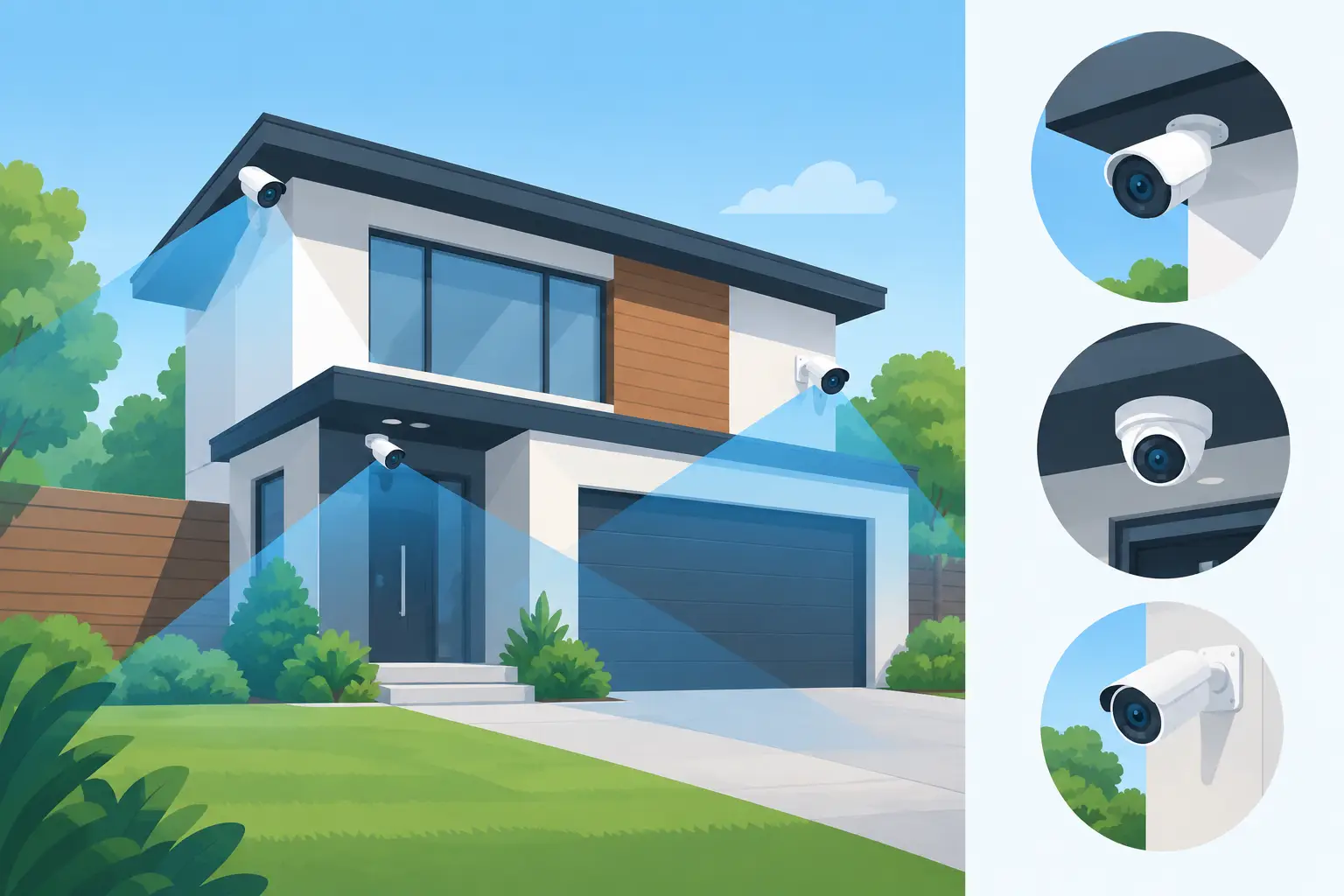


Learn how to position security cameras for clear evidence, safer access points and dependable night coverage at home or your business property every day.
Best Security Cameras for Nurseries That Protect
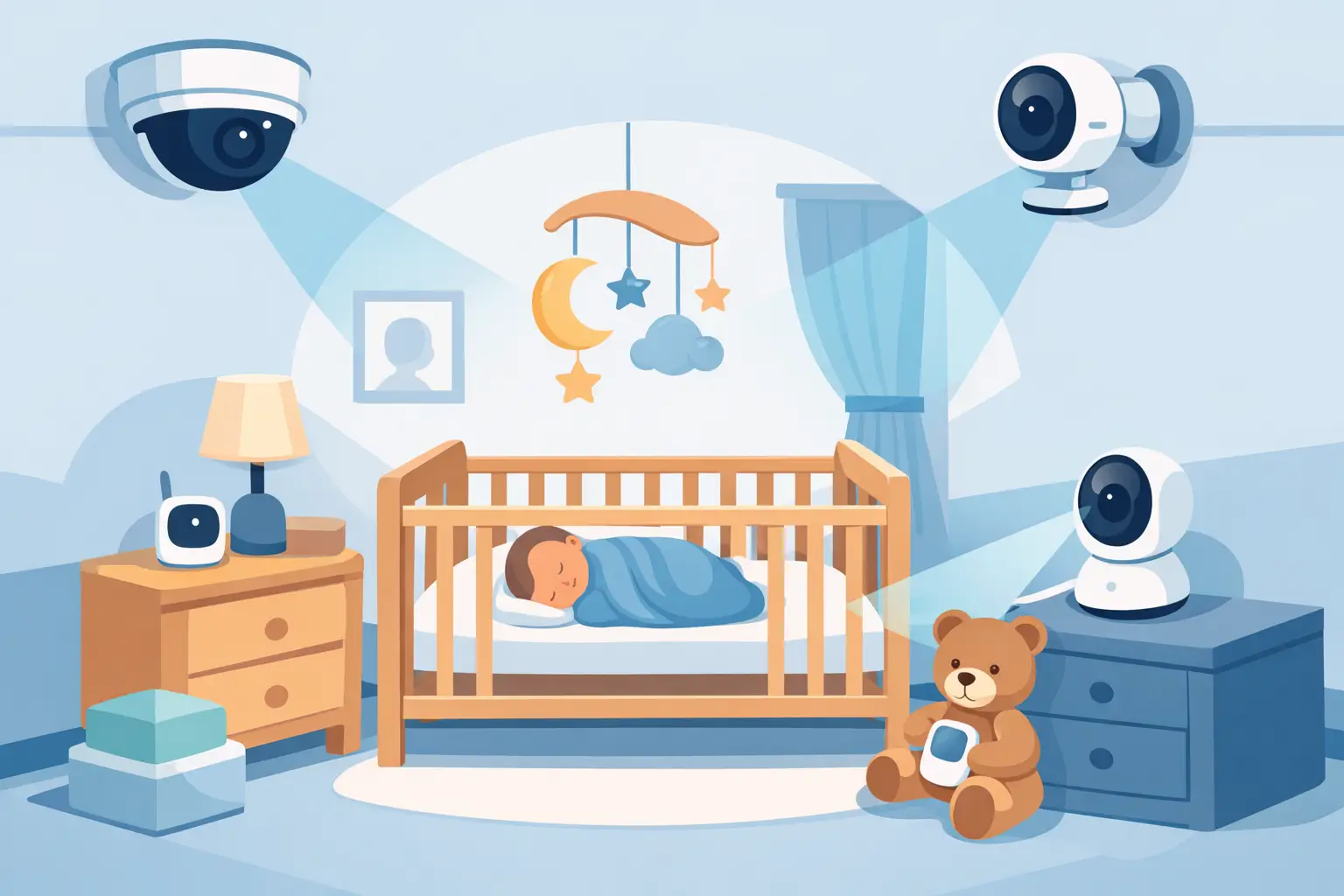
A nursery camera system has to do more than record a clear image. It must help staff protect children at entrances, give managers reliable evidence when questions arise, and provide reassurance without turning care rooms into uncomfortable surveillance spaces. The best security cameras for nurseries are therefore part of a properly designed safeguarding and access-control plan, not a collection of cameras bought off the shelf.
For a setting responsible for children, poor coverage is more than an inconvenience. A blind spot by the main gate, a washed-out image at collection time, or footage that cannot identify a person clearly can undermine the very purpose of the system. The right installation gives management clear visibility of the points that matter, with straightforward daily operation for authorised staff.
What nursery security cameras need to achieve
A nursery has different risks to a typical shop, office or home. There are regular arrivals and departures, busy handovers, delivery drivers, visitors, contractors and agency staff. Outside, darker mornings and afternoons can make gates, car parks and side access routes difficult to monitor. Inside, managers need accountability around shared or public-facing areas while respecting children, parents and employees.
Start with the outcome you need from each camera. At the main entrance, the aim is usually identification: a clear view of the person approaching and the interaction at the door. At a perimeter gate, it may be early detection and a usable record of anyone entering the site. In a corridor or reception area, wider coverage helps establish who moved through the building and when.
This is why camera position, lens selection and lighting matter as much as the camera specification. A high-resolution camera pointed at a wide playground may provide a useful overview, but it will not necessarily identify someone at the far fence line. Conversely, a tightly focused camera can capture faces well but leave the approach route unobserved. A professional survey matches each view to its job.
The best security cameras for nurseries are systems, not single devices
For most nursery premises, an IP CCTV system is the practical choice. IP cameras send footage across the network to a recorder, allowing controlled viewing on a monitor, computer or authorised mobile device. Power over Ethernet, commonly called PoE, can carry power and data through one network cable, reducing local power supplies and helping create a tidier, more dependable installation.
A well-specified system will normally combine different camera types rather than using one model everywhere. Compact dome cameras can suit internal communal spaces because they are discreet and difficult to redirect. Bullet or turret cameras are often effective outside, where a more visible camera can also act as a deterrent. A video door entry camera should be selected for the entrance itself, where two-way communication and controlled release are required.
The essential design decisions are these:
- Identification at entrances and gates, with a camera angle that captures faces rather than the tops of heads.
- Overview coverage of reception, corridors and outdoor circulation areas, so staff can follow events through the site.
- Reliable low-light performance, particularly at gates, car parks, bin stores and side passages.
- Secure recording and simple retrieval, so authorised management can find relevant footage quickly.
Higher resolution is useful, but it should not become the entire buying decision. More detail requires suitable storage capacity, adequate network performance and the right lens. A correctly positioned camera with balanced lighting will often deliver more usable evidence than a higher-resolution unit installed as an afterthought.
Colour night coverage where it makes a difference
Most incidents around nursery premises happen when the building is quieter: early morning opening, evening closing, weekends and school holidays. Conventional infrared night vision can produce clear black-and-white footage, but it may lose valuable details such as clothing colours, vehicle colour or a distinctive bag.
For key external areas, cameras with smart illumination and colour night coverage can provide a stronger picture when an intrusion line is crossed. These systems can use controlled white-light illumination to capture colour detail at the moment it is needed, rather than leaving an area permanently lit. That supports better identification while avoiding unnecessary light disturbance for neighbours and local residents.
There is a trade-off. Bright illumination must be aimed carefully, and it is not suitable for every view. A survey should assess the existing lighting, reflections from windows, nearby roads and the distance from camera to subject. The goal is useful footage, not simply the brightest image.
Do not separate CCTV from entry control
A camera at the front door is helpful, but it does not stop an unauthorised person from following someone inside. For nurseries, CCTV is strongest when paired with controlled entry. A Dahua IP video door entry system, for example, can allow staff to see and speak to a caller before releasing the door from an internal monitor.
Credential-based access can add another layer of control for staff-only doors. Depending on the building and operating procedures, this may use a keypad, card or fob. PoE-connected 7-inch Android monitors give authorised staff a clear, practical point of control at reception or in a management office.
This approach also improves accountability. Rather than relying on a door being locked and someone recognising every visitor, the setting has a repeatable process: visitors call, staff verify, access is granted where appropriate, and the event can be supported by video evidence. It is a sensible protection for children, staff and parents alike.
Privacy and data protection must shape the design
Nursery CCTV has to be proportionate. Cameras should address a clear safety or security purpose, not create blanket monitoring of every activity. Reception areas, external doors, perimeter routes and shared circulation spaces are common priorities. Placement in toilets, changing facilities or any area where a person would reasonably expect privacy is not appropriate.
Audio recording deserves particular caution. Capturing conversations is generally far more intrusive than recording video and is rarely necessary for a nursery security objective. If it is considered at all, management should seek appropriate data-protection advice and document a compelling reason.
The organisation operating the system needs clear rules for who can view footage, who can export it, how long recordings are retained and how requests are handled. Access should be limited to authorised people, with individual user accounts where practical rather than a shared password passed between staff. Strong passwords, secure remote access and regular updates are basic requirements, not optional extras.
Visible signage also matters. It tells visitors that CCTV is in operation and supports transparency. The exact policy and retention period should reflect the setting’s needs and its data-protection responsibilities. Keeping every recording indefinitely is not better security – it creates unnecessary risk and makes meaningful footage harder to manage.
Installation quality decides whether footage is useful
Nursery managers are often offered inexpensive wireless cameras that promise quick set-up. They can have a place in limited, low-risk situations, but they are not automatically the best foundation for a safeguarding-focused site. Wi-Fi coverage can vary through solid walls, battery cameras need regular attention, and consumer cloud services may provide less control over footage and user access.
A wired, professionally installed IP system is usually the more dependable route for permanent coverage. Cables can be routed securely, cameras mounted at the correct height, recording capacity calculated for the required number of days, and every angle tested in daylight and darkness. The recorder should be located in a secure position, not left where an intruder could simply disconnect it.
Installation should also allow for the nursery’s routine. Cameras must not obstruct signs, escape routes or everyday maintenance. External equipment needs weather-appropriate mounting, while internal cameras should be placed to avoid glare from windows and lights. Before handover, staff should know how to view live images, search by time and camera, save an incident clip, and contact support if anything changes.
A practical way to specify your system
Walk the premises at the times it is busiest and quietest. Follow the journey of a parent arriving with a child, a visitor seeking entry, a staff member opening up alone, and a person approaching from the street after dark. This quickly reveals which views need identification, which need overview coverage and where access control should sit.
Then agree the operating rules before equipment is chosen. Who answers the door? Who may release it? Which managers can view recordings remotely? What happens if a camera sends an alert? Technology supports procedure; it cannot replace it.
At NRI Security, a free site survey and no-obligation quotation can turn these questions into a right-fit design, without loading a nursery with equipment it does not need. With more than 20 years of installation experience, the focus is on clear coverage, dependable operation and support after handover.
The right nursery camera system should leave staff feeling more in control, not more burdened. When each camera has a defined purpose, access is managed properly and footage remains clear when light falls, the setting gains practical reassurance for every opening, collection and closing time.

Choosing a Panic Button Alarm for Home Security
A panic button alarm for home gives you a fast way to raise an alarm. Learn where it helps, key features and why professional fitting adds confidence.

Business Access Control Guide for Safer Sites
A practical business access control guide for offices, flats and managed sites. Learn what to choose, how systems work and what really matters.

A Case Study: Access Control for a Nursery
See how a nursery can control visitor entry, protect children and simplify daily arrivals with a professionally planned access control system on site daily.

Case Study: CCTV for Convenience Store Theft Prevention
A case study of CCTV for convenience store theft prevention, showing how planned coverage, lighting and review reduce loss and strengthen evidence daily.
Best Panic Alarms for Homes and Families
Compare the best panic alarms for homes, from personal buttons to monitored systems, and choose reliable protection for your family, home and property.

Residential CCTV Installation Guide for Homes
Residential CCTV installation guide for homeowners – learn camera placement, lighting, recording, compliance and why professional setup matters.

Access Control That Fits the Way You Work
Access control helps you manage who enters, when, and how. See what matters most for homes, offices, flats, and managed buildings.

Commercial CCTV Installation Guide for UK Sites
Our commercial CCTV installation guide explains how to plan cameras, protect privacy and achieve clear evidence with reliable professional support on site.

CCTV Installer Chorley: What Good Looks Like
Choosing a cctv installer chorley? Learn what a proper survey covers, the kit that matters, and how to avoid poor night footage and weak deterrence.

CCTV Maintenance Checklist for Businesses
Use this CCTV maintenance checklist for businesses to test cameras, recordings, remote access and lighting, so your premises stay protected every day.

Future of App Controlled Security: What Matters
The future of app controlled security brings clearer remote oversight, smarter alerts and safer entry – when systems are designed around real daily risks.