


Learn the best ways to deter trespassers with practical CCTV, lighting, access control and boundary advice for homes and businesses across the UK today.
Case Study: Door Entry for Apartment Blocks

A communal entrance can become the weakest point in an otherwise well-managed block. Residents may be letting in delivery drivers without checking, lost fobs may remain active, and a damaged audio handset can leave a flat unable to verify a caller. This case study of door entry in flats shows how a modern IP video entry system can give a property manager clearer control without making everyday access difficult for residents.
The setting is a mid-sized block of flats with a shared front entrance, a secure internal lobby and a mixture of owner-occupiers and tenants. The building needed a replacement for an ageing audio-only system that had become unreliable and offered little accountability when access issues arose.
The problem: entry was possible, but not controlled
The existing system had been installed years earlier. It relied on basic audio handsets inside each flat and a small number of proximity fobs for regular users. When the entrance panel worked, residents could speak to visitors. When it did not, the managing agent received calls, contractors were delayed and residents increasingly relied on someone else holding the door open.
There were three practical concerns. First, audio alone did not allow residents to confirm who was standing at the entrance. Second, replacement fobs had been issued over time without a dependable record of who still held one. Third, the system was difficult to support because its wiring and components had not been clearly documented.
This is a common position for blocks of flats. The issue is not simply whether the front door locks. A controlled entrance needs to help authorised people get in reliably, allow residents to make an informed choice about visitors, and give the building manager a sensible way to deal with lost credentials, faults and changing occupancies.
The brief for the flat door entry system
The managing agent wanted a system that could support the block now and remain practical as residents changed. It needed video calling at the entrance, simple operation within each flat, controlled access for residents and a clear route for adding or removing credentials.
The specification also had to respect the building itself. A replacement system should not mean unnecessary disruption to occupied flats, exposed cabling in communal areas or equipment that requires residents to become security experts. The aim was straightforward: make the entrance more secure, make visitor decisions easier and make management less reactive.
A free site survey is where these decisions should begin. The entrance location, door condition, cable routes, power provision, lock type, fire safety requirements and number of dwellings all affect the right design. A system suitable for six flats may not be appropriate for forty, particularly where multiple entrances, gates or concierge arrangements are involved.
Why IP video door entry was selected
The chosen approach was a Dahua IP video door entry system using a networked outdoor station and POE-connected 7-inch Android monitors inside the flats. POE, or Power over Ethernet, allows power and data to run through suitable network cabling. That can simplify the installation and makes the equipment easier to manage than a collection of separate power supplies.
At the entrance, the video call panel gave visitors a clear call point and allowed residents to see who was there before releasing the lock. This changed the decision from, “Who is it?” to a visual check supported by two-way conversation. For residents receiving regular deliveries, carers or tradespeople, that extra confirmation is often the feature they value most.
Inside the flats, the 7-inch monitor was selected because it offered a familiar, easy-to-use interface. Residents could answer a call, view the visitor and release the door without reaching for a phone or relying on a separate app. Remote mobile access can be useful for some buildings, but it should be considered carefully. It depends on resident preference, connectivity and how the managing agent intends to support privacy and account changes.
Access credentials: flexibility without losing accountability
A shared entrance works best when access is matched to how people actually use the building. In this case, residents required a quick way to enter without calling their own flat, while the managing agent needed the ability to remove access when a fob was lost or a tenancy ended.
The system was configured to support multiple credential options, including fobs, cards and keypad access where appropriate. Fobs suited most residents because they were familiar and convenient. Cards were useful for building staff or contractors who needed an identifiable pass, while a keypad can be helpful where regularly changing temporary access codes are preferable.
The important point is not to enable every option simply because the equipment can support it. More credentials can mean more administration. For a smaller block, properly managed fobs may be enough. For a building with frequent contractors, a cleaning team or a managed lettings portfolio, time-controlled codes or individual cards may provide better control.
Each credential should be issued against a clear record. When somebody moves out, their access can be removed rather than hoping a returned fob is the only copy in circulation. That gives the managing agent a more defensible process and reduces the risk created by unmanaged keys.
Installation decisions that protected daily use
The entrance panel was positioned to give the camera a useful view of callers rather than a view dominated by bright sky or reflected glass. This sounds minor, but camera placement determines whether video is genuinely useful. Poor lighting, a panel mounted at the wrong height or a restricted field of view can undermine an otherwise capable system.
The lock and door closer were assessed as part of the installation, not treated as someone else’s problem. Door entry equipment can release a lock, but it cannot compensate for a door that does not close properly or a latch that catches. The completed system needed to secure the door consistently after every entry, including when residents were carrying shopping, prams or parcels.
Existing routes were used where they were safe and suitable, with new cabling installed neatly where required. In occupied blocks, workmanship matters beyond appearance. Communal routes need to remain tidy, protected and serviceable, while disruption to residents should be planned rather than accepted as unavoidable.
Before handover, the installation was tested from the entrance panel through to each monitor. Calls, audio, video, door release and resident credentials were checked. The managing agent was also shown how to issue, delete and replace credentials, and what information to provide when requesting support.
The outcome: a more defensible entrance
The most immediate improvement was reassurance. Residents could identify callers visually before opening the door, rather than relying on a voice or opening the entrance on assumption. This does not remove the need for sensible resident behaviour, but it gives people the information needed to make a better decision.
For the managing agent, the value was operational as well as security-related. Adding a new resident, cancelling a lost fob and dealing with a reported fault became clearer processes. Instead of treating the entry system as a black box that only mattered when it failed, the block had a manageable access-control arrangement.
There was also a benefit for maintenance planning. An IP system built around known equipment and documented connections is easier to support over its lifetime. That does not mean it will never require maintenance. Entrance panels face weather, locks are mechanical components and communal equipment receives heavy use. It does mean faults can be diagnosed with a clearer understanding of how the system is configured.
What other property managers should take from this case study
Door entry is often purchased after an incident, repeated complaints or the failure of old equipment. A more effective approach is to assess the full entrance journey before making a decision. Consider who needs access, when they need it, how visitors are verified, what happens when credentials are lost and who will administer the system after installation.
Video entry is not automatically the right answer for every building, and a larger system is not always a better one. A small block may need a simple, dependable arrangement with video monitors and fobs. A multi-entrance development may need networked panels, central administration and carefully defined access permissions. The right specification comes from the site, the residents and the level of management required.
NRI Security approaches that decision through a site survey and no-obligation quotation, with the focus on a system that fits the property rather than unnecessary extras. The best flat door entry installation is one residents can use without thinking twice, while the people responsible for the building retain control when it matters.

Professional CCTV Installer Benefits
See the professional CCTV installer benefits that matter most – better coverage, cleaner setup, reliable recording and support after install.
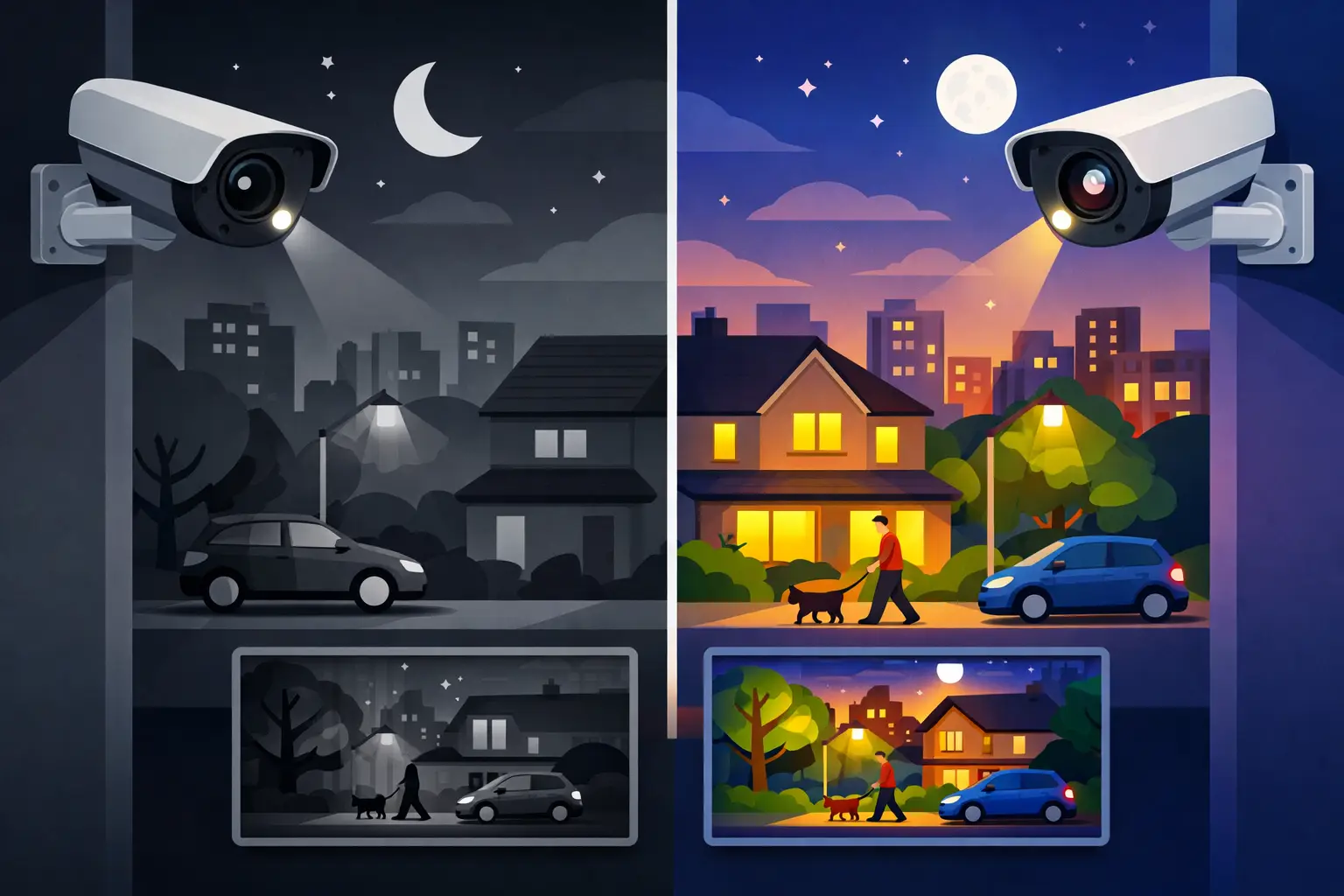
What Is Full Colour Night CCTV and How It Works
Understand what is full colour night CCTV, how it records useful colour after dark, and why camera placement and lighting still matter on every site.

Commercial CCTV Installation Guide for UK Sites
Our commercial CCTV installation guide explains how to plan cameras, protect privacy and achieve clear evidence with reliable professional support on site.

Wireless Alarm Reliability: What Really Matters
Wireless alarm reliability depends on design, signal strength, power and support. See what a professional installation checks before an alarm is needed.

A Nursery Security Upgrade Example That Works
See a practical nursery security upgrade example: controlled entry, CCTV and safer handovers designed around routines, privacy and safeguarding needs.

Is a PoE Video Intercom Worth It?
Choosing a poe video intercom with indoor monitor? Learn what PoE really changes, what to specify, and how to avoid common installation pitfalls.

How Long Should CCTV Recordings Be Kept?
How long should CCTV recordings be kept? Learn the right retention period for homes, landlords and businesses, with practical UK guidance.

How to Plan an Apartment Intercom Upgrade Safely
Learn how to plan apartment intercom upgrade work with clear entry rules, suitable IP equipment, resident communication and reliable ongoing support too.

Access Control Installation for Apartment Blocks
Access control installation for apartment blocks improves entry security, resident safety and daily management with the right system design.

Cloud vs NVR CCTV Storage: Which Fits?
Compare cloud vs nvr cctv storage for homes and businesses. Learn the real trade-offs on cost, access, reliability and control.

Intrusion Line Triggered CCTV: A Practical Guide
Intrusion line triggered cctv captures the moment someone crosses a boundary, improving night footage, alerts and evidence without constant false alarms.