


Access control installation for apartment blocks improves entry security, resident safety and daily management with the right system design.
Best Commercial CCTV System Features

A camera that records a blurry figure in a hoodie is not much use after a break-in, stock loss or dispute at reception. When businesses ask about the best commercial CCTV system features, what they usually want is simpler than a spec sheet – clear evidence, reliable coverage and a system that helps staff act quickly when something happens.
That means looking beyond camera count and headline resolution. The right commercial CCTV system should suit the site, the risks and the way the building is used every day. A small office, a nursery, a block of flats and a warehouse may all need CCTV, but the features that matter most will differ once you consider entrances, lighting, public access, out-of-hours activity and who needs to review footage.
Best commercial CCTV system features that matter most
The first feature to prioritise is image quality that holds up in real conditions, not just on a brochure. High-definition cameras are now standard, but resolution alone does not guarantee usable footage. Camera position, lens choice, lighting levels and the width of the scene all affect whether you can identify a face, read a number plate or confirm exactly what happened.
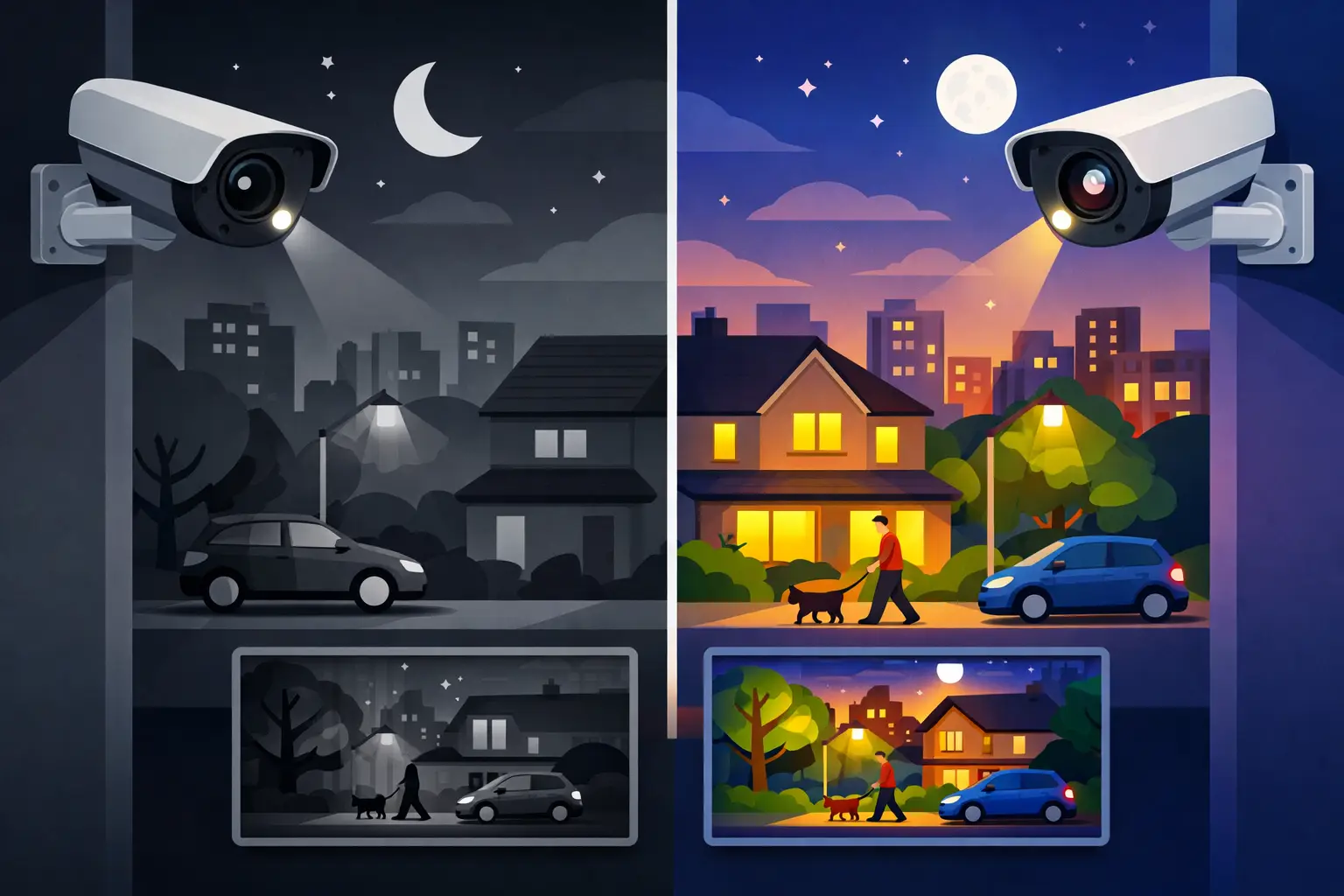
For many commercial sites, colour night coverage is one of the biggest upgrades in practical terms. Traditional night footage often turns incidents into grey shapes and guesswork. Newer systems can provide full-colour images at night, especially when combined with smart illumination or intrusion-triggered lighting. That gives you a better chance of seeing clothing, vehicles and movement routes clearly, which makes footage far more useful for investigations and insurance.
Motion detection and intelligent event triggers are just as valuable when set up properly. A well-designed system can distinguish between general movement and activity that needs attention, such as a person crossing a perimeter line after hours or approaching a restricted entrance. This reduces wasted time searching through hours of uneventful footage. It also means alerts can be more meaningful instead of becoming background noise that staff start to ignore.
Remote access is another core requirement. Business owners, site managers and landlords increasingly want coverage in the palm of their hand, whether they are on site, at home or moving between locations. Live view and playback through a secure app can make daily management easier, especially for out-of-hours checks, opening and closing procedures, or responding to an alert without delay. The key point is not just having remote access, but having it configured securely and simply enough that people actually use it.
Storage matters more than many buyers realise. A system may produce excellent footage, but it still needs enough retention time for your business type and risk profile. Some environments need short-term review for operational issues, while others may need longer retention due to regulation, incident reporting or delayed complaints. Storage must also match recording quality and camera count. A poorly specified recorder can leave you with gaps, compressed footage or fewer days of playback than expected.
Why the best commercial CCTV system features depend on the site
A good installer starts with the property, not the product. A front entrance camera has a different job from one watching a car park, delivery area or internal corridor. In retail or hospitality settings, you may need broader situational coverage at till points, exits and customer areas. In offices or managed residential buildings, controlled entry and clear footage of shared access points may be the priority. In nurseries, safeguarding and accountability shape both camera placement and access to footage.
This is where wide-angle coverage versus identification detail becomes important. One camera can cover a large space, but if it is trying to do too much, faces become too small to identify properly. In many cases, it is better to combine overview cameras with focused cameras at key choke points such as entrances, gates and reception desks. That gives you context and detail rather than one compromise view.
Lighting is another major factor. Bright sunlight through glass, dim loading bays, car parks and side alleys all create challenges. The best systems account for changing light conditions throughout the day and year. Features such as wide dynamic range, smart supplementary light and intrusion-linked illumination help preserve usable images where basic cameras would struggle.
Network design also matters. Modern IP CCTV systems offer stronger image quality and better flexibility than older analogue systems, but they need the right infrastructure behind them. Power over Ethernet can simplify installation and improve reliability by carrying power and data over one cable. For many commercial premises, that makes the system cleaner, easier to manage and more future-ready if cameras or related devices need to be added later.
Features that improve control, not just recording
The strongest CCTV systems do more than capture incidents after the fact. They help deter intruders, support staff and improve response time while an event is still unfolding. Audible warnings, visible deterrence and lighting integration can all play a part, depending on the site and the threat level.
Perimeter protection is a good example. If your property has defined boundaries, yards, side passages or access roads, virtual intrusion lines and tripwire rules can create earlier alerts than cameras aimed only at doors. That may be useful for businesses with vulnerable rear access, compounds or out-of-hours deliveries. It is not always necessary on every site, but where external approach routes are a known weakness, it can materially improve security.
Search functions are often overlooked until an incident happens. If reviewing footage means scanning through endless recordings manually, time is lost and key moments may be missed. Intelligent search by event, line crossing or time window makes the system more practical for real businesses. This is especially useful for managers who do not have the time or technical background to wrestle with complicated playback every time something needs checking.
User permissions are another feature worth paying attention to. Different people may need different levels of access. A facilities manager, a business owner and a receptionist should not necessarily all have the same rights to export footage or change settings. Properly configured access protects privacy, keeps accountability clear and reduces the chance of accidental changes that weaken the system.
Integration with access control and day-to-day operations
For many commercial buildings, CCTV works best when it does not sit in isolation. Sites with controlled entrances, shared occupancy or regular visitor traffic often benefit from pairing surveillance with door entry or access control. Seeing who is at the door, verifying access events and reviewing linked footage can tighten security and reduce disputes.
This is particularly relevant in office buildings, nurseries and blocks of flats, where a video door entry system and CCTV can support both safety and convenience. Credential options such as keypad, card or fob access can be matched to the way the property is used, while internal monitors and app access give staff or residents clearer visibility before granting entry. The benefit is practical control, not technology for its own sake.
Integration can also support incident timelines. If there is a question about who entered, when they arrived and what happened next, linked systems provide a clearer record than standalone devices. That can be useful for safeguarding, staff accountability, deliveries, contractor access and complaint resolution.
What to avoid when choosing a system
The biggest mistake is buying on headline specification alone. More megapixels, more cameras or a lower quote do not automatically give you better protection. Poor placement, weak night performance and badly configured recording can leave major gaps even in a system that looks impressive on paper.
Another common issue is overbuying features that will never be used. Not every site needs advanced analytics on every camera, and not every business needs the same retention period or viewing permissions. The aim should be right-fit design. A consultative survey usually saves money in the long run because it focuses investment where it actually improves coverage and evidence.
It is also wise to consider support after installation. Cameras, recorders, apps and network settings all need to work together over time. If remote viewing stops working or footage is difficult to retrieve after an incident, a cheap install quickly becomes expensive. Ongoing support and straightforward advice matter just as much as the equipment itself.
For most buyers, the best commercial CCTV system features come down to a few essentials: clear images in daylight and at night, dependable recording, useful alerts, secure remote access and a layout designed around real risks on the site. Everything else should support those basics, not distract from them.
If you are weighing up options, the most useful next step is not guessing which camera has the longest feature list. It is having the property assessed properly so the system fits the building, the people using it and the level of control you actually need.

CCTV retention duration: how long is right?
Set a CCTV retention duration that protects your property, supports investigations and respects UK data protection duties without wasting storage space.

Your Guide to Wireless Alarm Installation
Use this guide to wireless alarm installation to plan reliable protection, smart device placement, app control and ongoing support for your property today.

Best Video Door Entry Monitors for UK Properties
Compare the best video door entry monitors for homes, flats and workplaces, with clear advice on screens, POE, access control and installation choices.

What Home CCTV Tech Is Worth Buying?
Learn which latest CCTV technology for homes genuinely improves security, from smart alerts to colour night vision and professional setup.

Commercial CCTV That Fits the Job
Commercial CCTV should deter, identify and inform. Learn what to specify, where systems fail, and how to choose the right setup.

How Long Should CCTV Recordings Be Kept?
How long should CCTV recordings be kept? Learn the right retention period for homes, landlords and businesses, with practical UK guidance.

Ajax Alarm System Review UK
Ajax alarm system review UK – a clear look at features, app control, reliability, costs and whether Ajax suits homes and businesses.

Why Security Consultation Before Installation Matters
Security consultation before installation helps you choose the right CCTV, alarms and access control for proper coverage, compliance and value.

Cloud vs NVR CCTV Storage: Which Fits?
Compare cloud vs nvr cctv storage for homes and businesses. Learn the real trade-offs on cost, access, reliability and control.
What Is Full Colour Night CCTV and How It Works
Understand what is full colour night CCTV, how it records useful colour after dark, and why camera placement and lighting still matter on every site.

CCTV Recording Retention Period UK Explained
Understand the CCTV recording retention period UK organisations should set, balancing security evidence, storage capacity and UK data protection duties.